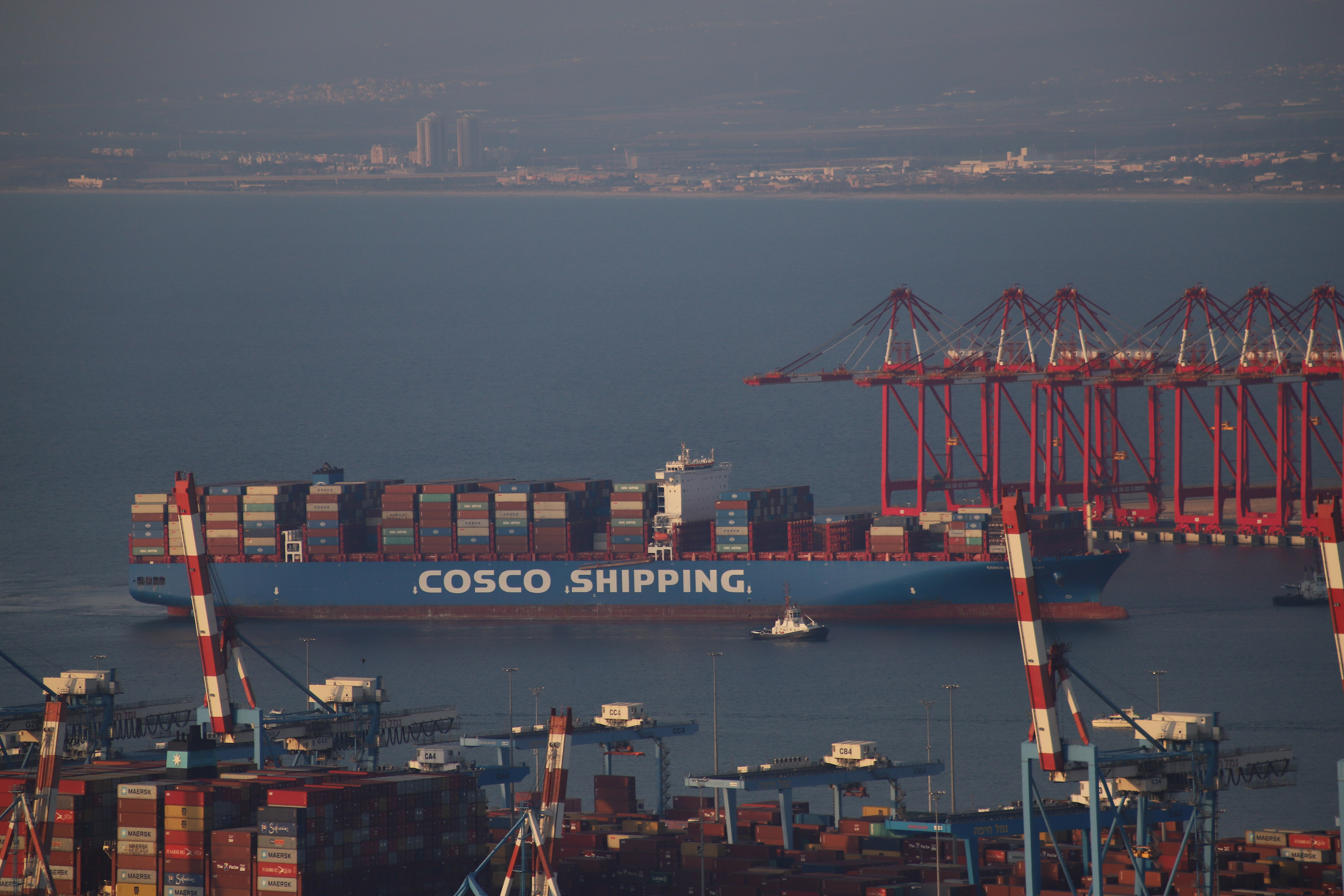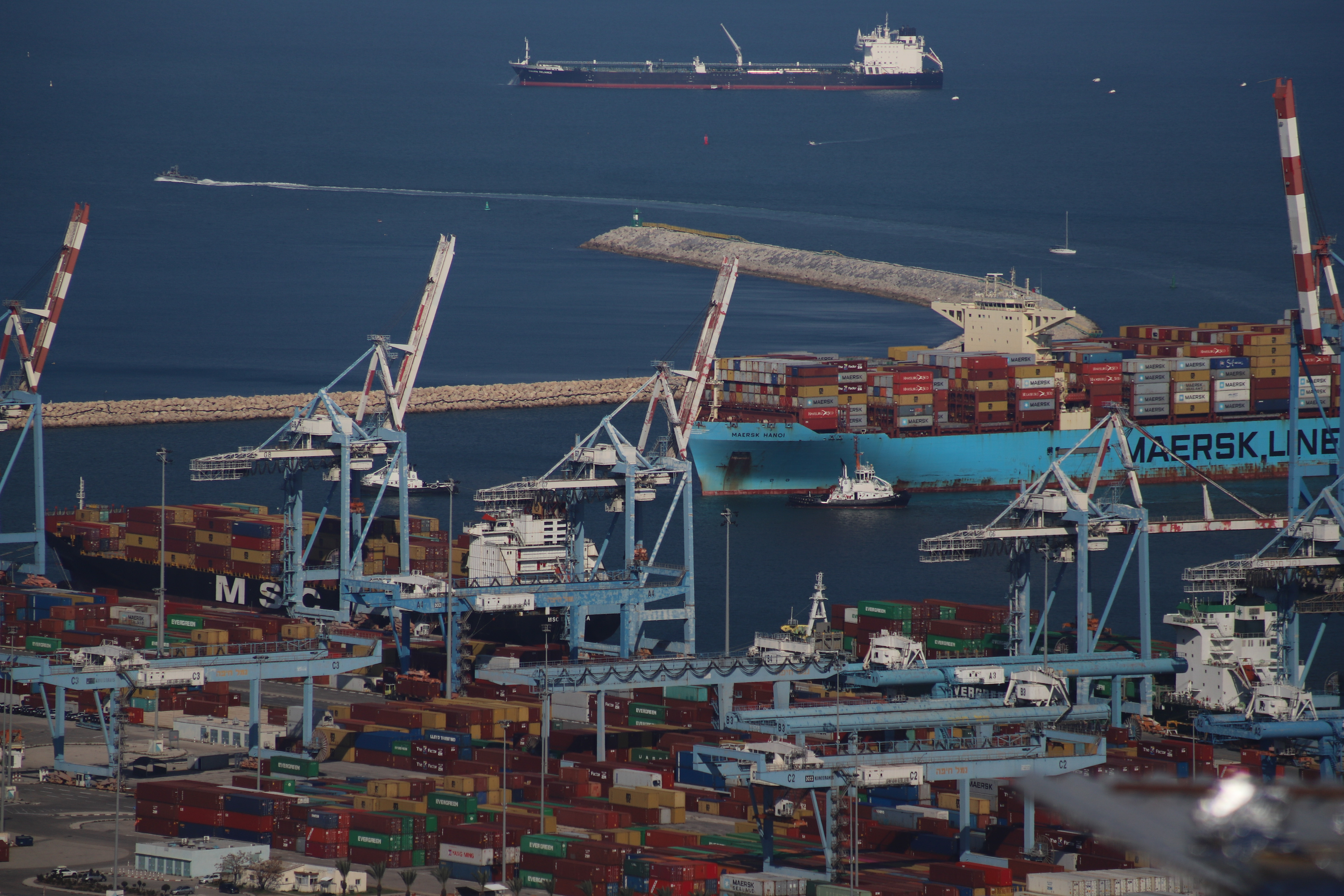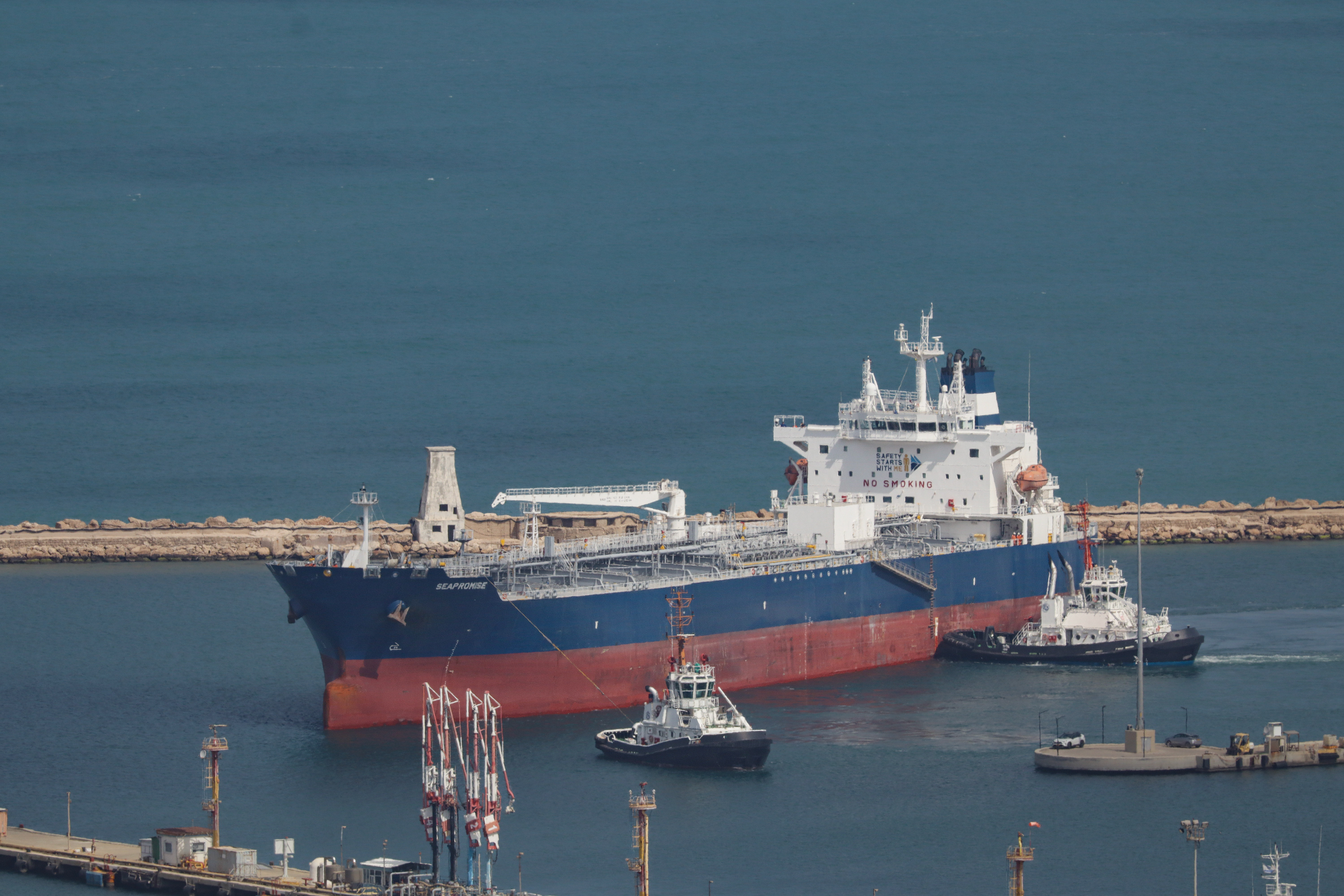
A ship like this makes the Strait of Hormuz feel less abstract. In the image, a large tanker painted in deep navy blue and rust-red sits inside a calm harbor under clear light, escorted by tugboats that look tiny against its hull, almost toy-like at first glance, until you realize they are the only reason something this massive can move with precision in tight water. The sea is smooth and flat, the breakwater behind it looks solid and protective, and the whole scene has an almost routine, workaday feel. That is exactly why it connects so well to Hormuz. The real story of Hormuz is not only missiles, threats, headlines, or naval maps with red arrows. It is this: huge commercial vessels, vulnerable in practice, dependent on narrow passages, escorts, timing, and port choreography. A tanker does not have to be hit to become part of a crisis. It only has to be delayed, rerouted, priced differently, or turned into a risk calculation.
What the photo captures so well is the hidden fragility of maritime trade. The tanker dominates the frame, yet it is obviously not fully in control of its own movement. It is being guided, nudged, managed. That is the Hormuz lesson in visual form. The world likes to speak about energy markets as if oil flows were automatic, as if supply simply exists and demand simply meets it. But the truth is more mechanical and more exposed than that. Oil moves because ships move. Ships move because sea lanes remain open. Sea lanes remain open because states, insurers, ports, crews, naval forces, and commercial operators all keep believing the route is still usable. Once that belief weakens, the entire chain starts to wobble. Not always dramatically at first, sometimes just a little. Freight premiums go up. Insurance costs rise. Schedules slip. Buyers hedge. Traders speculate. Then suddenly everyone remembers that geography still rules.
This image could have been taken far from the Gulf, and that almost makes it stronger as a metaphor. Hormuz is not just a place on a map between Iran and Oman. It is a pressure point that reaches into ports, shipping ledgers, refinery planning, and energy politics far beyond the Middle East. A tanker in a safe harbor is part of the same global system as a tanker waiting nervously for passage through a narrow chokepoint. The calm blue water in the photograph creates a kind of visual irony. Everything looks orderly. The ship is intact, the tugs are in position, the breakwater holds, the harbor infrastructure stands ready. Yet all of that order depends on something larger remaining stable elsewhere. One disruption in the wrong corridor, and even distant ports begin to feel it through rerouted cargoes, tighter vessel availability, more expensive voyages, and a general rise in maritime caution.
Another thing the image says, maybe without meaning to, is that scale can be misleading. The tanker is enormous, but its size does not make it invulnerable. In fact, size can make dependence worse. A vessel this large cannot improvise much. It needs routes, clearance, coordination, and confidence in the system around it. That is one reason Hormuz matters so much. It is not merely a narrow stretch of water; it is a place where oversized industrial logistics meet concentrated geopolitical risk. The bigger the energy system becomes, the more dramatic the effect of constriction points like this one. People often picture global trade as a vast open web. In reality, it runs through a handful of maritime bottlenecks where pressure accumulates fast.
Seen this way, the photo becomes more than a port scene. It becomes an image about dependency. The tugboats pressed close to the tanker’s side suggest assistance, but also exposure. The ship cannot simply power through everything on its own. Neither can the global oil economy. Hormuz remains one of those places where a local confrontation can produce worldwide consequences because too much tonnage, too much energy, and too much strategic signaling pass through too little space. This calm harbor scene reminds us what is really at stake. Not just military escalation, but the everyday movement of the heavy world: fuel, trade, schedules, port calls, industrial continuity. That is the real weight of Hormuz, and this photograph, oddly enough, shows it beautifully.