Visualizing Agentic AI — Systems That Act, Not Just Respond
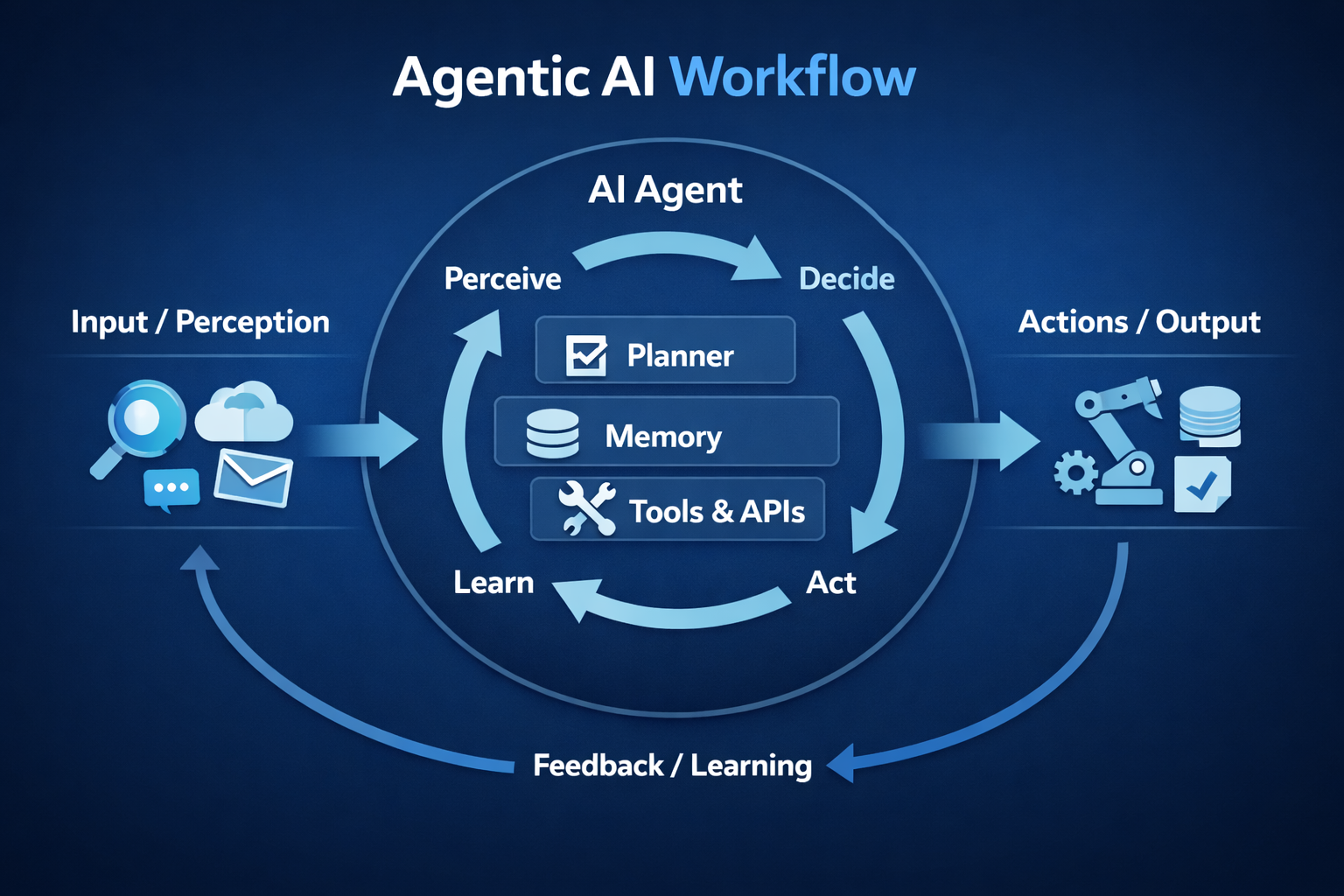
The visuals that tend to work best for a page like this aren’t flashy renders or humanoid robots—they’re diagrams that feel almost technical at first glance, but then you start noticing the flow. One arrow leads to another, loops come back into themselves, little boxes labeled “memory,” “tools,” “planner,” and suddenly it clicks: this isn’t a single response engine, it’s a system that keeps moving.
A good illustration usually shows that cycle—input comes in, but instead of going straight to output, it gets routed through layers. There’s a planning step, maybe a decision node, then an action—calling an API, retrieving data, executing something. And then, importantly, it loops back. The system evaluates what just happened and decides what to do next. That loop is really the whole point of agentic AI, even if it looks deceptively simple on paper.
Some diagrams lean into multi-agent setups, which can look a bit like a network map. Different agents handling different roles—one gathering information, another analyzing, a third executing tasks. Lines crisscross between them, sometimes messy, sometimes clean. It almost resembles a small organization rather than a piece of software.
The more minimal visuals—just a loop labeled “perceive → decide → act → learn”—can actually be more powerful. They strip away the noise and show the core behavior. You don’t need much more than that to explain why agentic systems feel different from traditional AI.