Most tech event coverage is the same post written a hundred times. Keynote recap, three quotes lifted from the press release, a group photo of people in lanyards. If you’re a solo publisher with no crew and no budget, you can’t win that game. You can win a different one, and it starts with showing up with a plan.
Do the homework before you arrive
Read the agenda the week before and pick five sessions. Not fifteen. You will not see them all, and the ones you skip are exactly where you’ll want to be standing when a good conversation breaks out in the courtyard.
- International Test Conference 2026, October 11–16, Grand Hyatt San Antonio River Walk, San Antonio
- AUSA Annual Meeting & Exposition 2026, October 12–14, Walter E. Washington Convention Center, Washington DC
- SEMICON West 2026, October 13–15, Moscone Center, San Francisco
- Fal.Con Europe 2026, November 2–4, Fira Gran Via, Barcelona
- A3 International Robot Safety Conference 2026, November 3–5, Huntington Place, Detroit
- Humanoids Summit Silicon Valley 2026, December 1–2, San Mateo County Event Center, San Mateo
- Sohn London Investment Conference 2026, November 18, London Marriott Grosvenor Square, London
- SuperReturn Secondaries North America 2026, November 17–18, Convene 360 Madison, New York
- Singapore FinTech Festival 2026, November 17–20, Singapore Expo, Singapore
- SuperReturn Europe 2026, November 3–6, Hotel Okura, Amsterdam
Look at the sponsor list too. It tells you who is paying for the place, which tells you which companies want to be seen and what they want to talk about. Bank, cloud provider, telecom, a public broadcaster, a government investment agency. Each one is a story if you ask why they’re here.
Apply for the media pass early. Email the press office and say what you publish, in one paragraph. Ask if there’s a press lounge. There usually is, and it usually has power outlets, which matters more than you think.
Carry less than you think
A phone, a handheld mic, headphones you can monitor audio with, a power bank. One camera with a wide lens if you shoot photos. That’s it.
Outdoor venues are hard on audio. Wind, crowds, a stage two hundred meters away. Put a foam windscreen on the mic and stand with your back to the noise. Wear the headphones while you record so you know right away if the levels are bad, because you’ll only get one take.
Shoot the room, not only the stage
Stage photos all look alike. Every speaker stands at a lectern in front of the same backdrop.
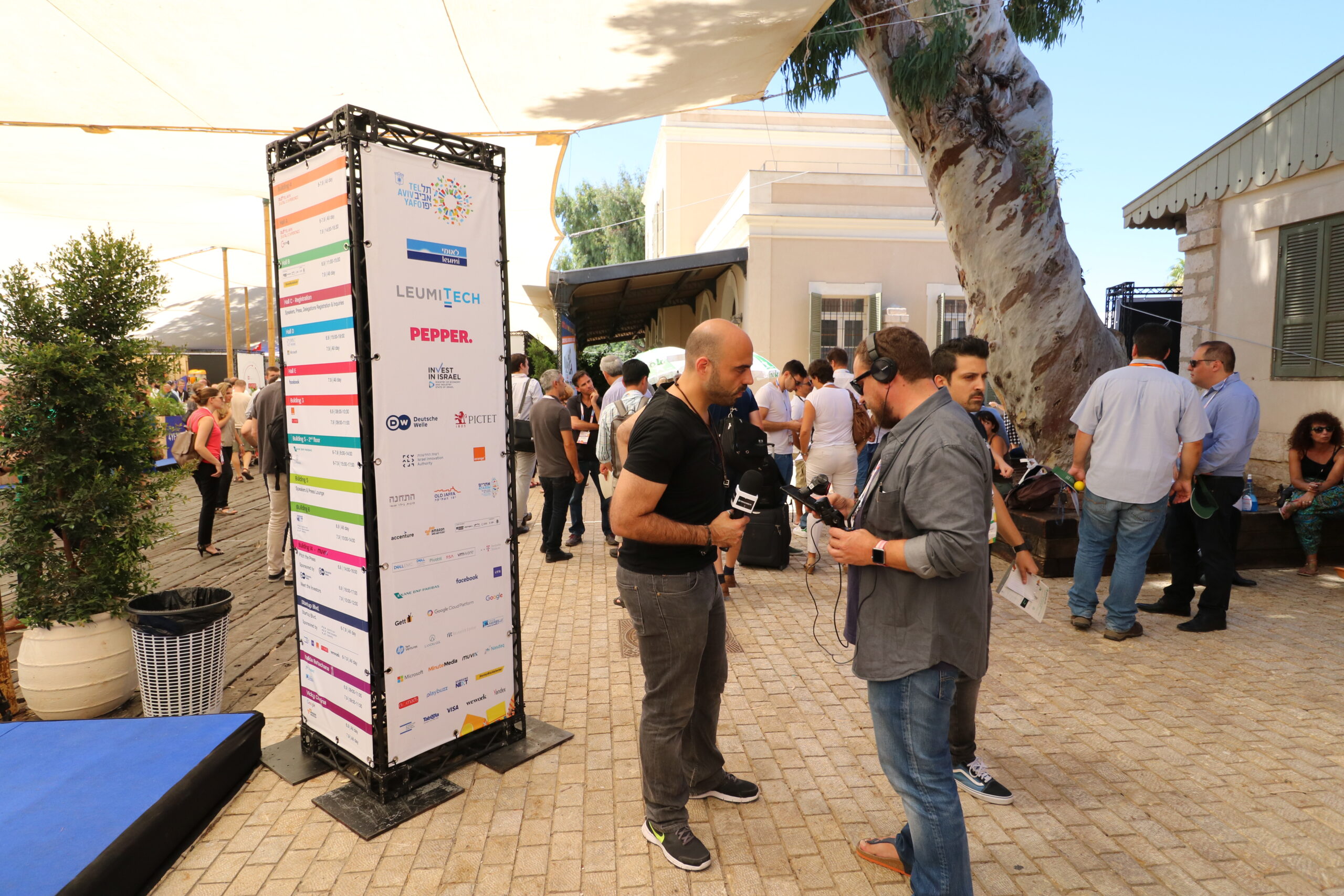
The better frames are in the gaps between sessions. A courtyard full of people reading the schedule. The sponsor banner tower at the entrance with a dozen logos stacked down its face. Two people talking next to it, one holding a mic, the other with headphones on and a recorder in hand. That single frame tells you the scale of the event, who paid for it, and that real work is happening away from the stage.
- Penguin Solutions (PENG) Posts Record FY26 on Memory, Bets FY27 on AI Infrastructure
- Boost Run (BRUN) Signs $525.6M GPU Deal as Liquid Compute Opens $250M Facility to Finance Compute Before Delivery
- Vinci Hits $1.5B Valuation Ten Months Out of Stealth With $250M Round for Chip Physics Simulation
- Matic Becomes First Home Robot Cleared From the FCC Covered List as Security Rules Reshape Robot Vacuums
- BareProxy: A Go Reverse Proxy That Makes Routing Decisions Explainable
- Preconfiguration: Generates Reproducible Setup Across Multiple Cloud Platforms From One Spec
- Precomputing: Materializes Dashboard Answers With SQLite Triggers as Data Arrives
- VPN Works: Uses Linux Network Namespaces to Isolate and Log Every Connection From an Agent
- AltSql: An Embedded Database Engine That Syncs Devices and Gateways Without Conflicts
- AI Infrastructure Moves Beyond GPUs as Billions Flow Into Interconnects, Cloud, Robotics and Agent Systems
Shoot wide first to set the scene, then go in close on hands, badges, mic flags, signage. You need both. Wide shots carry the post and close shots carry the captions.
Interview in the hallway
Speakers on stage are performing. Speakers in the hallway are people, and they’ll give you a straight answer if you catch them at the right moment.
Ask one good question and give them two minutes. What changed in your work this year? What are you building that you couldn’t have built two years ago? Skip the “tell me about your company” opener, they have given that answer forty times today and it sounds like it.
Record the name and title on tape, spelled out, before you do anything else. You will forget how it’s spelled by the time you’re back at your desk. Ask permission to use the audio, and say where it will run.
Follow the money on the signage
Sponsor walls are data. Photograph every panel you can, straight on, so the logos are readable. Then compare against last year’s event, or another event in the same city. Who’s new? Who dropped out? Which banks and telecoms keep coming back, and which cloud vendors have quietly taken over a whole hall?
Nobody else at the event is writing this piece, because it isn’t on the agenda. It’s also the kind of thing your readers can’t get from the organizers.
Publish the same day
Don’t wait. Post something short that night while people are still searching the event name: five photos, a few lines on what you saw, one quote. Then write the longer piece later in the week when you’ve had time to listen back to the audio.
Caption every photo with who, where and what is happening. Name the files properly too, event-name-courtyard-interview.jpg beats IMG_4471.jpg every time, both for search and for your own sanity six months later.
Write it up in your own words
Put the press release down. Say what you saw and heard, in the order it happened, the way you’d tell a friend over coffee. Rough edges are fine. A slightly choppy, opinionated post from someone who was actually there beats a polished recap from someone who wasn’t.
Cover one event well, then do it again at the next one. A body of work with the same voice and the same eye is what turns a solo site into a media property people come back to.