Photographing moving vehicles is one of the simplest ways to introduce motion and energy into an otherwise static city scene. The trick is to choose a shutter speed that allows the vehicle to blur while keeping the surrounding architecture reasonably sharp. You don’t need expensive equipment, and you certainly don’t need to photograph racing cars. An ordinary London taxi passing a historic building can be enough.
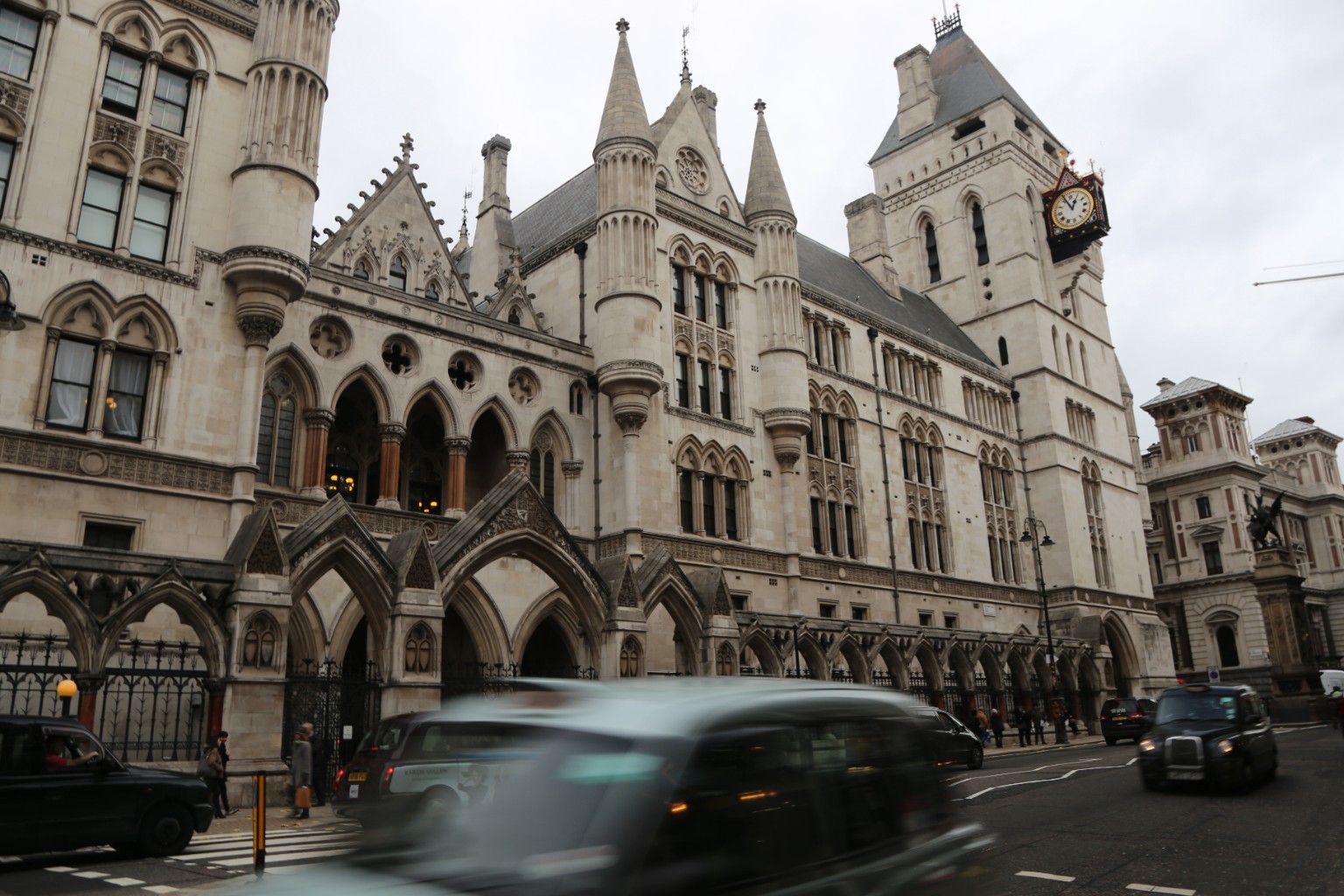
This photograph, taken outside the Royal Courts of Justice on London’s Strand, demonstrates the effect particularly well. The Gothic Revival building, with its pointed arches, ornate stonework, slender towers and distinctive clock, remains largely sharp and recognizable. Meanwhile, a black London taxi passing across the foreground becomes a sweeping blur, its dark silhouette and pale reflections stretching across the lower portion of the frame. Another taxi farther along the street is considerably sharper, providing a useful comparison. The contrast between centuries-old architecture and modern traffic gives the photograph its character.
The key camera setting is shutter speed. At 1/500 second, most city traffic will appear relatively frozen. At 1/60 second, a passing vehicle may begin to show noticeable movement. Slowing to 1/15 or 1/8 second can produce a much stronger blur, especially when the vehicle passes close to the camera. These are starting points rather than fixed rules, because the result depends on vehicle speed, distance and direction.
Start with shutter-priority mode, usually marked Tv on Canon cameras. Select 1/15 second, use a low ISO where lighting permits, and allow the camera to choose the aperture. Hold the camera steady, preferably against a wall or on a tripod, and wait for a vehicle to cross the composition. Take several photographs, because even small differences in timing can change the result dramatically.
There is another technique worth trying: panning. Instead of holding the camera still, follow the moving vehicle smoothly while releasing the shutter. With practice, the vehicle can remain relatively sharp while the buildings and street behind it become streaked. Try 1/30 or 1/60 second initially. Panning requires more practice, but the results can be wonderfully dynamic.
The London photograph uses the opposite approach. The architecture provides the stable visual anchor, and the passing taxi supplies the motion. An overcast day helps, too, because reduced light makes slower shutter speeds easier to achieve without overexposing the scene. A neutral-density filter can provide the same flexibility in bright sunshine.
Perhaps the most important lesson is compositional rather than technical. Leave room for the moving vehicle to travel through the frame. Look for a strong stationary background, interesting light and traffic that moves across your field of view rather than directly toward you. A little experimentation with timing can turn an everyday street photograph into something much more expressive.
Motion blur is not necessarily a photographic mistake. Used deliberately, it becomes a way of showing time passing within a single image. And sometimes a blurred London taxi tells a better story than a perfectly sharp one.