Every tech conference is built to be photographed. The logos repeat across the backdrop so they show up behind any speaker’s head. The booths are lit like film sets. Someone has usually been paid to make sure the right banner lands in the right frame. And still, the best conference pictures are rarely the ones anyone planned.
This page collects 12 images from the technologyconference.com media library. Cybertech in Tel Aviv, a Microsoft Ignite tour stop, DLD, a Hannover trade fair hall, an outdoor tech festival in the sun. Plus one clean banner graphic for the Sonar Summit, which is the only picture here that looks exactly the way somebody wanted it to.
The banner is the promise, the photo is what happened
Put the Sonar Summit banner next to anything else in this gallery and you’ll see the gap. The banner is a purple gradient, a logo and a year. Tidy. Every photo from an actual event is messier than that. People walk through the frame, the lighting is purple because somebody picked purple, and half the crowd is looking at their phones.
That mess is the useful part. The Cybertech speaker is a good example. The backdrop behind him is pure marketing, Cybertech Global Tel Aviv 2026 repeated over and over with red shield logos. He’s holding two microphones at once, mid-sentence, leaning in. You believe the picture because of the two microphones. Nobody would stage that.
The camera in the room
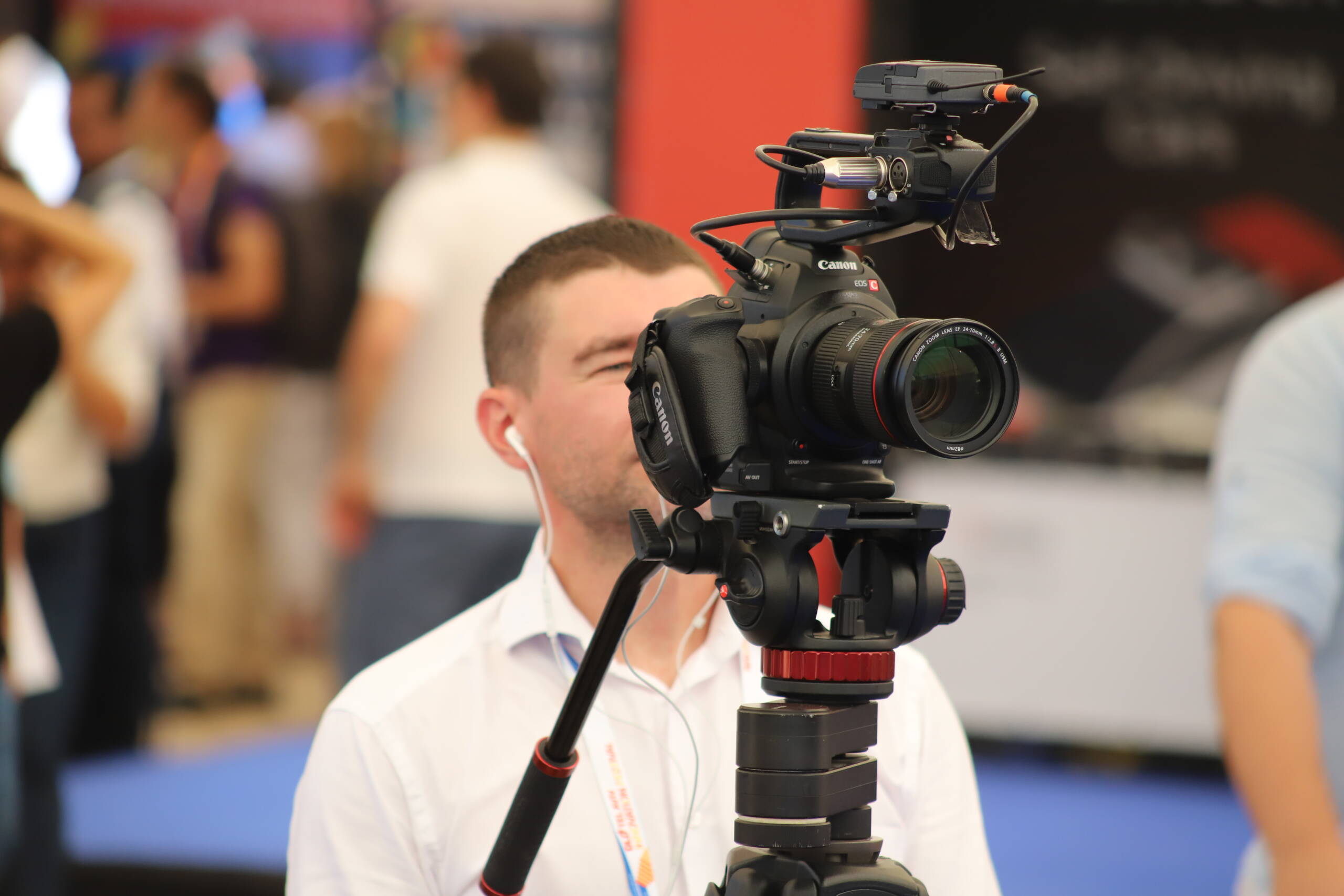
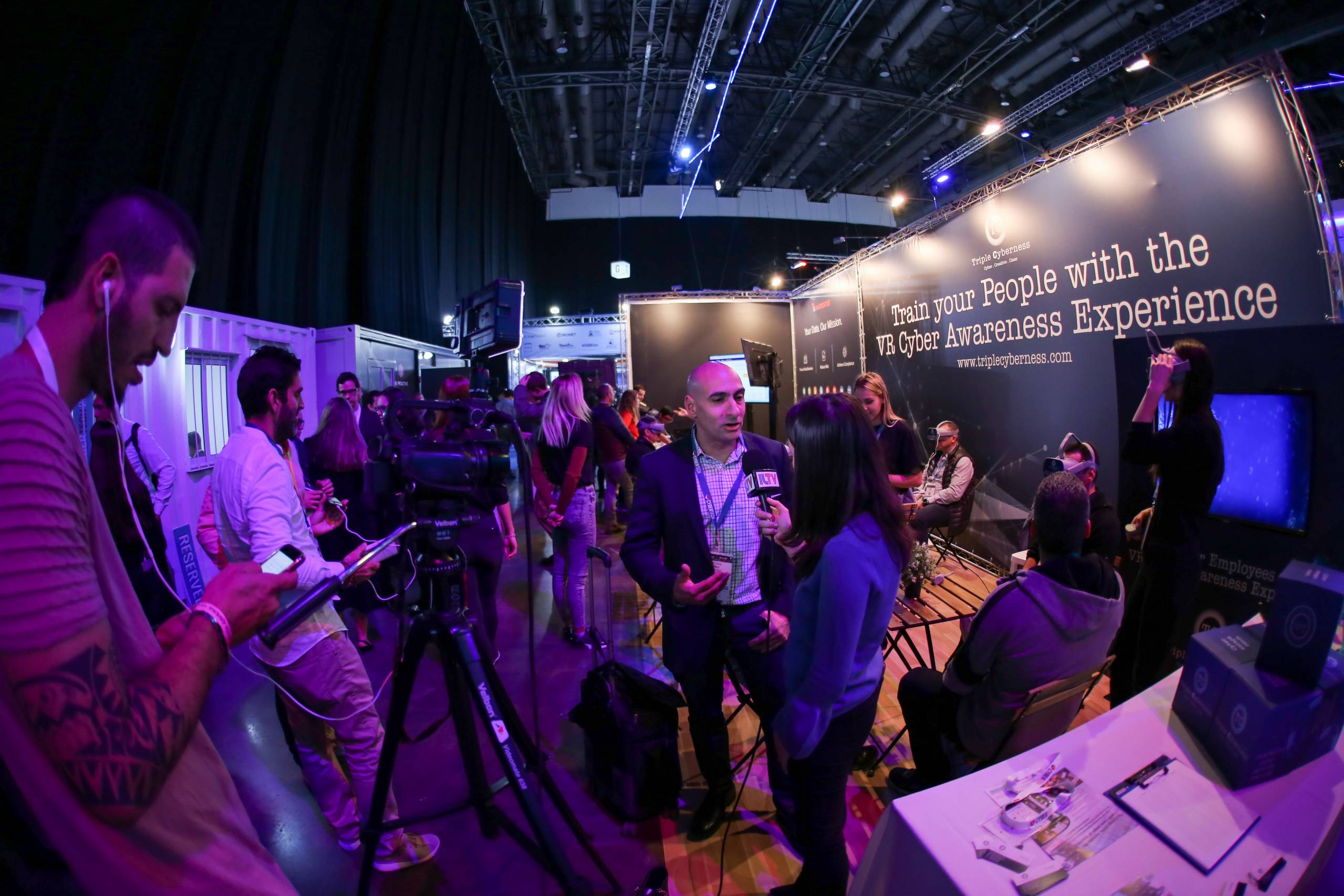
Two of these images are pictures of people making pictures. A videographer behind a Canon cinema rig with a shotgun mic, one earphone in, squinting past the camera at whatever he’s filming. And a TV crew at Cybertech, shot through a fisheye, interviewing a man in a suit in front of a booth that says Train your People with the VR Cyber Awareness Experience.
Conferences run on this. The talks get recorded, the booths get filmed, the interviews get cut into clips that go out the same afternoon. A lot of what a conference actually produces is footage. Pointing the camera at the camera crew is a quick way to show that without explaining it.
Booths compete for attention, and toys win
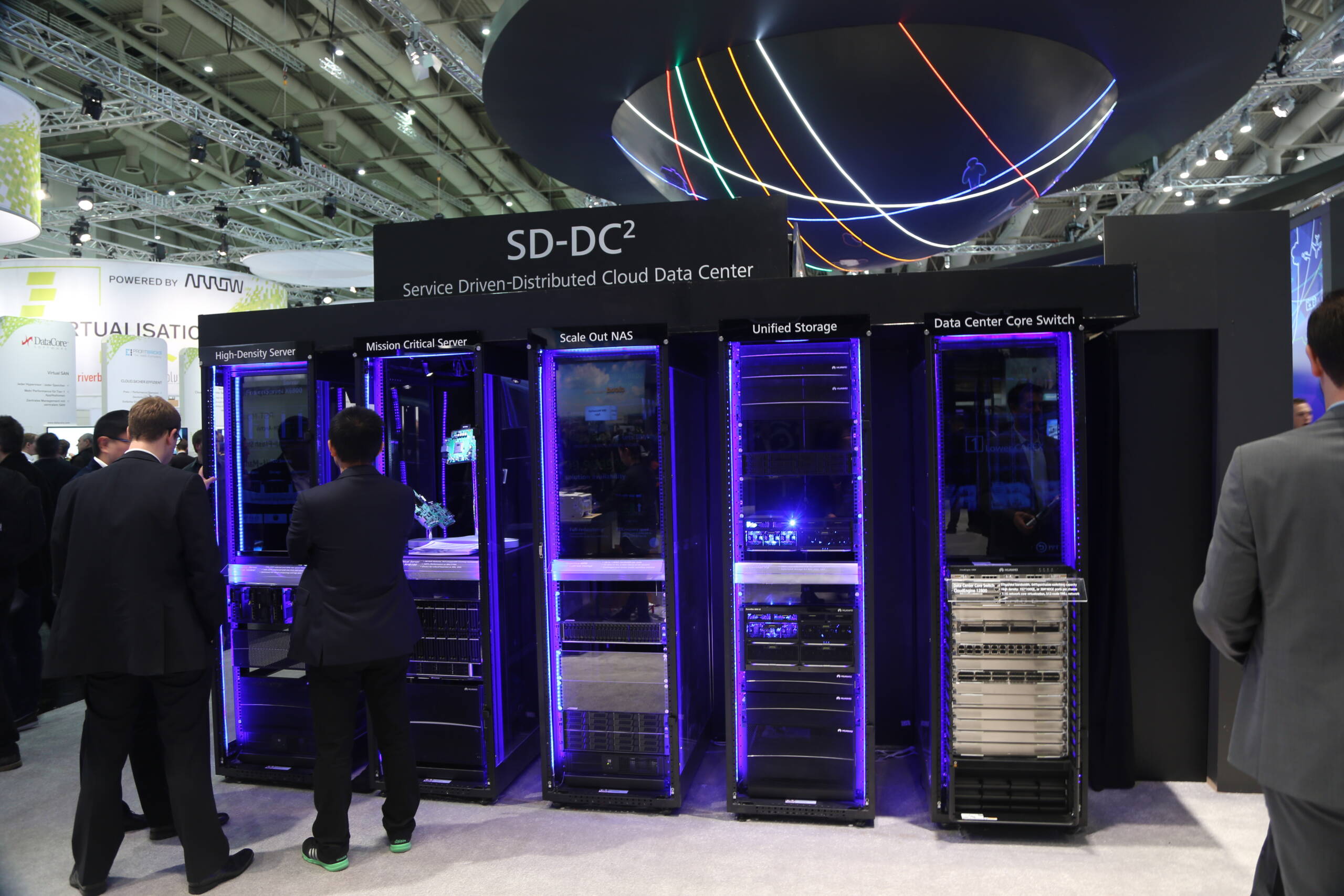
Hardware stands have a problem. A server rack is a black box. The data center display here gets around it with purple LEDs and a giant sign, SD-DC² Service Driven-Distributed Cloud Data Center, and it works well enough to pull a crowd of suits in close.
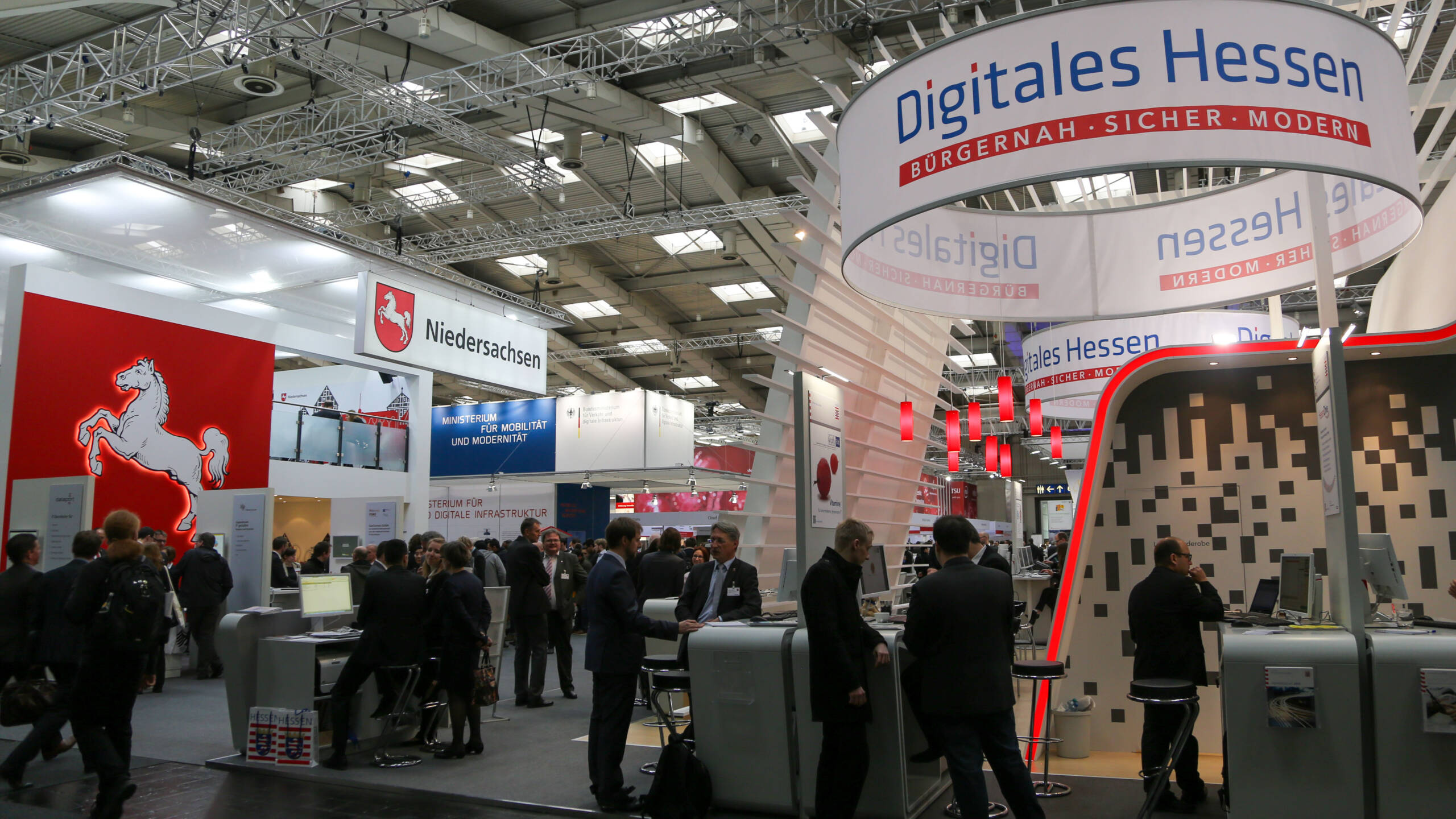
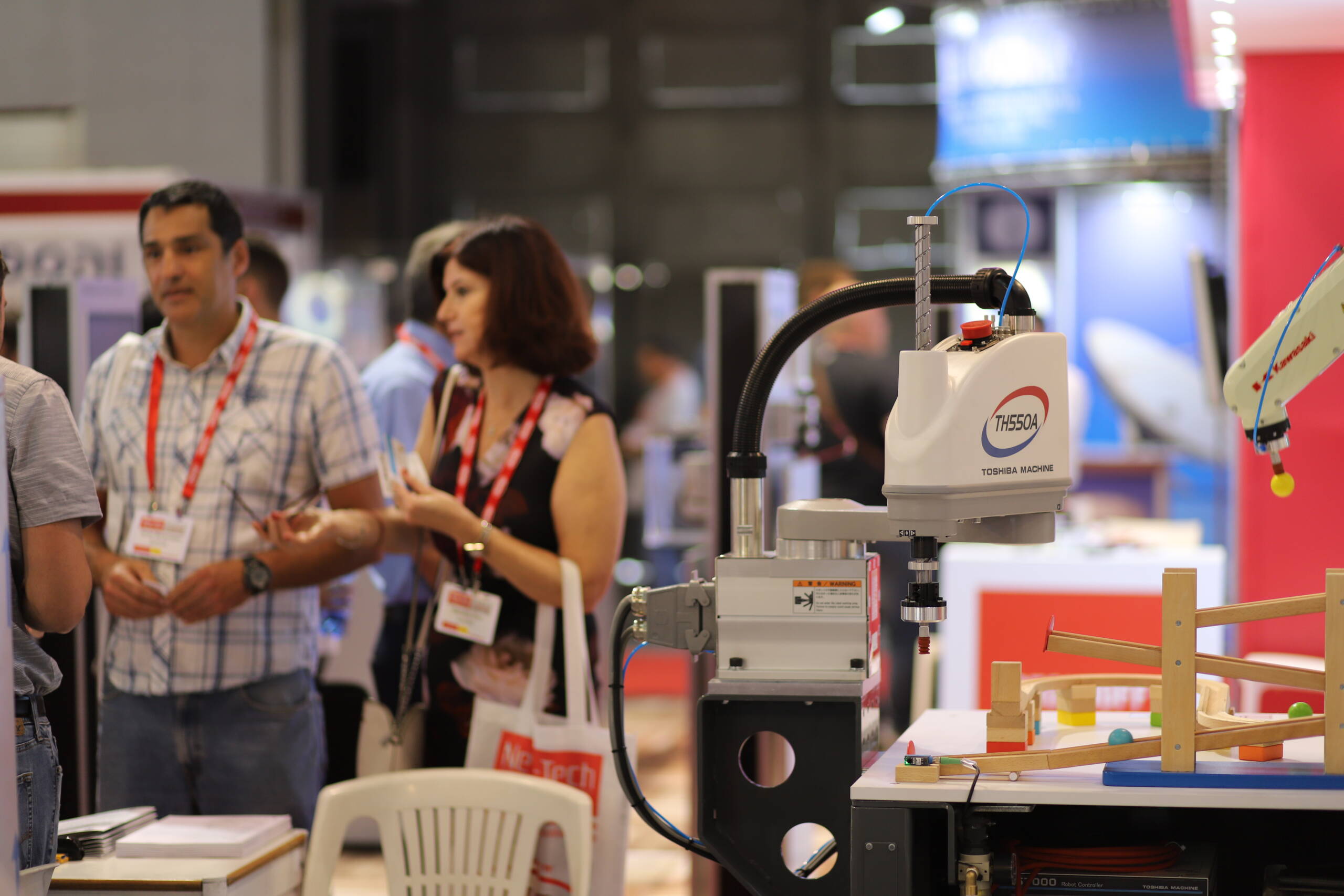
The Toshiba stand did something smarter. Next to a white SCARA robot arm there’s a wooden marble-run toy, the kind you’d find in a kindergarten. Visitors stop for the toy and stay for the robot. It’s the oldest trick in trade show design. In Hannover even the German states play the game, with Digitales Hessen and Niedersachsen building stands that pitch like any vendor’s.
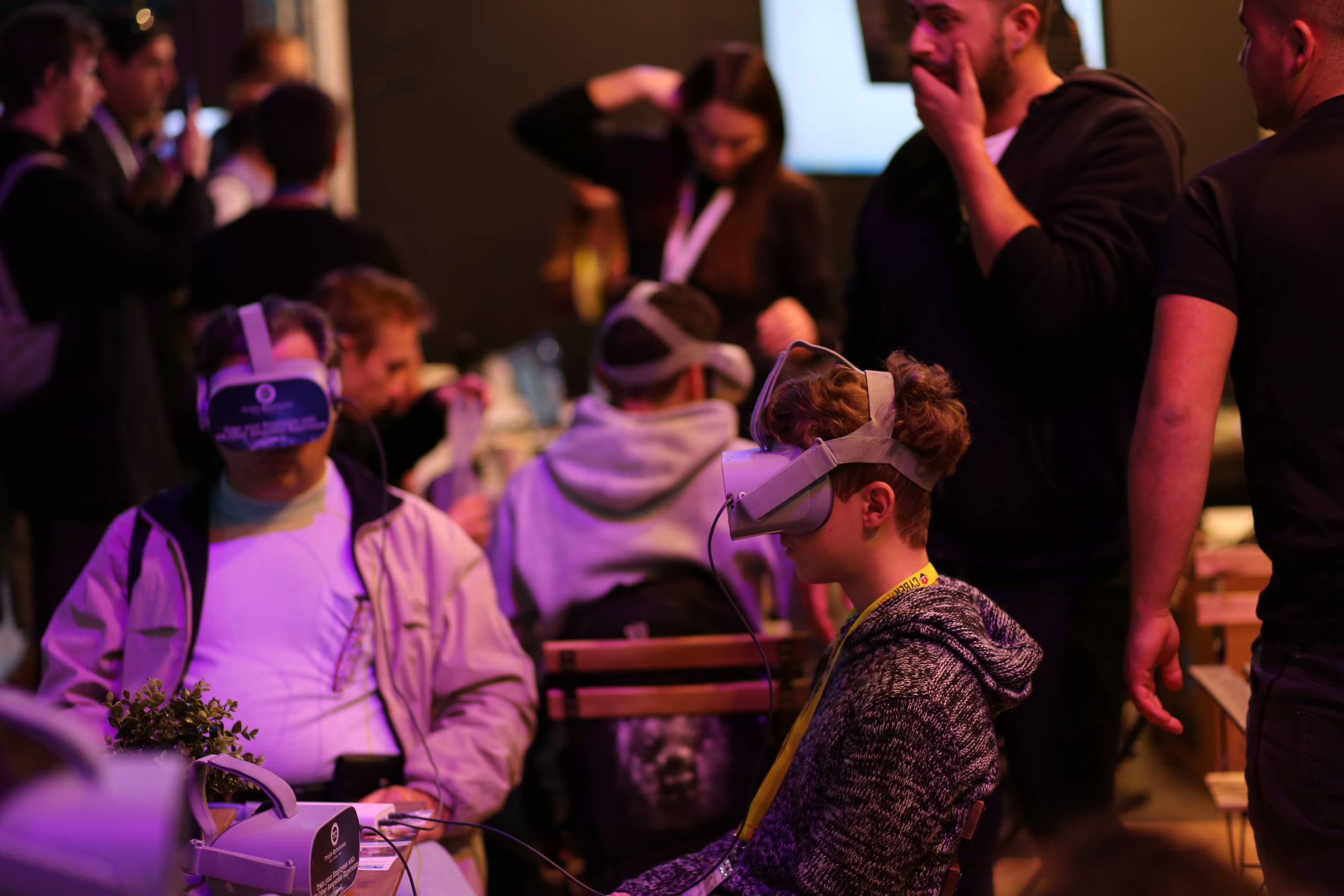
The VR demos pull the same trick with a headset. At DLD a row of people sit in purple light with white headsets strapped on, and everyone standing around them is watching them instead of the demo. The people are the show.
The hallway track happens outside
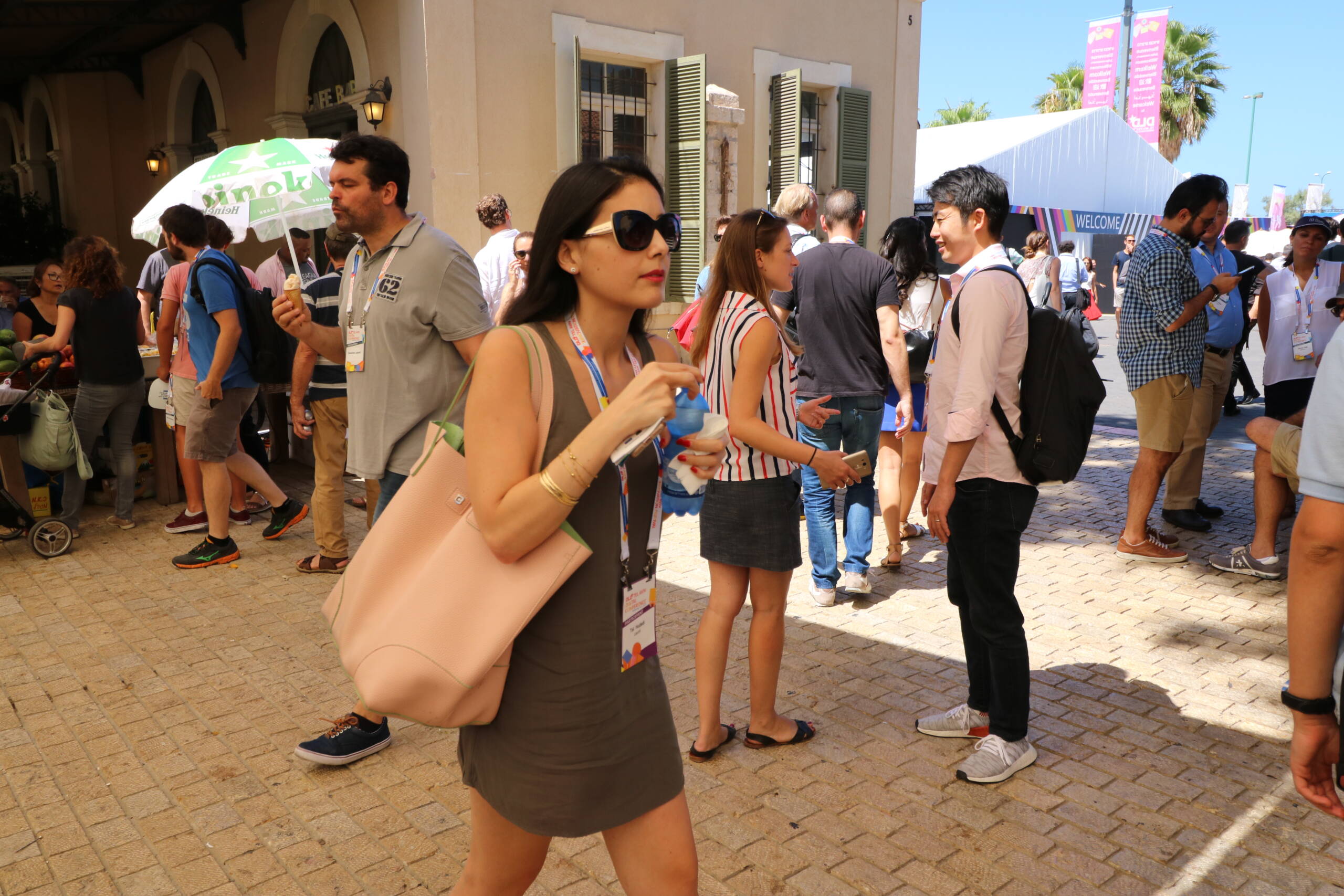
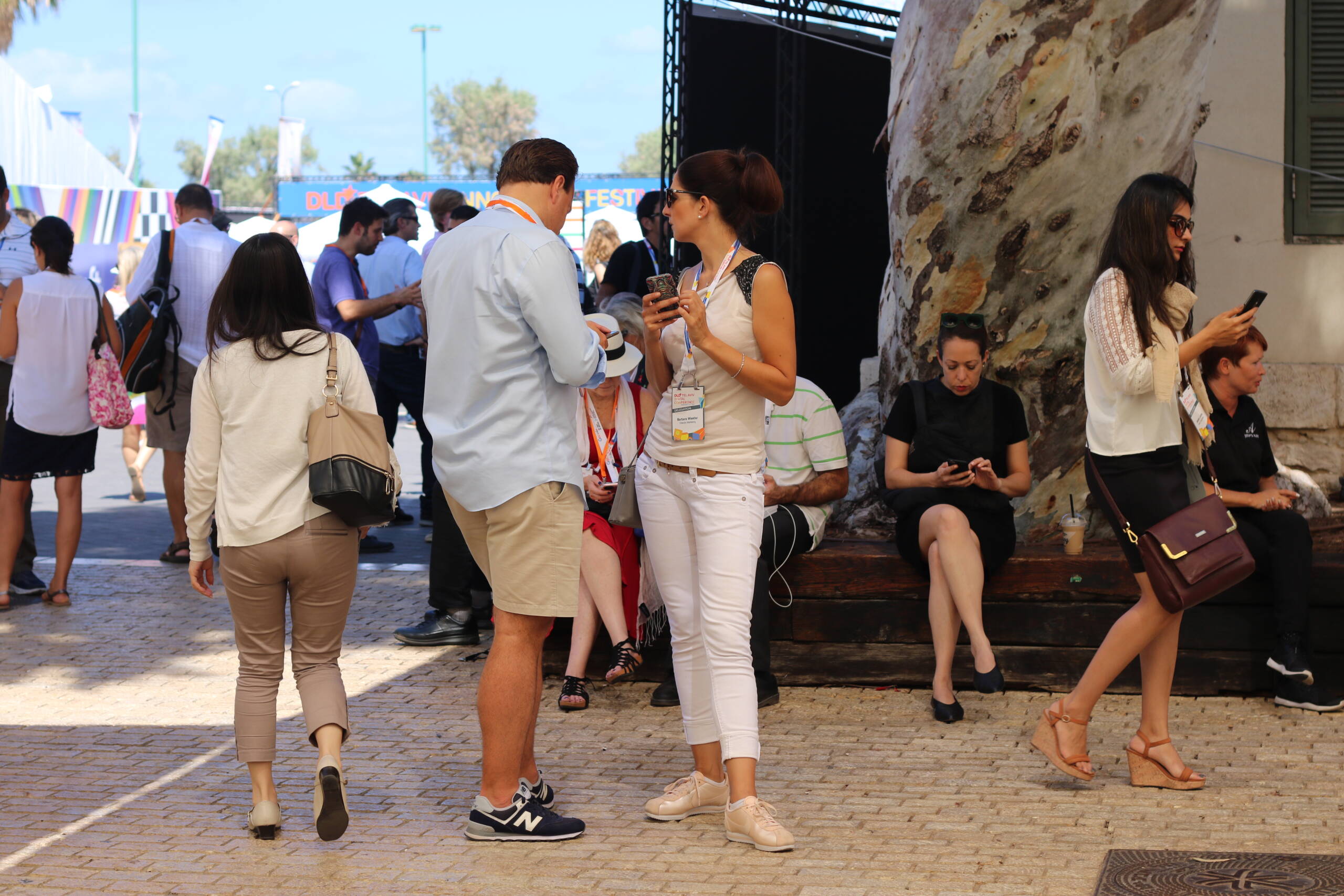
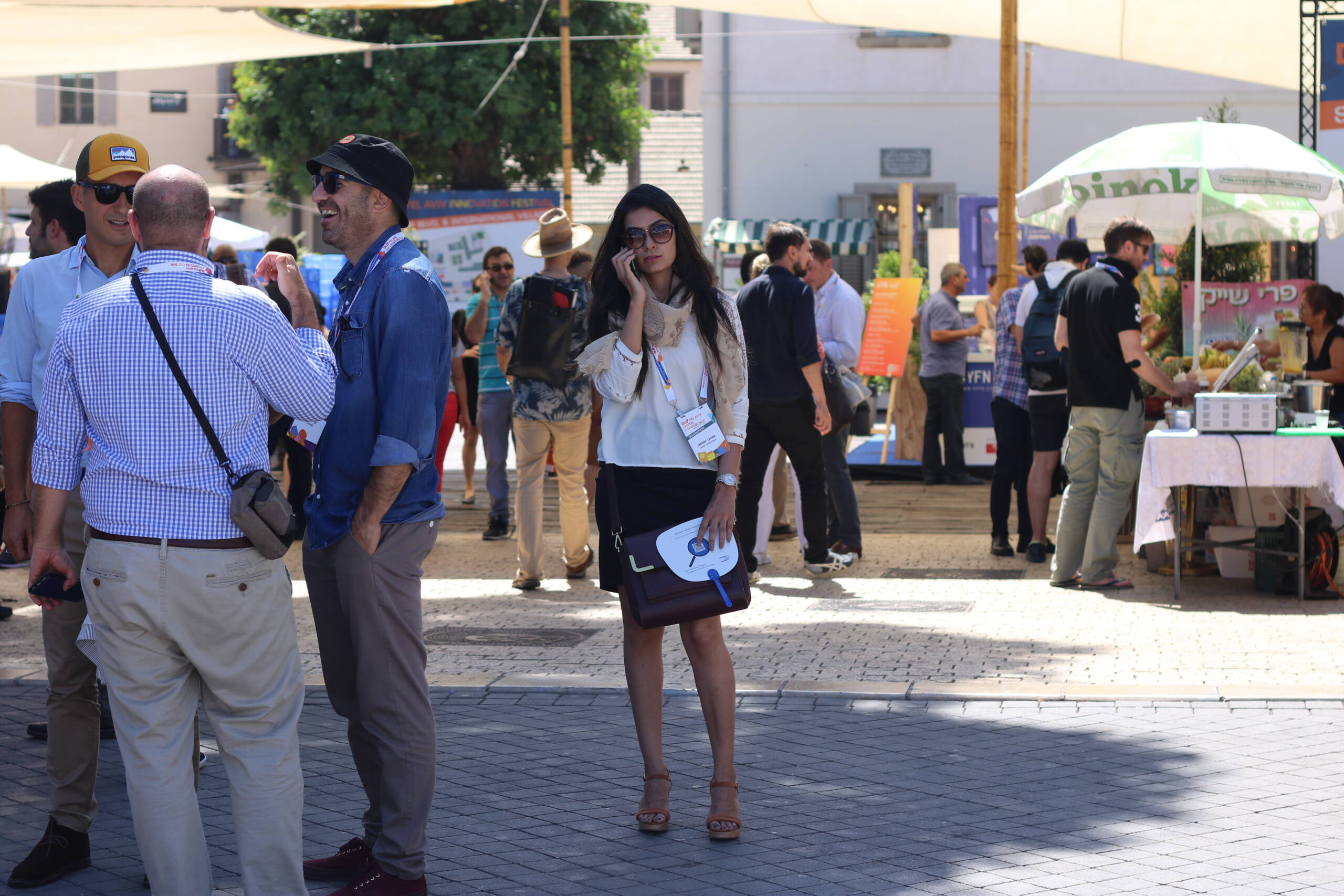
Three of the best frames here come from an outdoor tech festival and none of them show a stage. A woman in sunglasses walks across a cobblestone courtyard with a pink tote and an ice cream. People lean on a huge eucalyptus trunk to check their phones. Two men in caps laugh about something while a woman next to them takes a call, holding a paper fan.
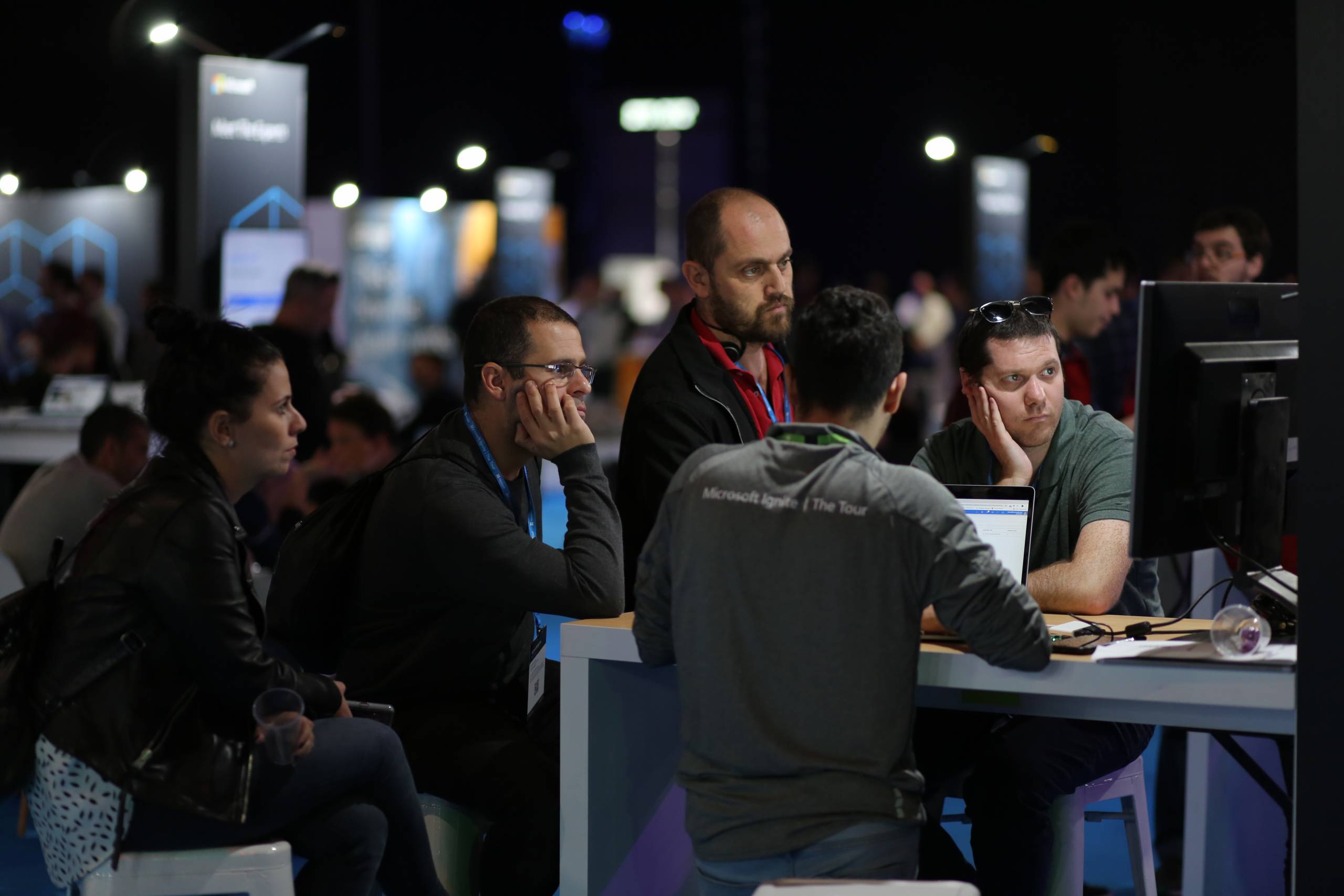
This is what people mean when they say the real conference happens in the hallway. It’s the part that’s hardest to sell on a banner and easiest to see in a photo. The Microsoft Ignite shot catches the indoor version: an ask-the-experts table, laptops open, one attendee with his chin in his hand, listening hard. Nobody’s performing. They’re just working something out.
Hover over any image to see its title. Click it to open it on its own page.
Start with the ice cream.