Most technology is invisible. Code, models, protocols, the stuff that actually moves the money, none of it photographs well. You can’t take a picture of a vector database. So tech coverage leans on whatever can be seen: the booth, the robot arm, the ship, the person with a headset strapped to their face.
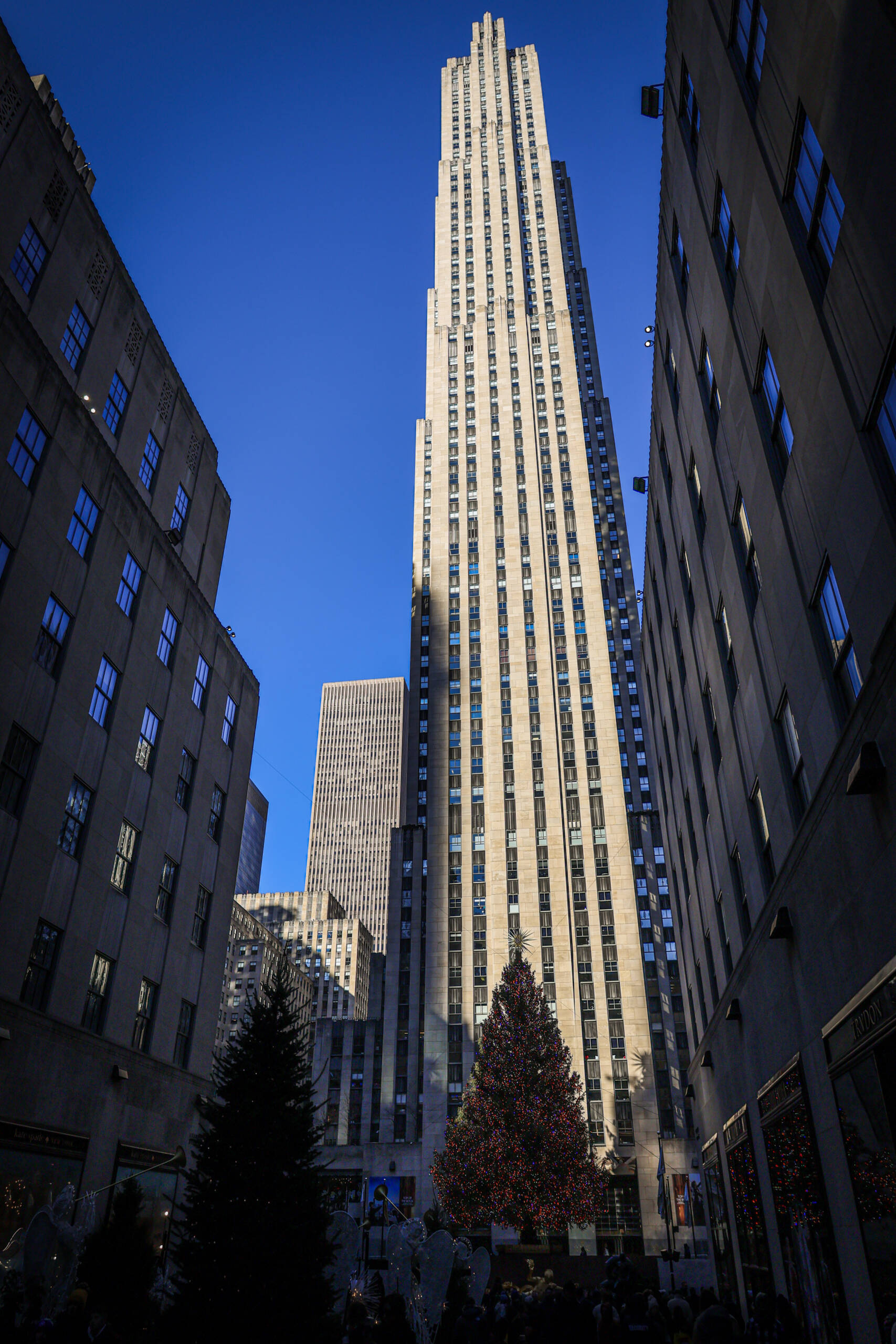
That’s what this page is. 18 images from the technologies.org media library, from conference floors in Tel Aviv, robotics demos, a couple of ports and one very tall building in Manhattan. Plus two diagrams, because some ideas only make sense once they’re drawn out.
The headset shot
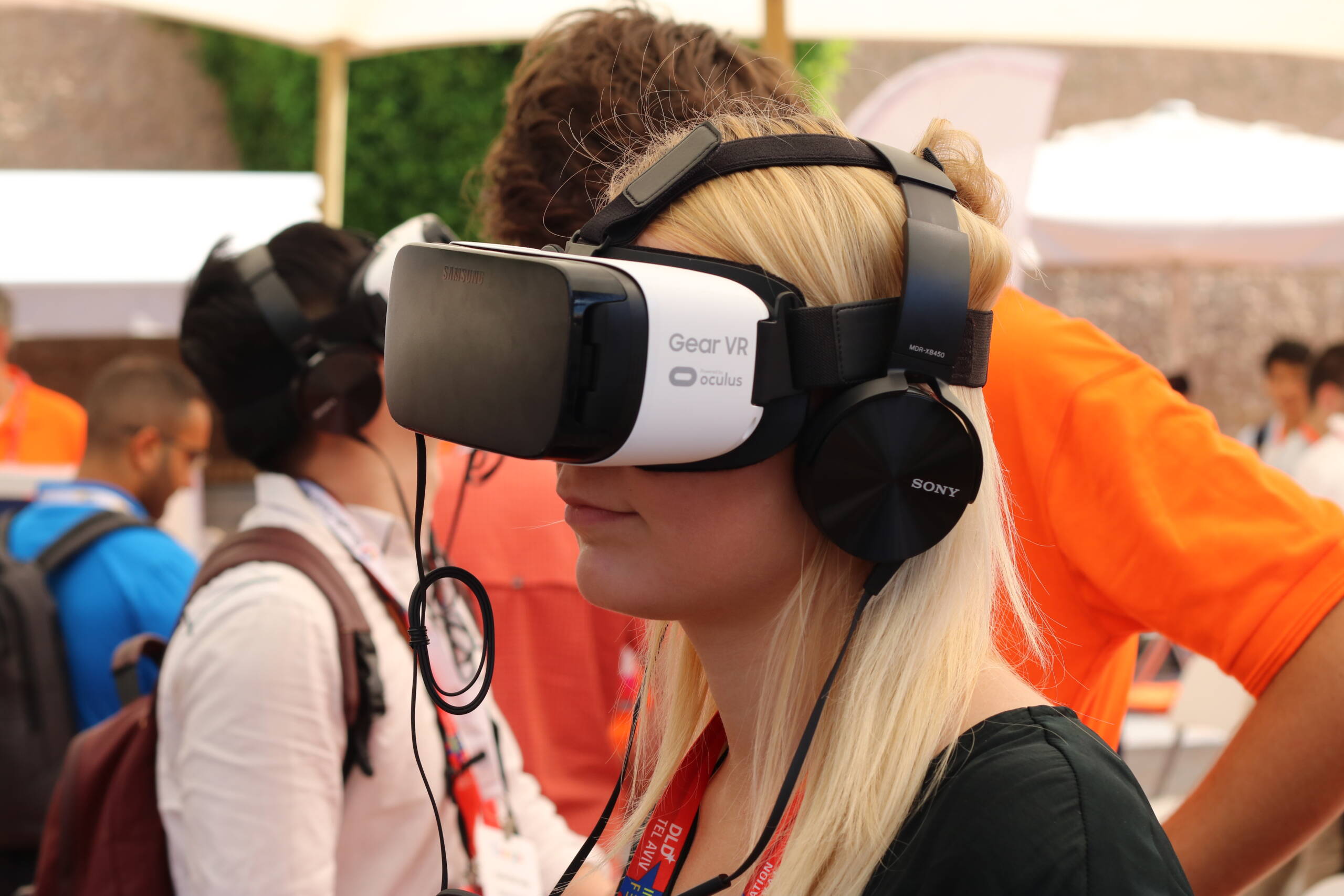
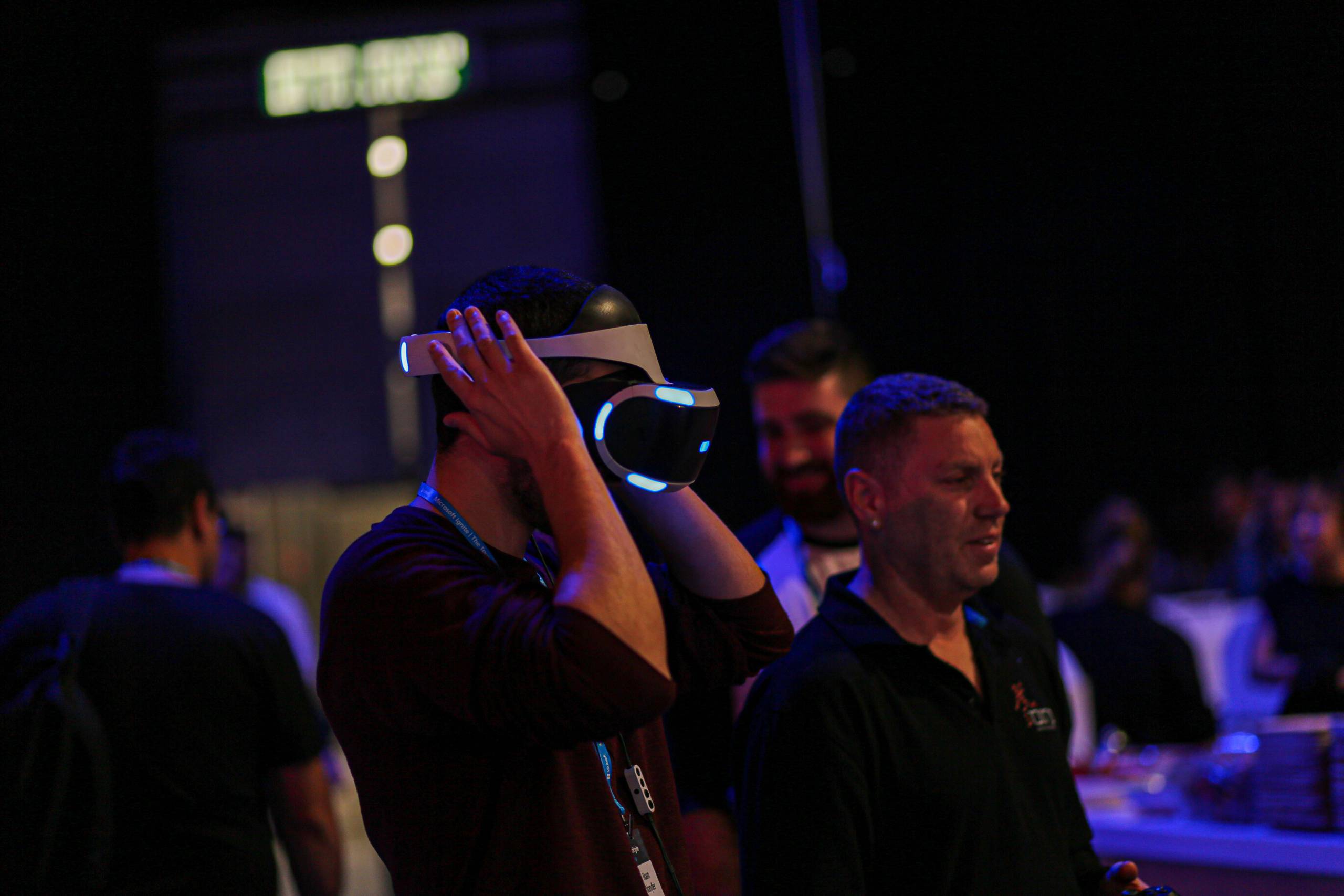
There are two VR pictures here and they tell the same story. A person with a box on their face. Someone next to them watching, half curious and half amused. The woman in the Samsung Gear VR has Sony headphones clamped over the straps and a conference lanyard around her neck. The man in the dark hall is still adjusting his headset, hands up by his temples. You can’t see what they’re seeing. That’s the point, and it’s also the problem VR never quite solved. From the outside it looks lonely.
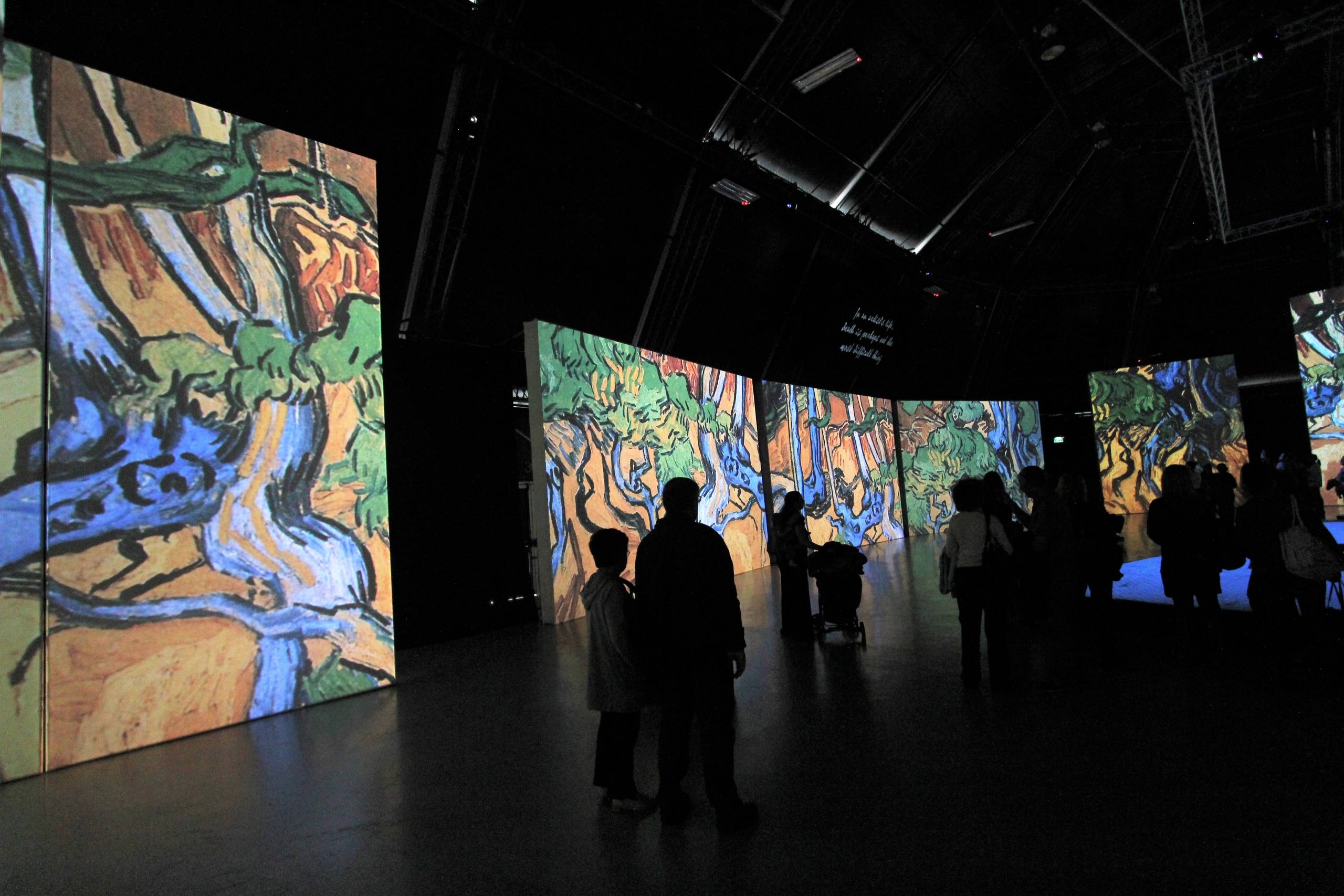
The immersive art exhibition does the opposite. A post-impressionist painting of tree roots is blown up across every wall of a dark hall, and the visitors stand inside it as silhouettes. Everyone sees the same thing at the same time. Same idea as a headset, only the whole room gets it. It makes a much better photo.
Robots are easy to photograph, and that’s a trap
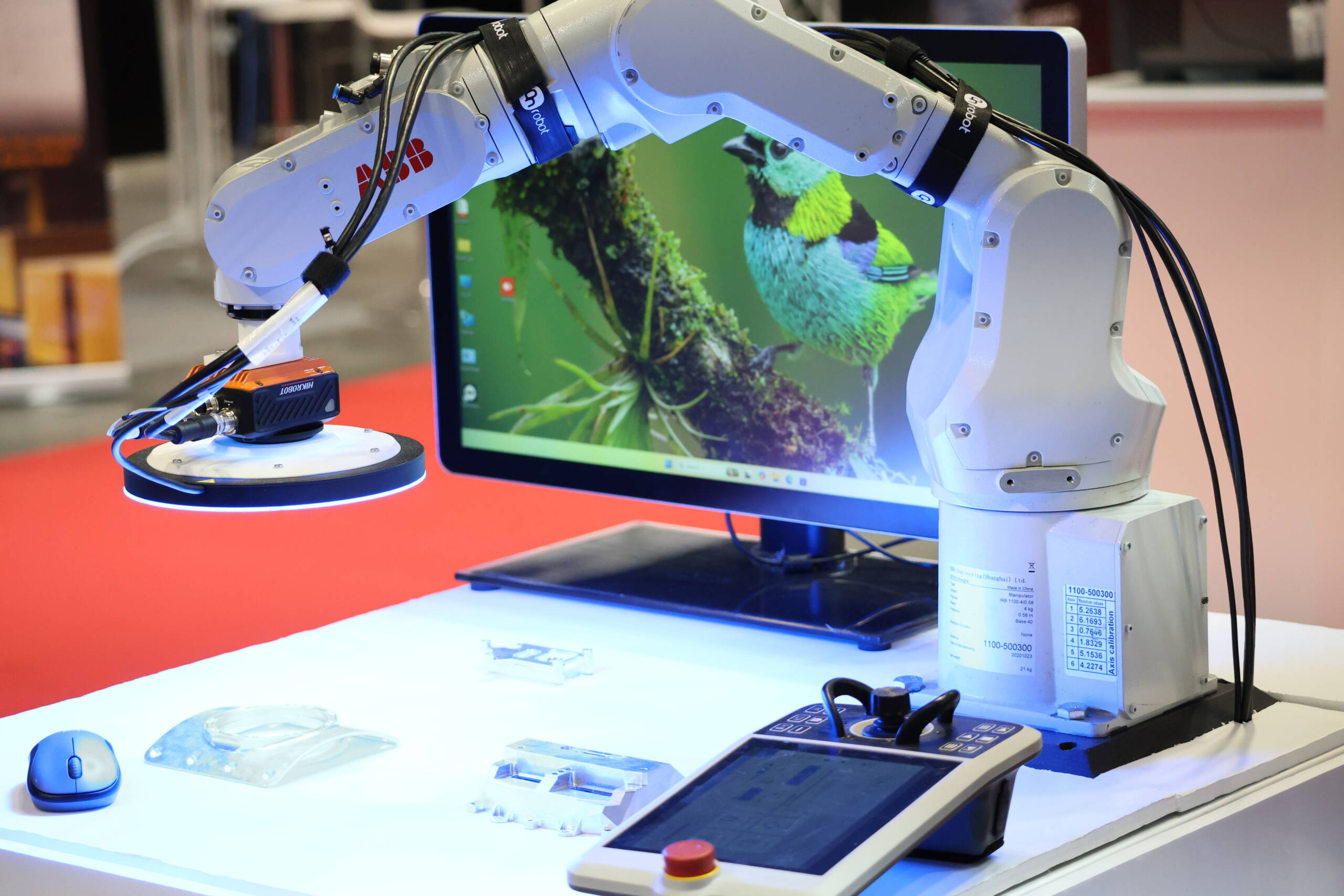
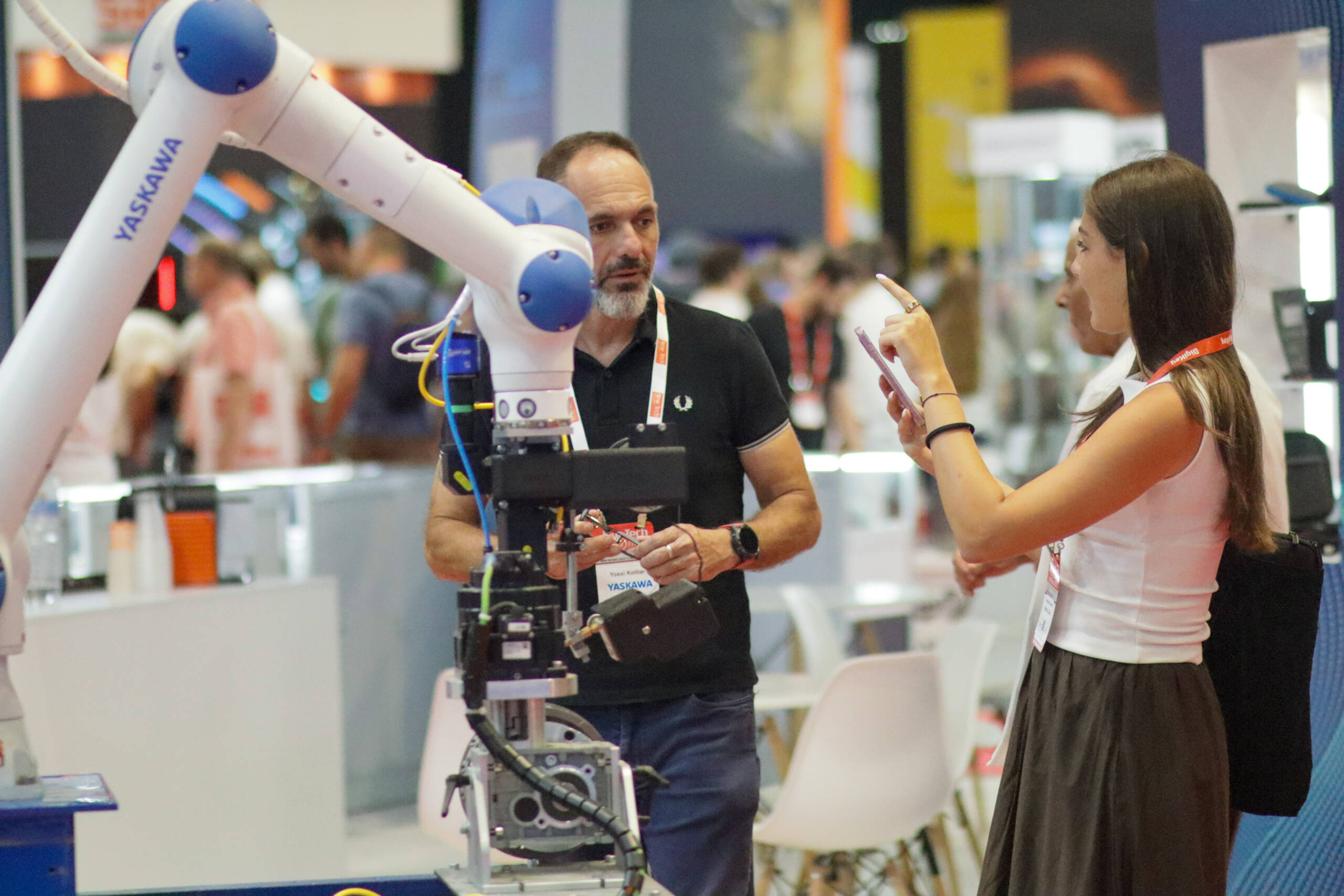
Robot arms are the most photogenic thing at any industrial show. Yellow FANUC, white ABB, Yaskawa in blue and white. They move, they have clean lines, and they always get the best lighting on the floor. The ABB arm here is holding an industrial camera pointed at a monitor showing a green-headed tanager. Great picture. Slightly absurd too.
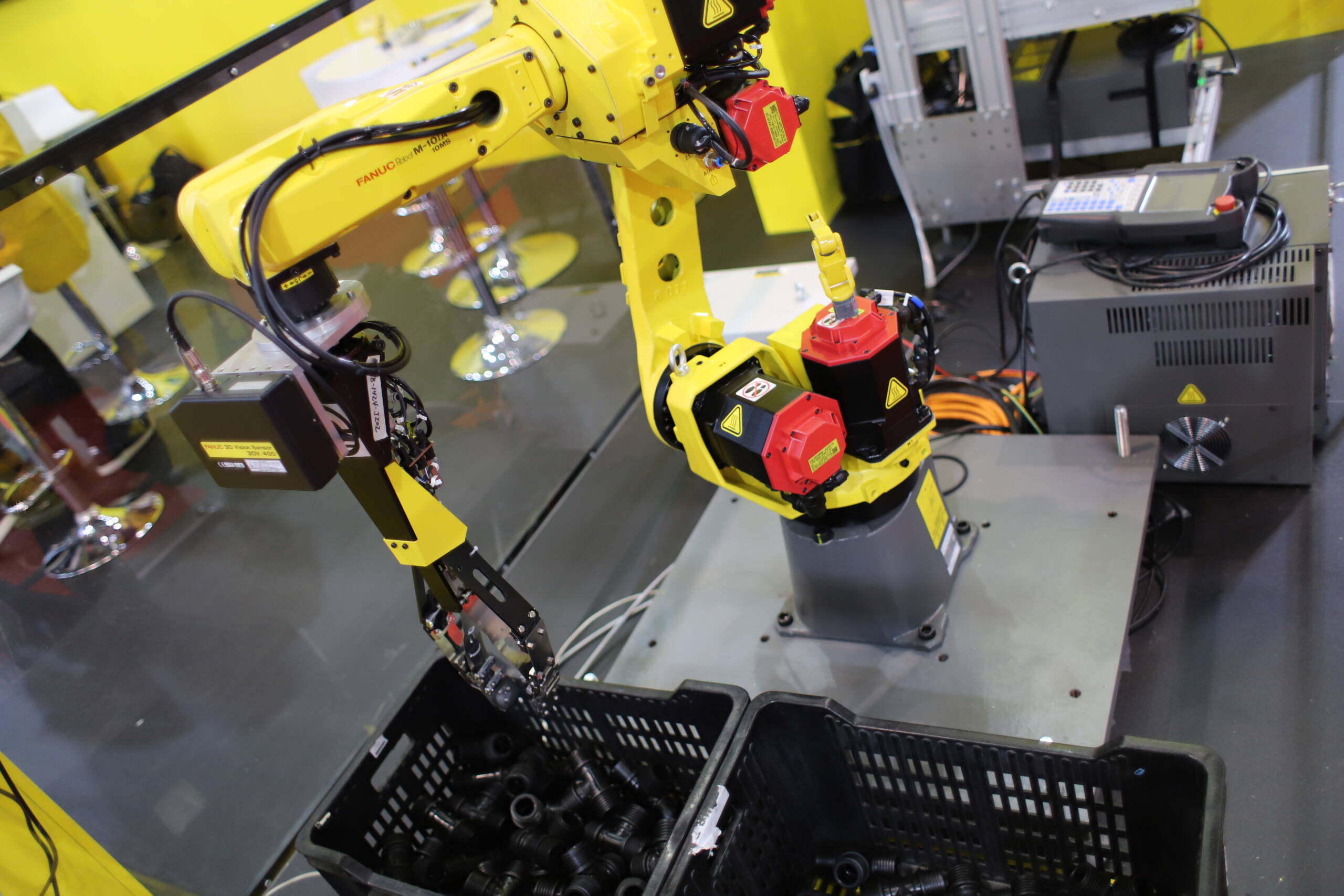
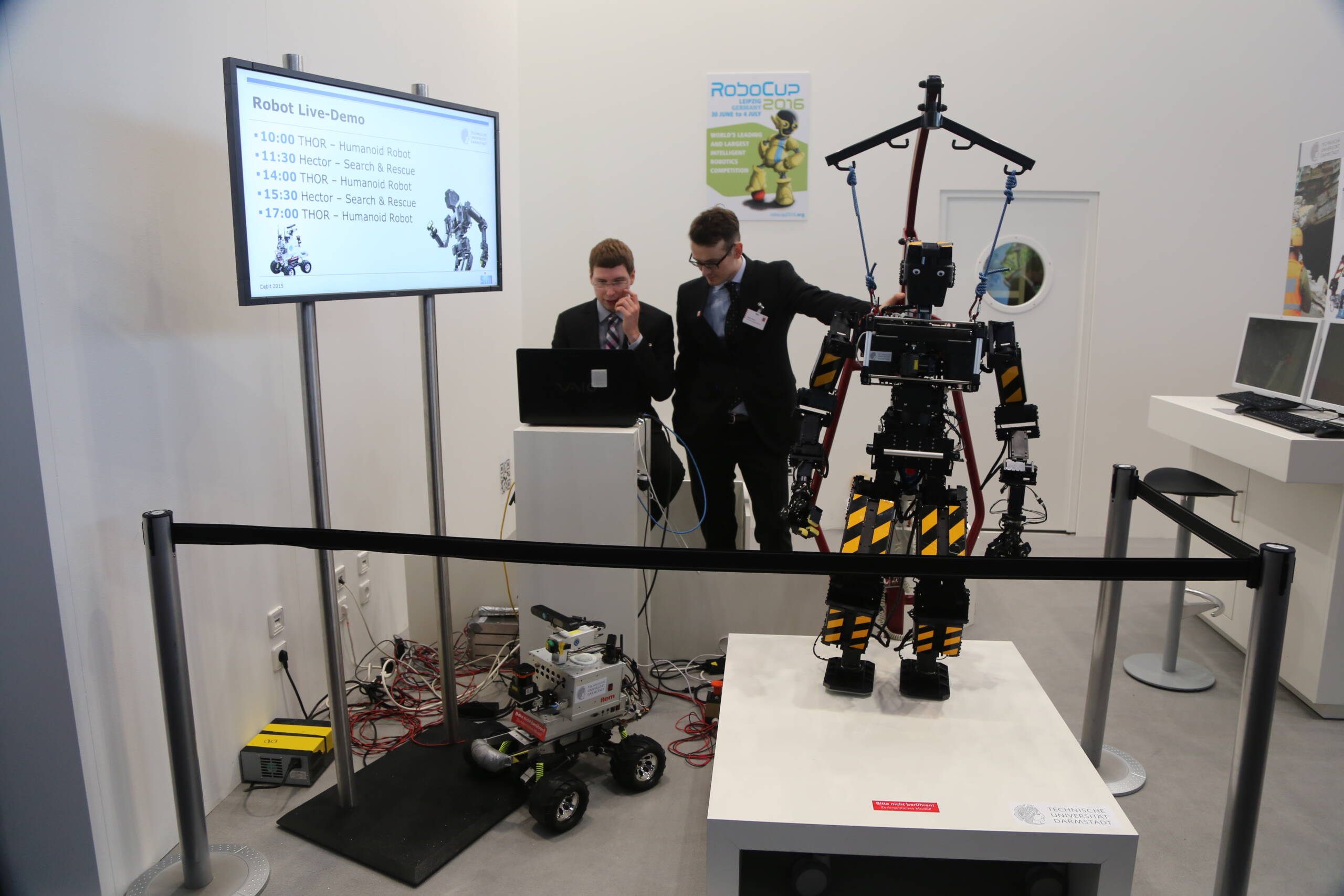
The more telling frame is the THOR humanoid. It’s standing, sort of, held up by an overhead rig behind a rope barrier while two engineers watch a laptop. A tracked rescue robot sits on the floor beside it. Now look at the FANUC arm reaching into a crate of loose parts with a 3D vision sensor. Put those two side by side and you get the whole argument about humanoid robots without writing a word. One of them is doing the job. The other is being held up for the demo.
Ports are the physical side of tech
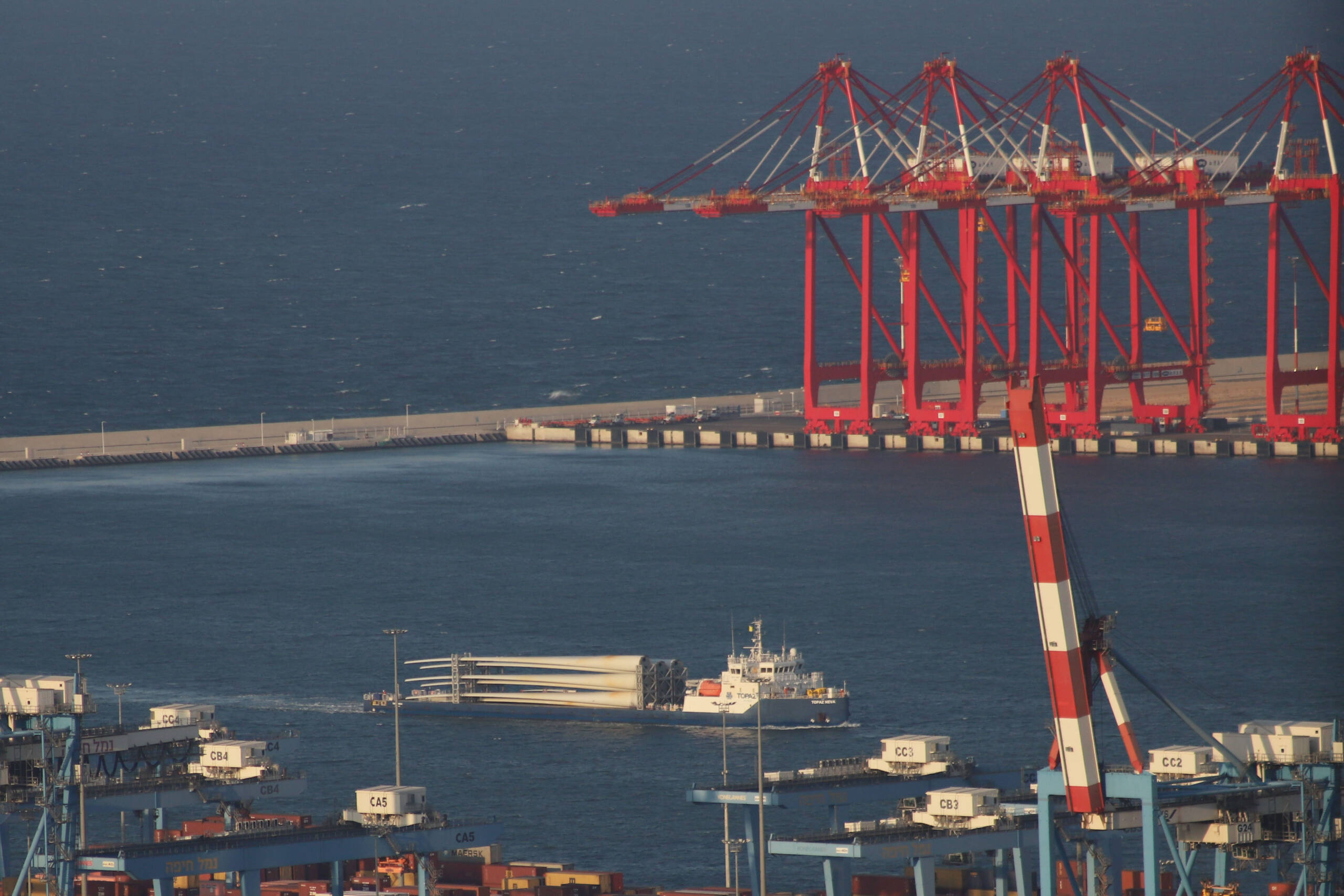
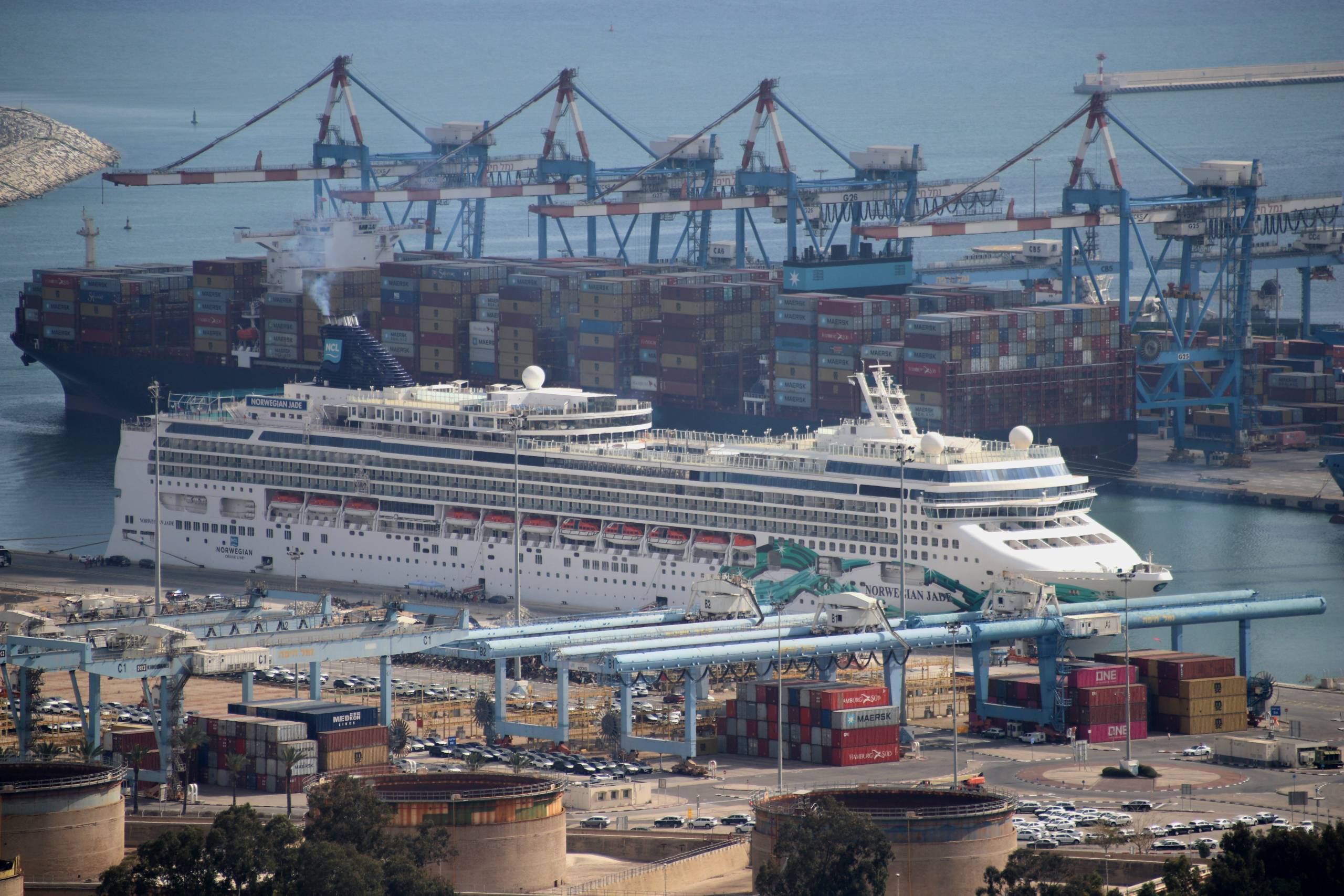
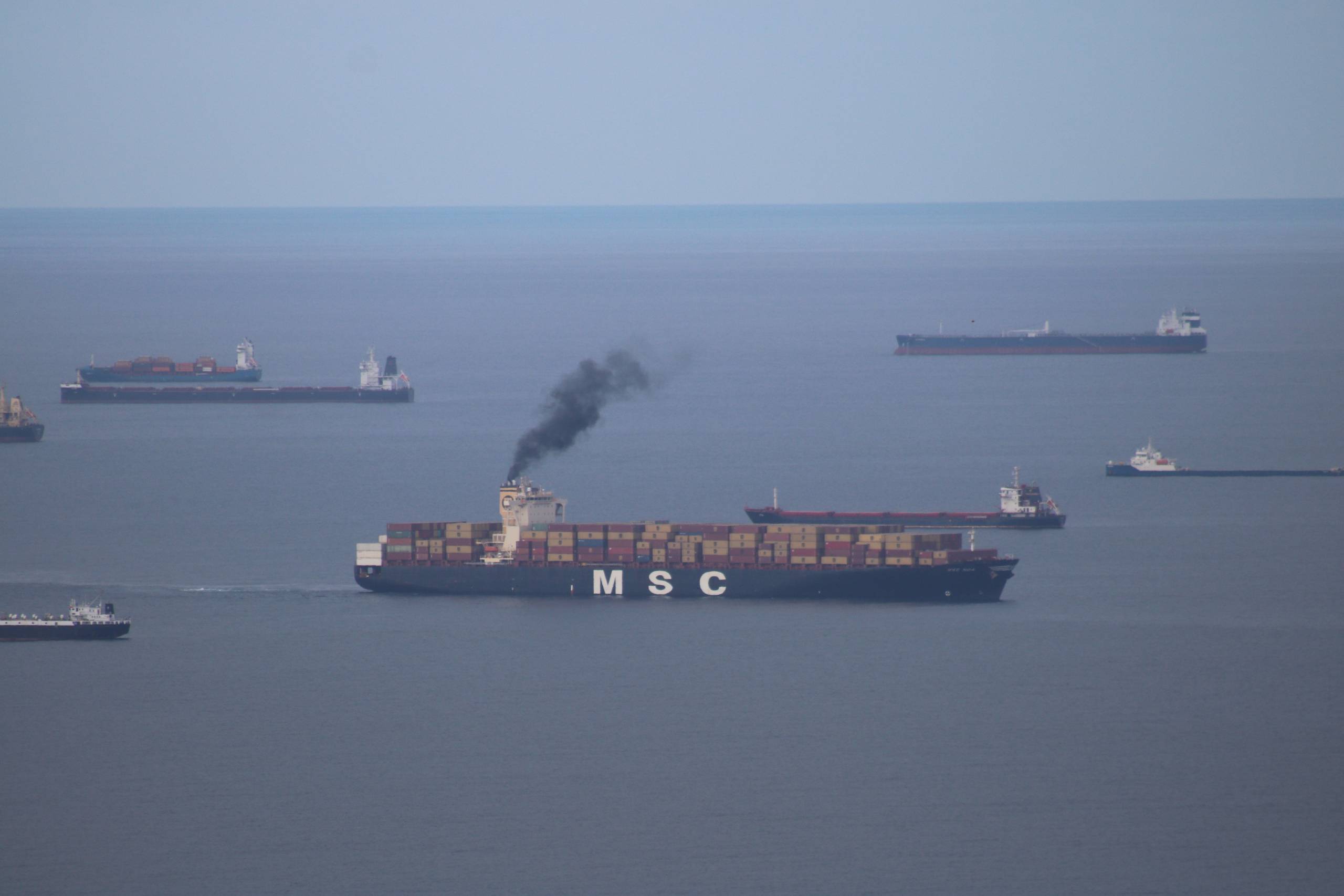
Tech coverage tends to forget the boats. Almost everything on a trade show floor came through a port like the ones here. Wind turbine blades crossing a harbor on a cargo ship, dwarfed by red container cranes. A cruise ship parked in front of a container terminal. An MSC container ship trailing black smoke while other ships sit at anchor around it.
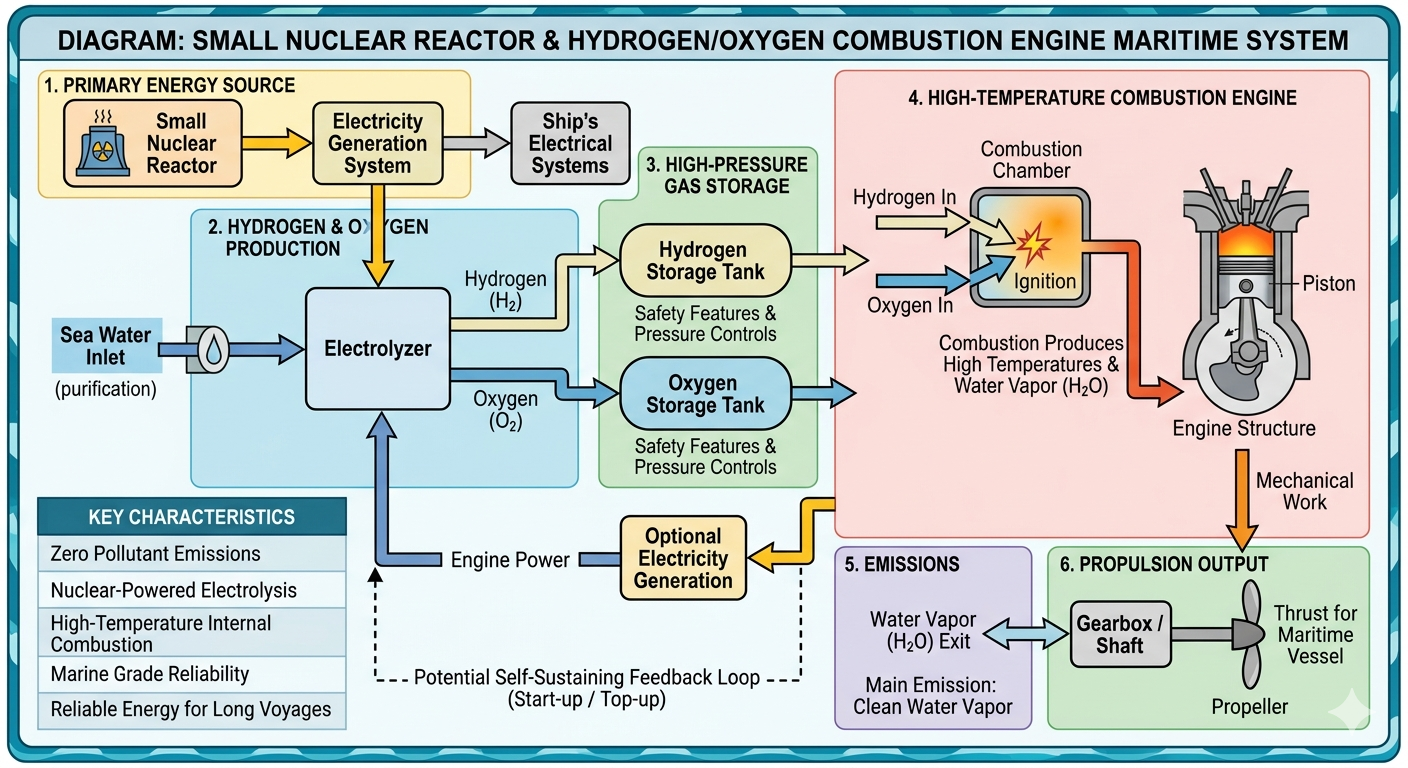
That last one does something a chart can’t. Emissions figures are abstract. A smudge of black smoke over flat grey water isn’t. Pair it with the diagram of a nuclear and hydrogen ship propulsion system and you’ve got the problem and one proposed fix on the same screen.
When a photo isn’t enough
Two of the images aren’t photos at all. One maps how AI models reach vector databases through the Model Context Protocol, the other lays out that ship propulsion system. They exist because some systems only make sense as boxes and arrows. A photo of a server room tells you nothing about how a model finds its context. A good diagram does.
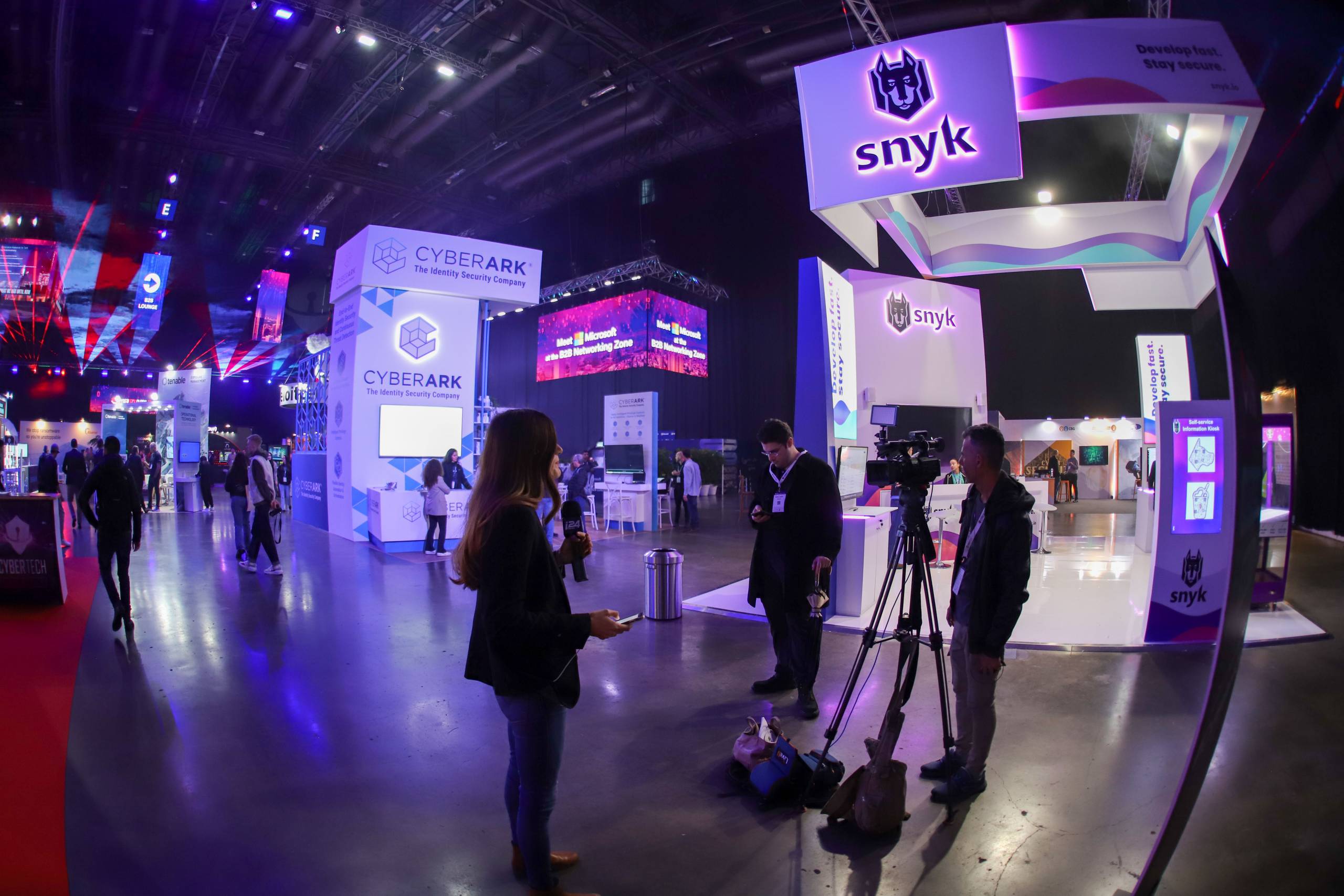
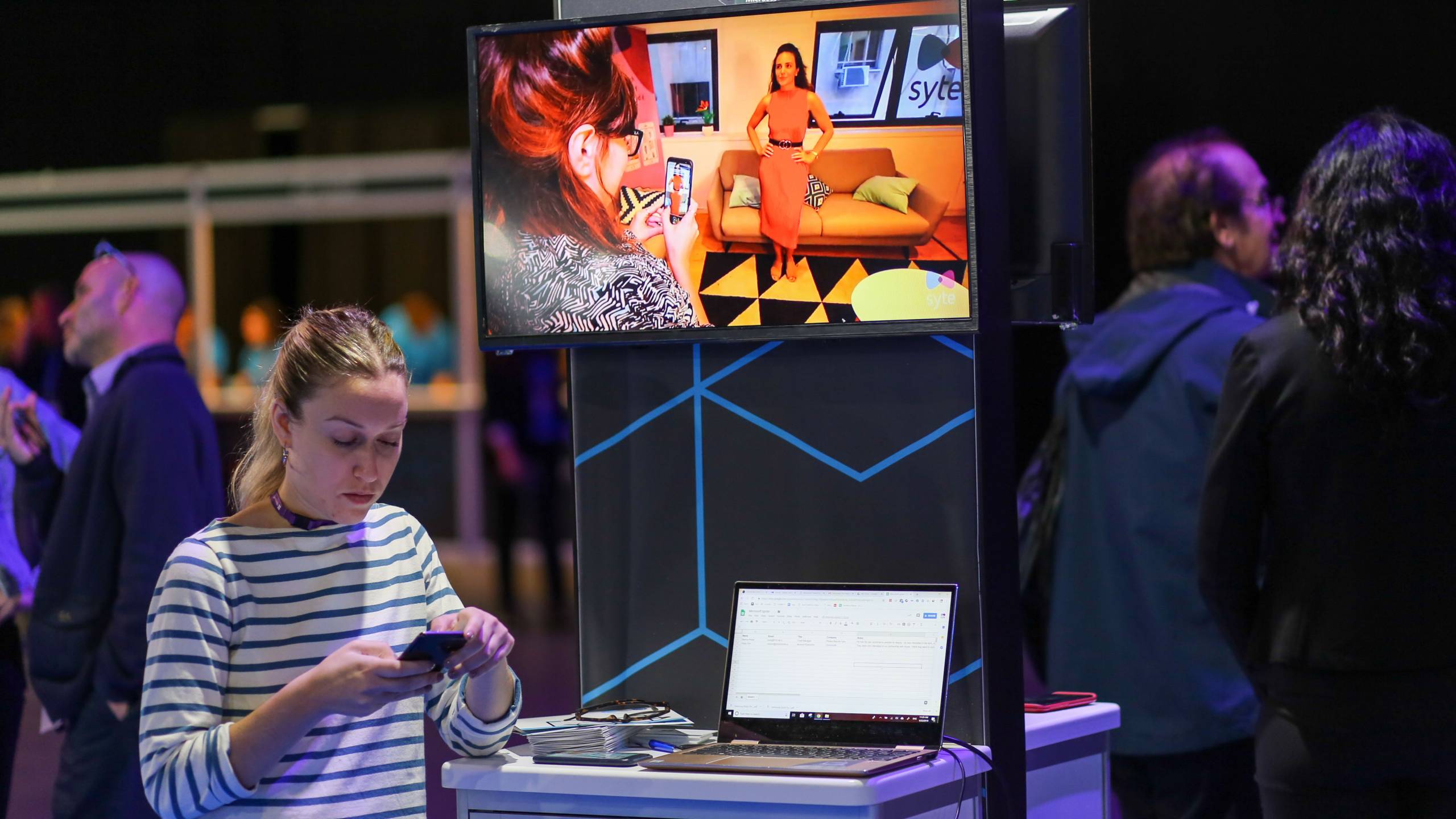
The rest of the gallery sits somewhere between those two modes. The Microsoft AI Tour crowd in Tel Aviv, pressed around an Ask the Experts booth. A video crew setting up between the Snyk and CyberArk stands. A woman checking her phone at a visual search booth while the demo loops on the screen above her. She isn’t looking at it. That’s a story too.
Hover over any image to see its title. Click it to open it on its own page.
Start with the robots.