Every September the ground under the palm looks like this. A carpet of dates, thousands of them, in every colour from green through yellow and orange to a deep red brown, and nobody picks up a single one. Walk past on a hot afternoon and you can smell them going.
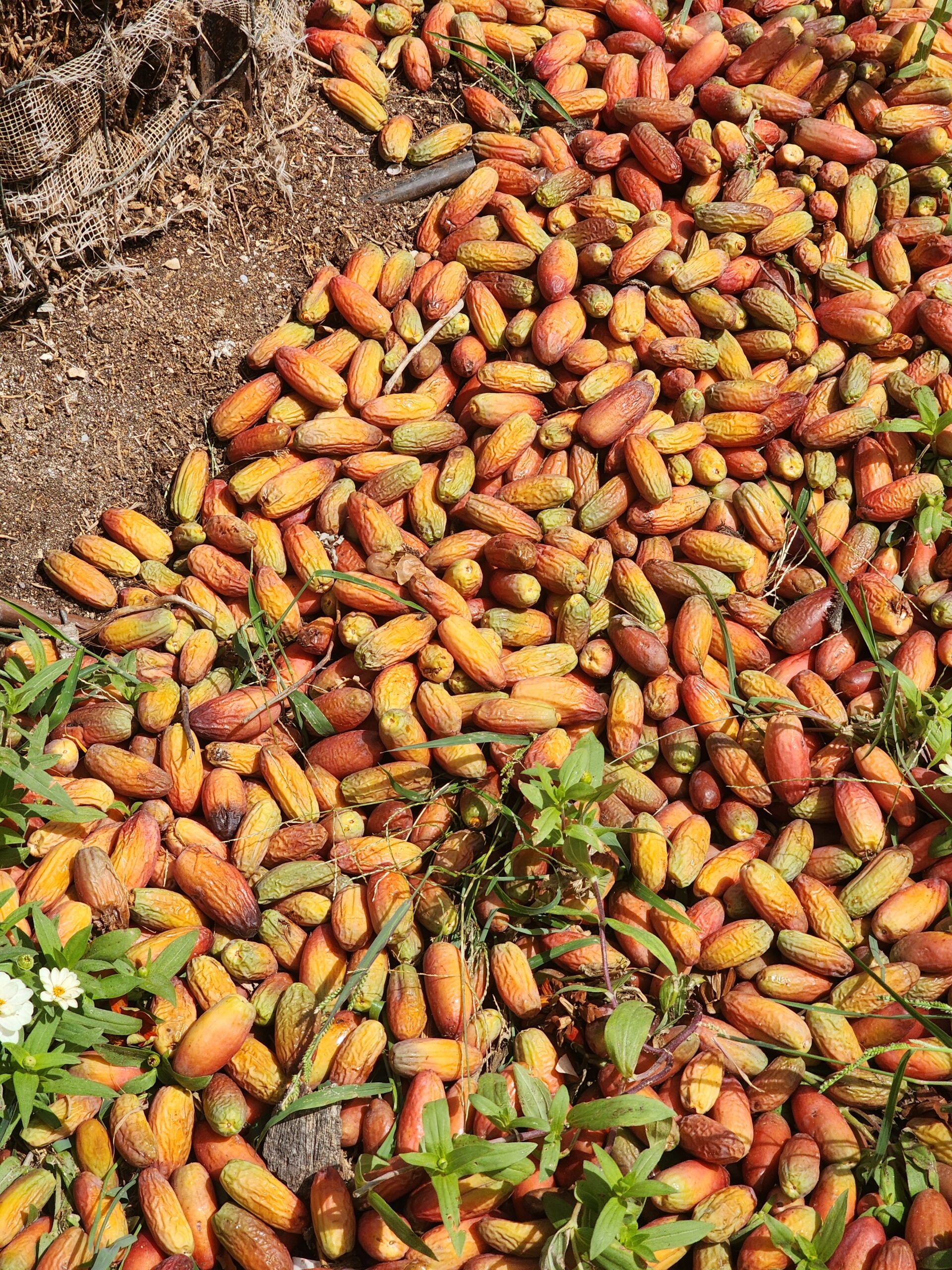
The colour is finished, the fruit isn’t
This is the khalal stage. The date has reached full size and full colour, it’s firm, and it’s still mostly tannin. Bite one and your mouth goes dry. The sugar arrives later, at rutab, when the fruit softens from the tip back and turns translucent amber, and by then the skin usually loosens and wrinkles.
Barhi is the exception everyone knows. Those yellow ones get eaten crunchy off the bunch, like a small apple, and they’re sold that way by the bunch in late summer. Most other varieties are unpleasant at this stage and there’s no cooking around it.
Look closely at the picture and a lot of them are already shrivelled. That’s not ripening. That’s a fruit that fell with its water supply cut, drying in the sun on a warm path. Different process, different result.
Why the tree drops them
A palm sets far more fruit than it can carry to the end. On a farm the bunches get thinned hard in early summer, half the strands cut out, and the remaining dates get bagged in mesh so they ripen on the tree and fall into the bag. This tree got none of that. It’s a garden palm, planted for shade and for how it looks, so it does the thinning itself by shedding whatever it can’t finish. Wind speeds it up. So do wasps and birds, which puncture a fruit, and the fruit lets go.
You can read the date of the drop off the ground, roughly. The reddest and most wrinkled ones have been down a while. The pale green ones came off yesterday.
What to do with the pile
Taste one first, because if it’s a barhi you’re standing on food. If it’s astringent, a few days in a paper bag at room temperature will sometimes carry the firmer ones to rutab, though fallen fruit is hit and miss and anything with a puncture will ferment instead of ripen.
The rest is compost, and it’s good compost, high sugar and it heats fast, so bury it under browns or you’ll be feeding fruit flies. Sheep and goats take them. Chickens take the soft ones.
What you shouldn’t do is leave them. Sugar on a warm path means wasps within a day and ants immediately, the stones are miserable underfoot, and once a few hundred of them start fermenting the smell sits under the tree for weeks. A stiff broom and ten minutes, once a week through the drop, and the tree stops being a problem.
The zinnias at the edge of the frame seem to be fine with it.