Photographers talk about light more than gear, and for good reason. The same scene shot at two different times can look like two different places.
Golden hour is the stretch just after sunrise and just before sunset, when the sun sits low and the light is warm and soft. Shadows are long, skin looks kind, and everything glows a little. It’s popular because it works.
The hour after
Blue hour comes in the twilight before sunrise and after sunset. The sky turns deep blue while city lights start to show, and the balance between the two is beautiful for about twenty minutes. Bring a tripod.
The photo shows the Miroir d’eau in front of the Place de la Bourse in Bordeaux, caught as daylight fades into early blue hour.
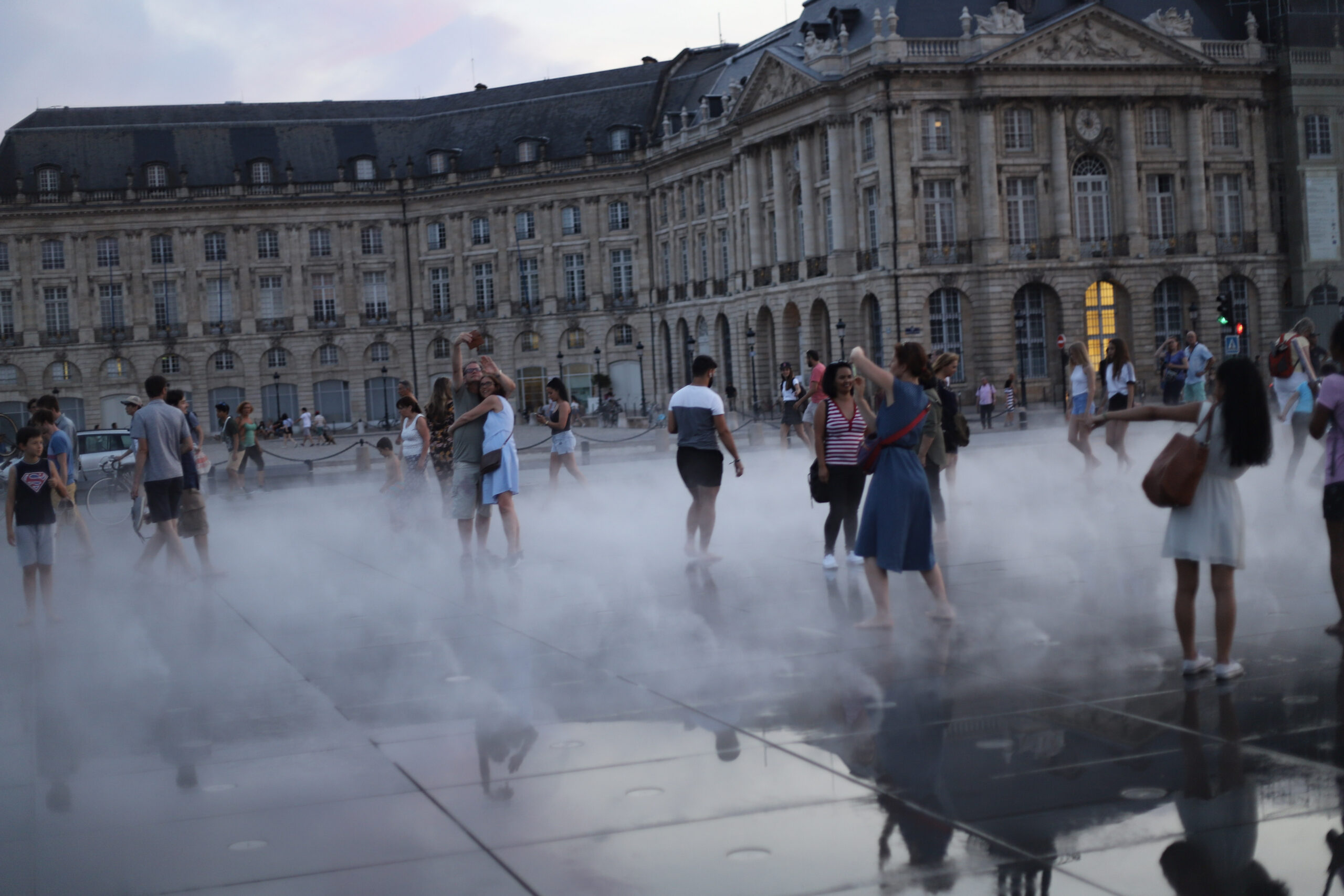
The whole frame sits in a cool colour cast. The sky above the roofline is a soft lavender-grey with a faint pink smudge at top left, the last trace of sunset. The pale limestone facade, which is warm honey by day, has turned to a muted grey-beige. The slate mansard roofs and pediment sculpture become dark blue-grey shapes against the sky. Nothing is in hard light. The shadows are soft and the contrast is gentle.
The warm colour that remains is very small and works well against all that blue. One arched window on the right glows amber, and a traffic light shows green and red. The street lamps along the arcade look unlit or barely on, so you’re at the start of the blue hour, not deep into it. The city is still using daylight.
The mist is the centrepiece. Low fog from the water mirror rolls across the plaza and takes on the same cool tone as the sky, so the figures seem to wade through cloud. It flattens the middle distance, softens the legs and feet of the crowd, and separates them from the building behind. Under the mist, the thin sheet of water turns the dark stone into a mirror. You can see blurred reflections of people and, at bottom right, a dark upside-down figure. The reflections are dim and a little abstract, which suits the low light.
The people add the human scale. Barefoot walkers, a couple hugging for a selfie, a woman in a blue dress mid-twirl with one arm raised, and a girl in a pale dress with her arms out. Their muted blues, whites and reds sit comfortably inside the palette, and the slightly soft, motion-blurred edges read as the longer exposure that dusk forces.
Midday gets a bad name
Harsh noon sun makes deep shadows under eyes and blown-out highlights. That’s true. But it’s great for graphic shots with hard shapes, and for places with strong colors, like a whitewashed village.
Overcast days are underrated. Clouds act like a giant softbox, spreading light evenly. Portraits, flowers, forests and wet streets often look better under grey sky than in bright sun.
So don’t wait for perfect conditions. Learn what each kind of light does, and pick a subject to match.