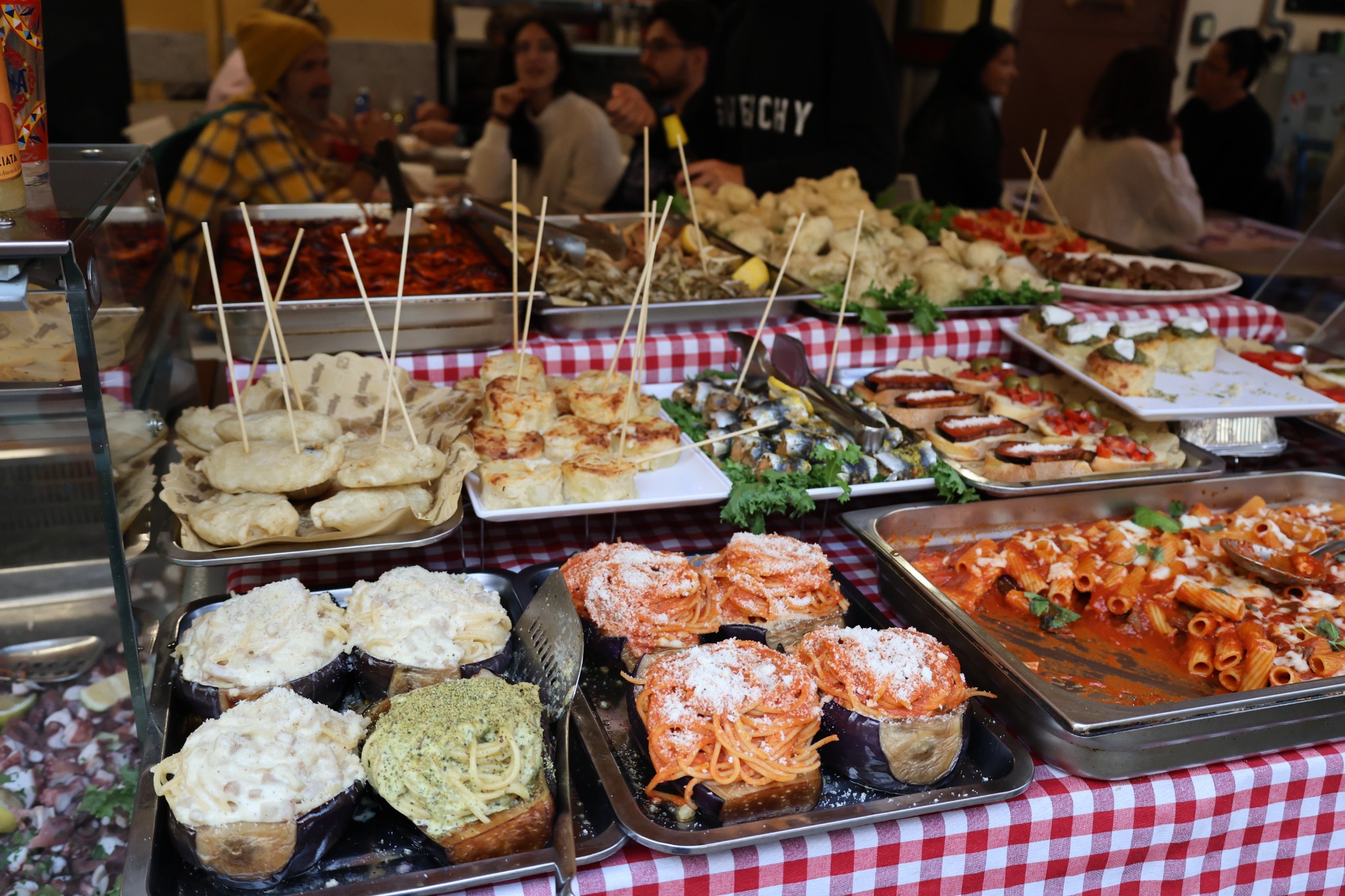
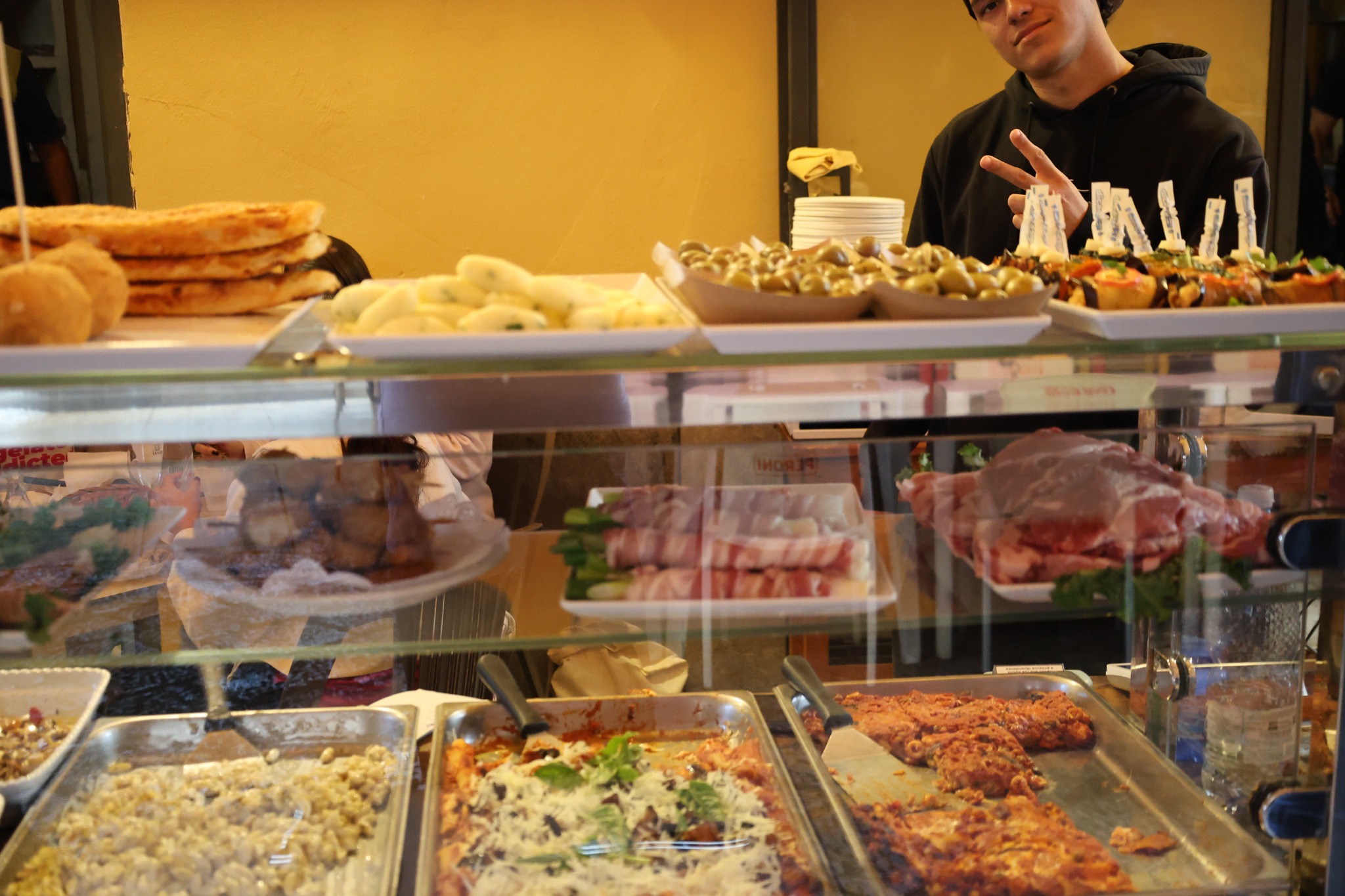
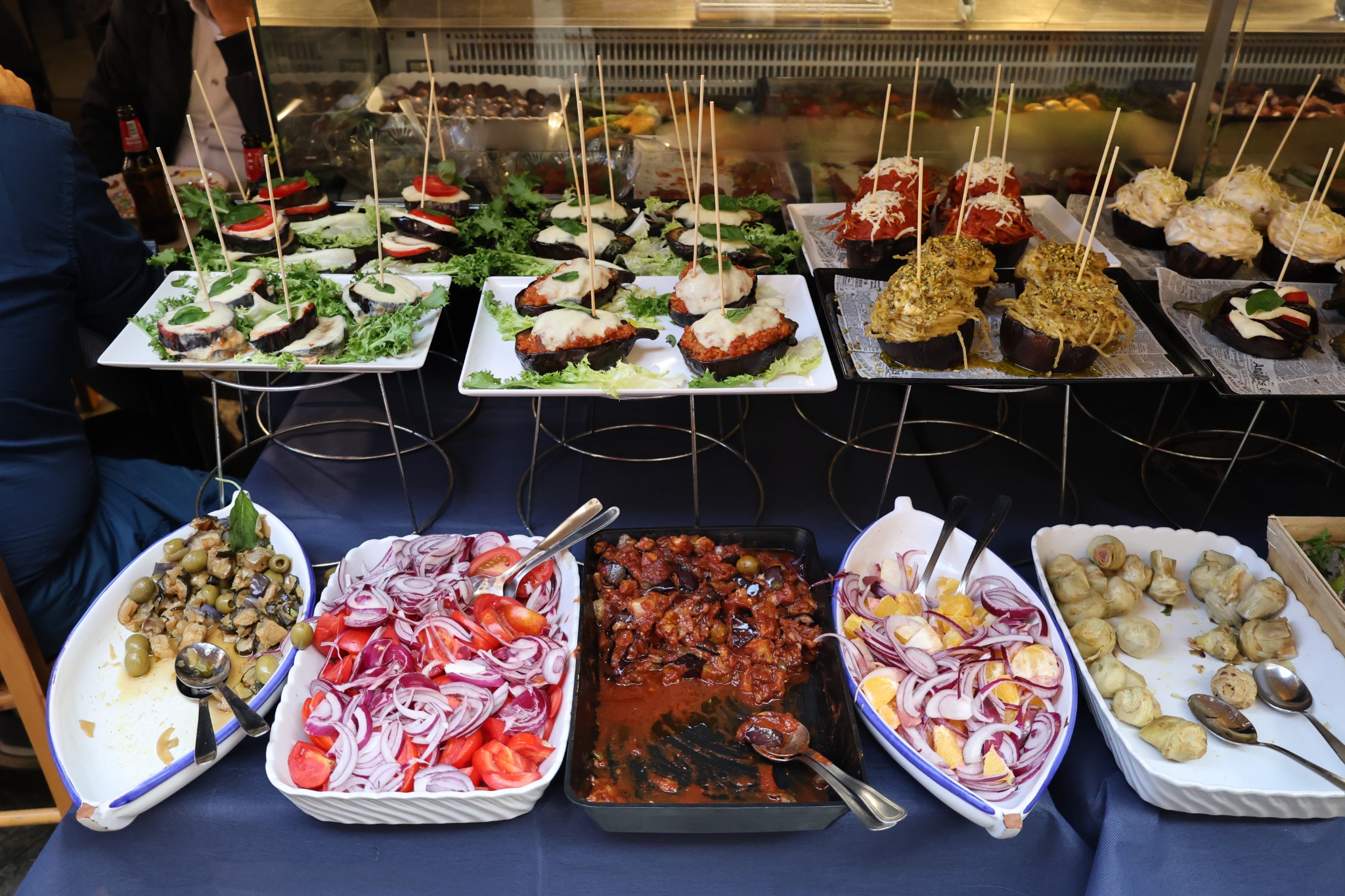
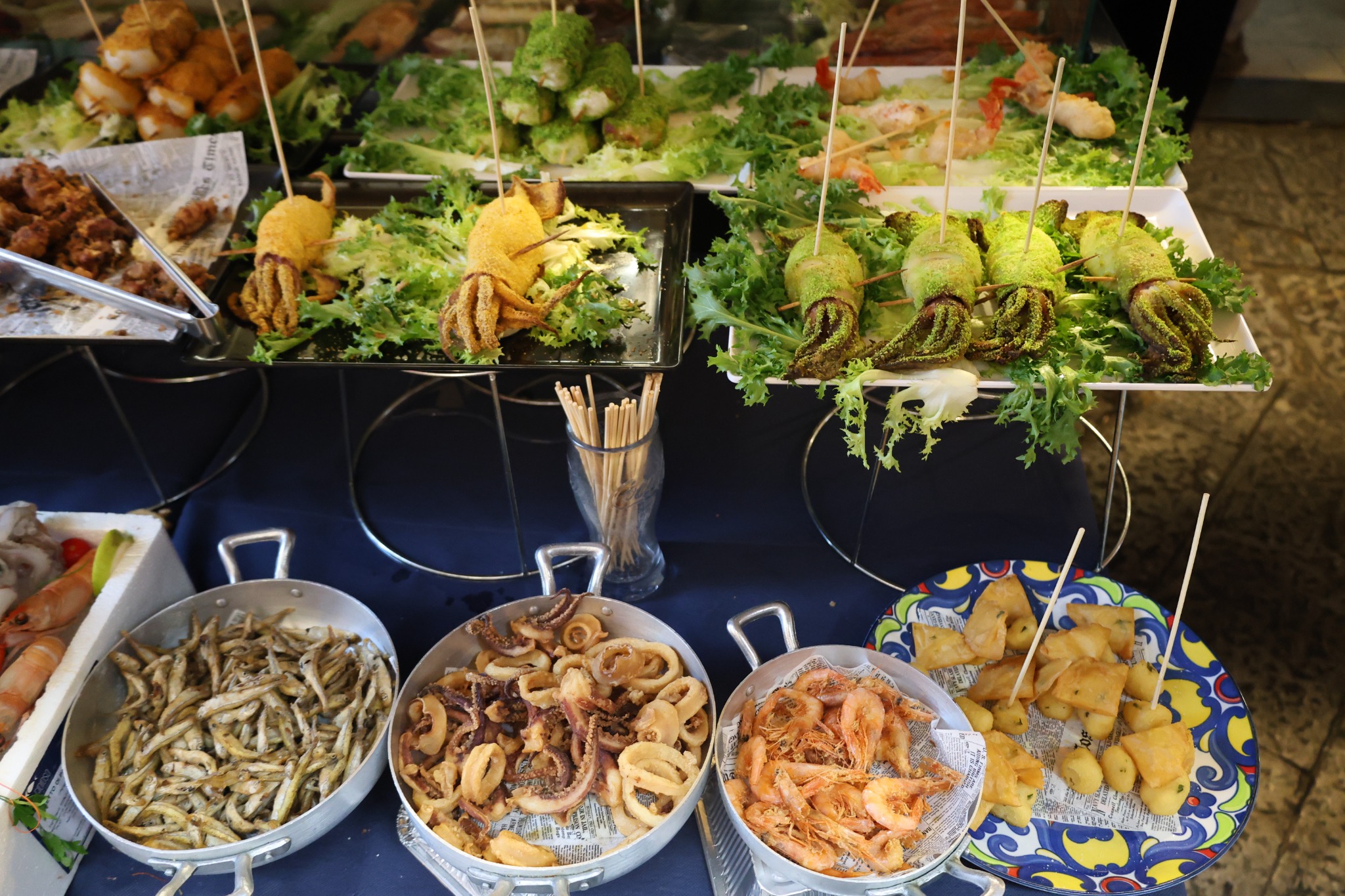
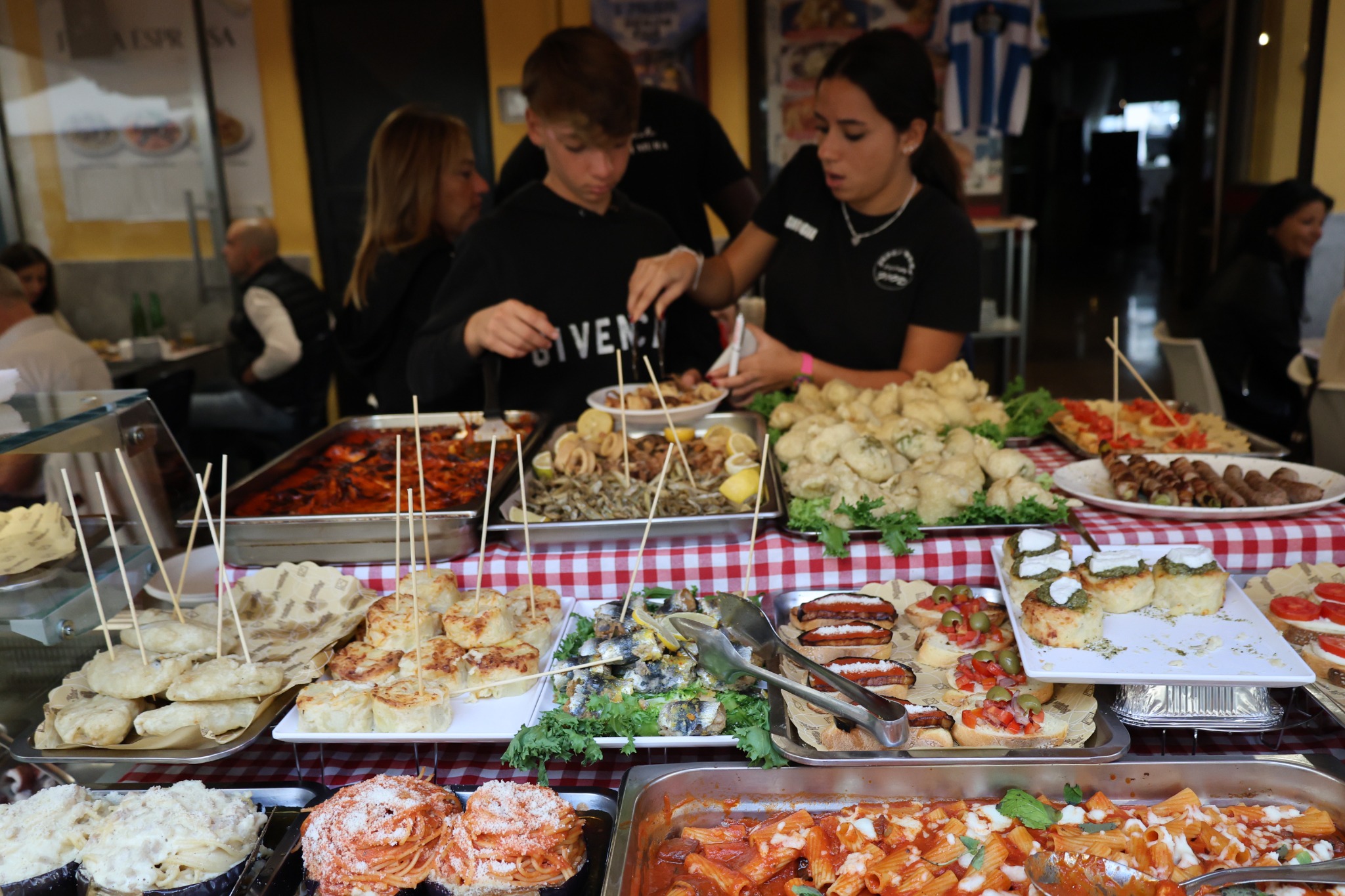
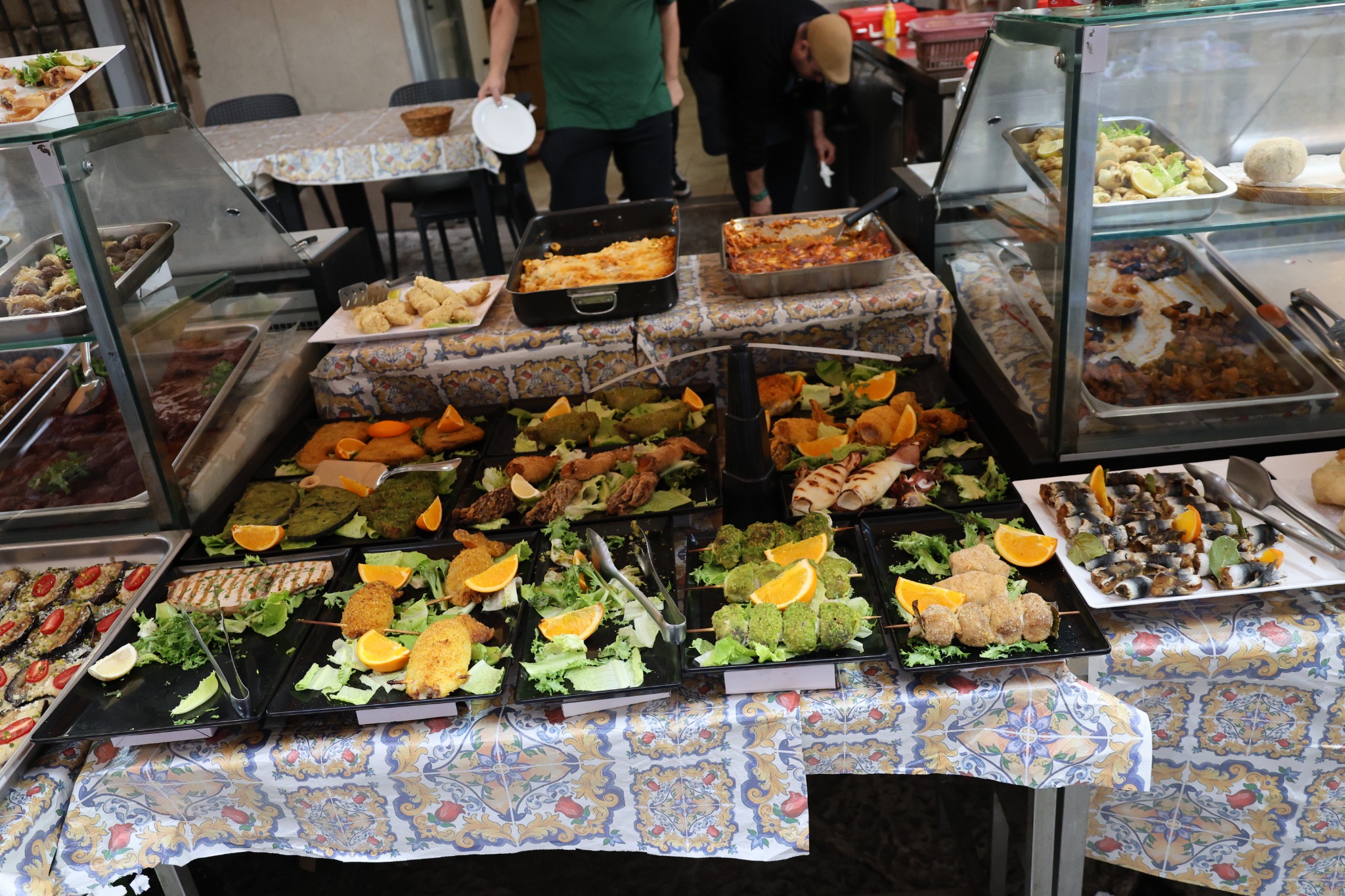
Palermo reveals much of its character through food displayed in the open: not just through the dishes themselves, but through the crowded counters, the people deciding what to order, and the cooks working inches away from the street. In these photographs, Sicily’s capital appears as an enormous, informal dining room. Trays of pasta, vegetables, fried seafood and bite-sized appetizers stretch across tables covered with checked cloth, while customers lean over glass cases to inspect the day’s offerings.
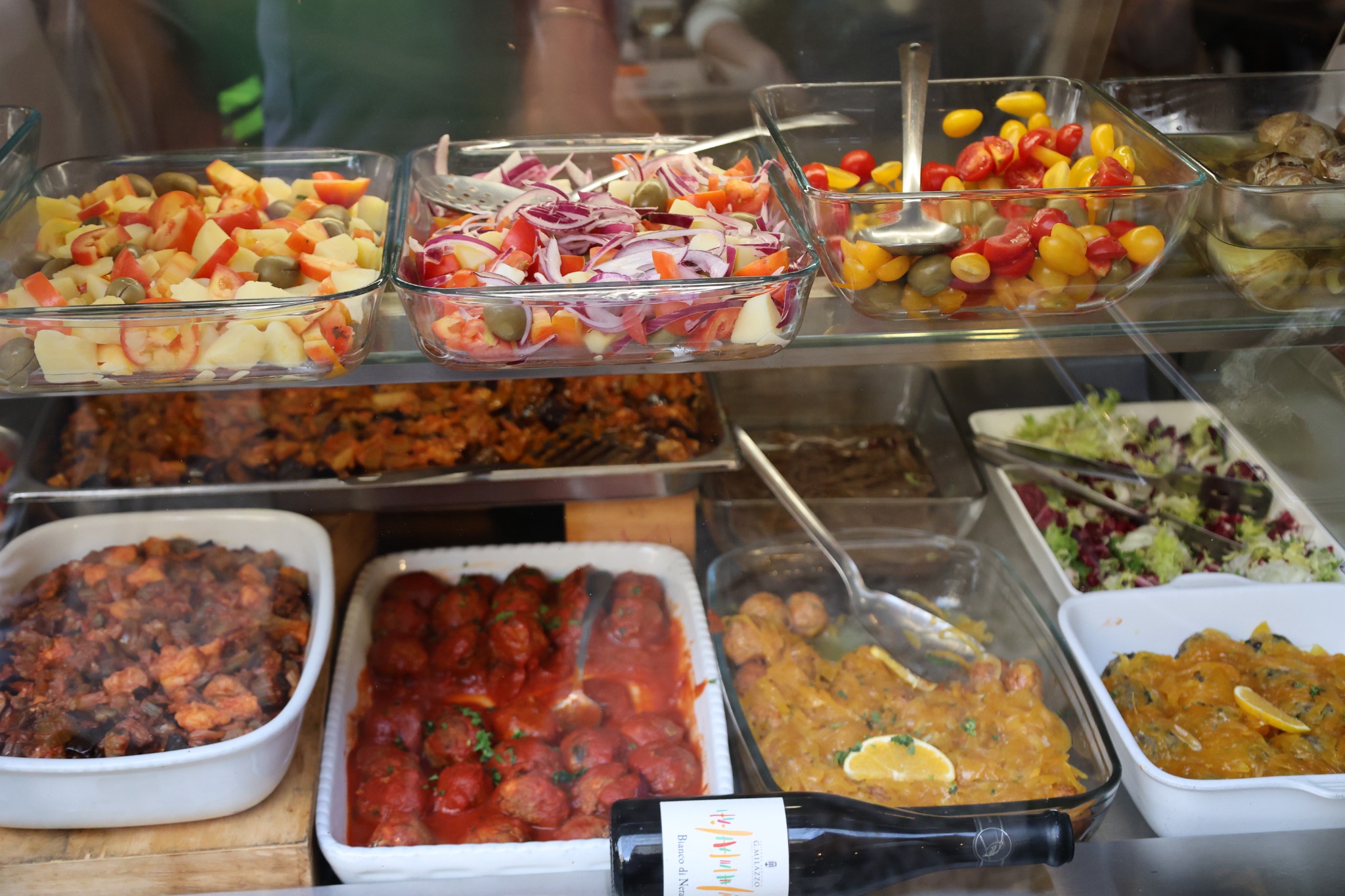
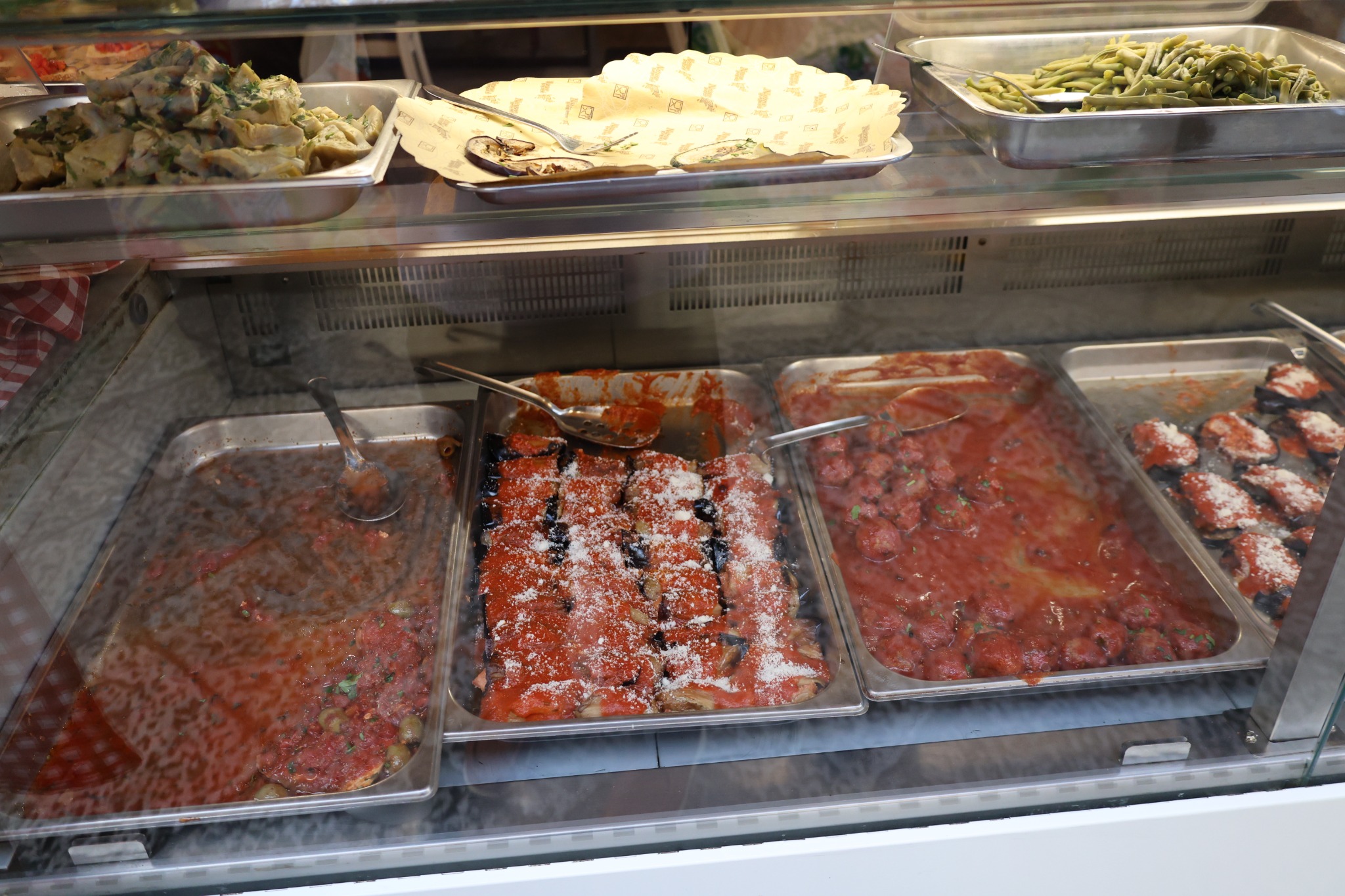
At first the sheer variety is almost overwhelming. There are portions of spaghetti perched on thick rounds of eggplant, pasta in bright tomato sauce, cheese-topped baked vegetables, bowls of olives and onions, and platters of antipasti arranged to be chosen by sight rather than by menu. Red, green and gold repeat from counter to counter: tomatoes and peppers, herbs and pistachio-colored coatings, lemon wedges and crisp breaded crusts. Some dishes look like something from a family kitchen; others are unmistakably designed for eating on the move.
Several of these photographs have their own stories on Tavolata.org: the Capo Market counter of salads and meatballs, the extraordinary variety of eggplant dishes, and Palermo’s anelletti al forno, the baked ring pasta. They turn the busy visual displays into stories about ingredients, preparation and everyday eating.
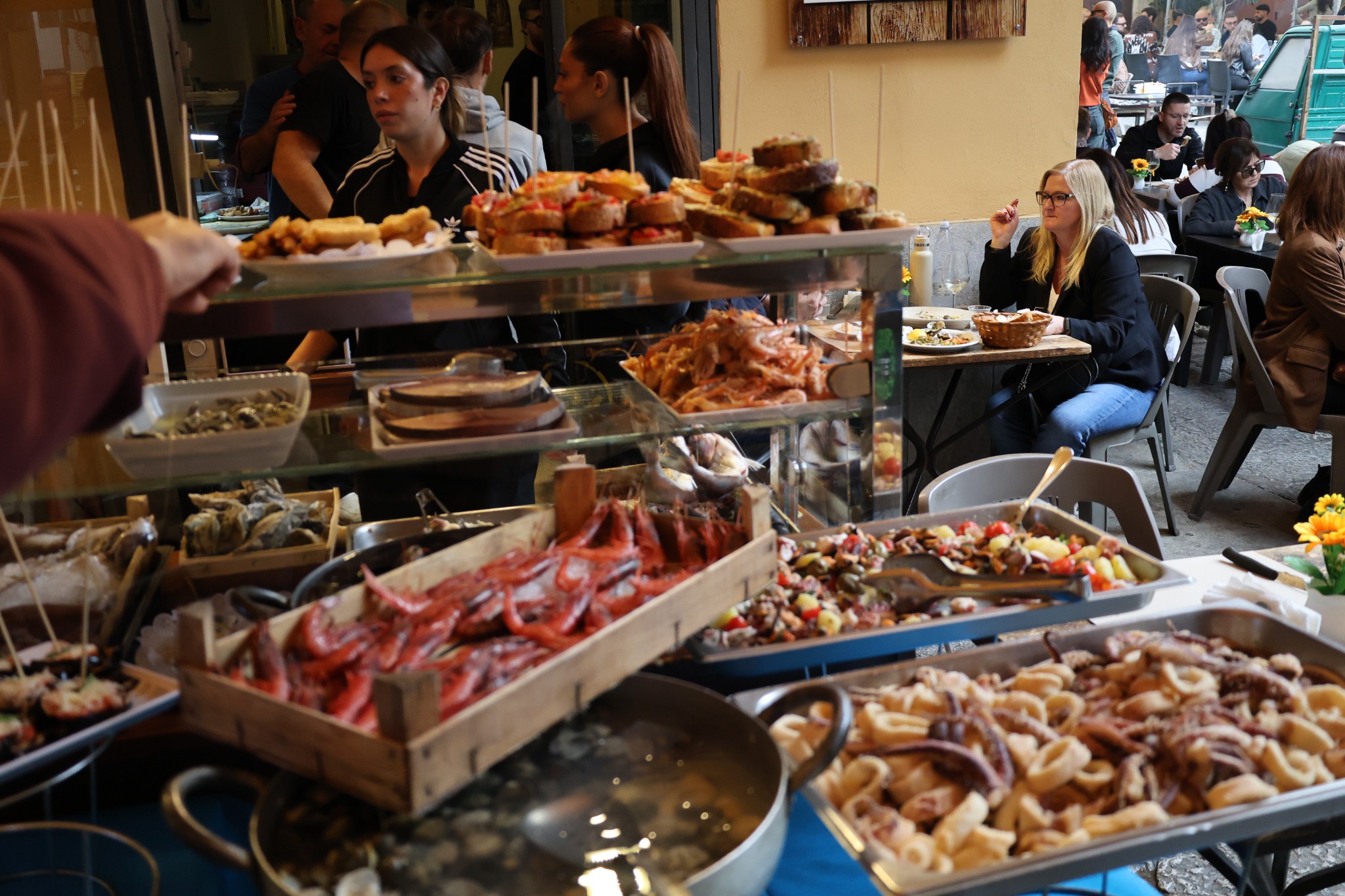
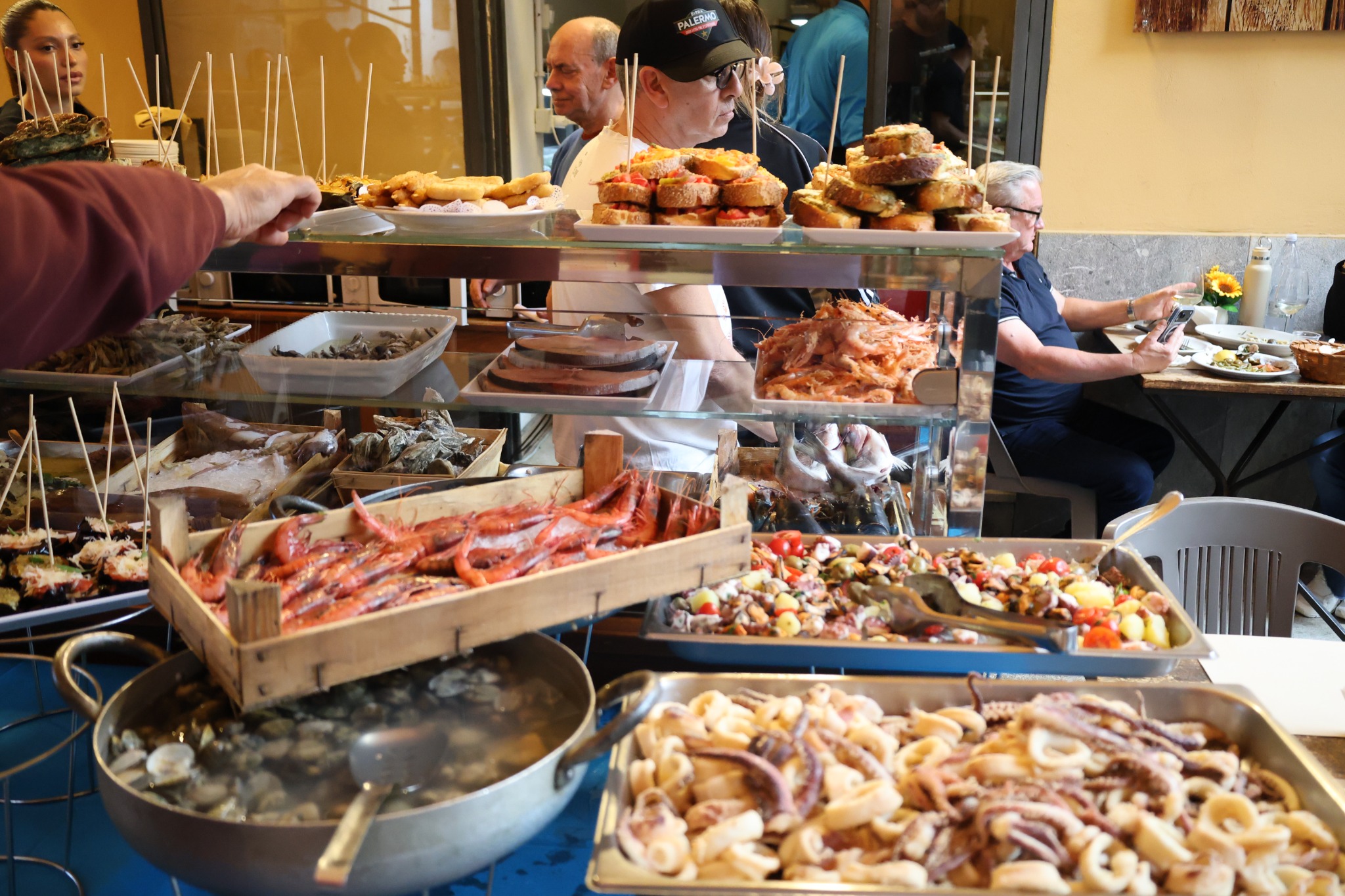
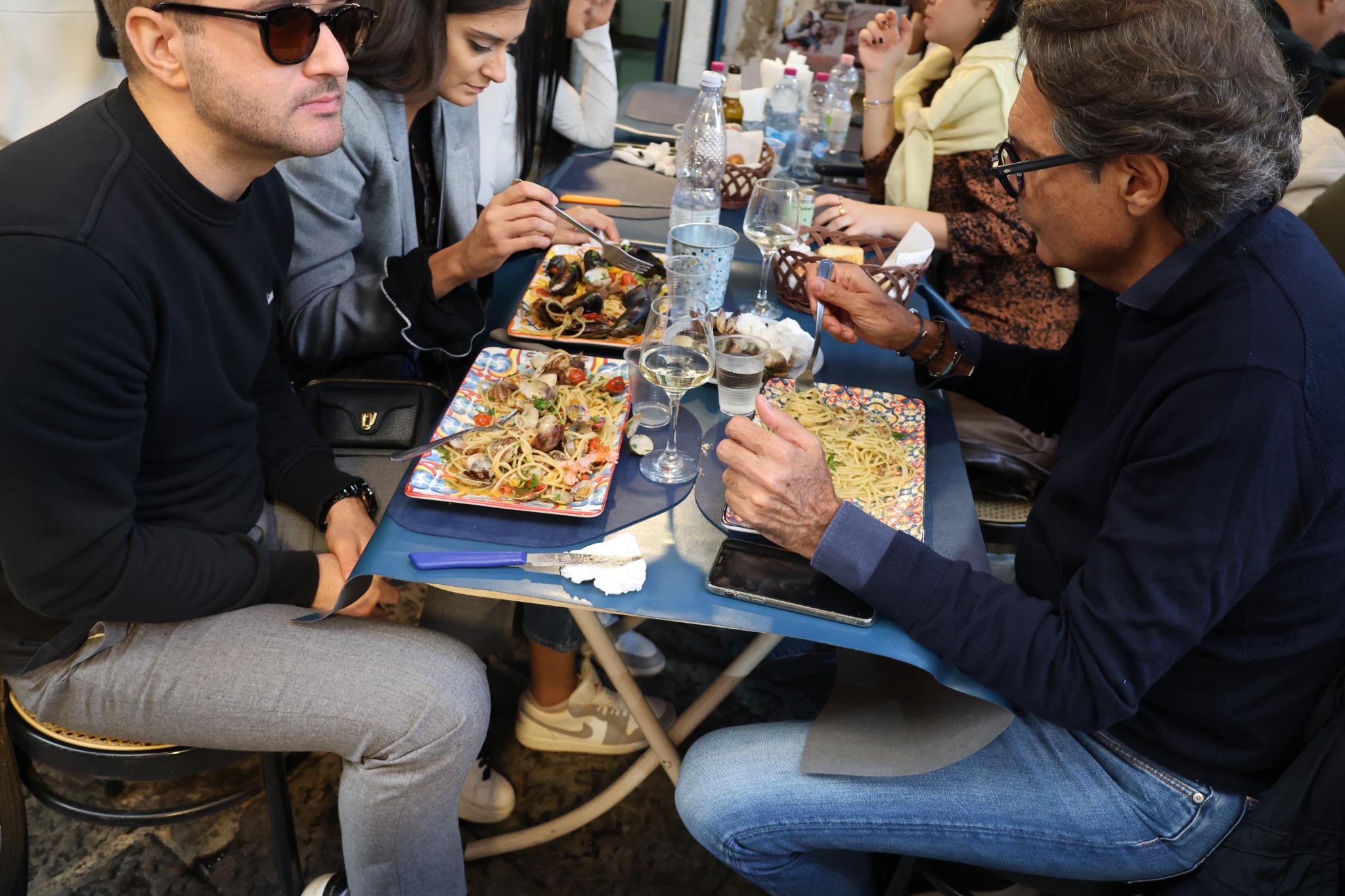
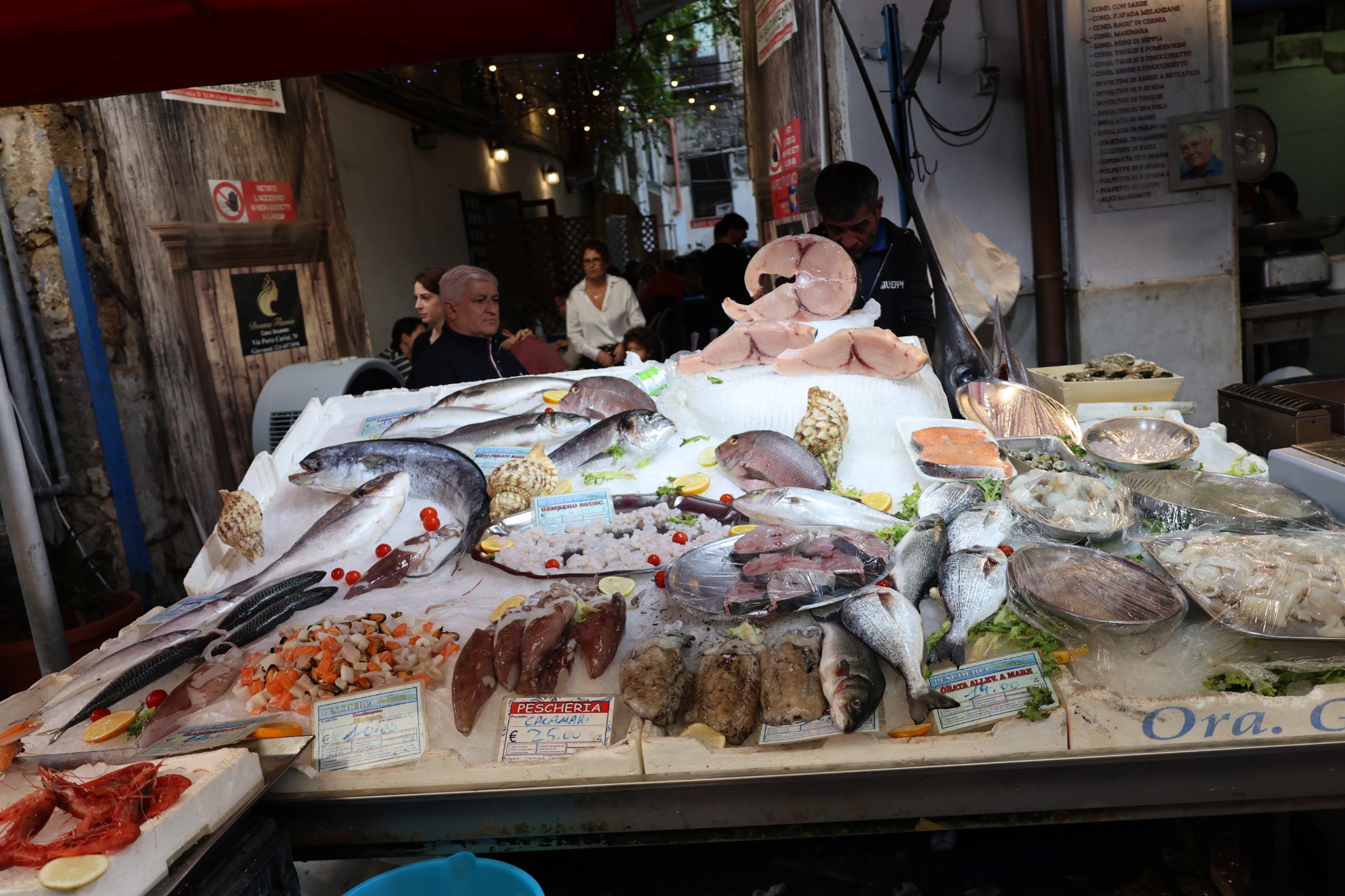
Seafood occupies a place of its own in this visual story. One stall presents gleaming whole fish, squid and cut steaks over ice; another turns the catch into ready-to-eat calamari, little fried fish, prawns and mixed seafood salads. Nearby, diners settle in at narrow outdoor tables with pasta and wine. What the market offers and what a restaurant serves are closely connected here, at least to the eye: ingredients and finished meals share the same streets.
The catch on ice deserves a closer look. Tavolata.org explains the fish, swordfish cuts and price cards in How to Read a Fish Stall at Capo Market. For a wider view of street food and market shopping across Palermo, see its guide to Ballarò Market.
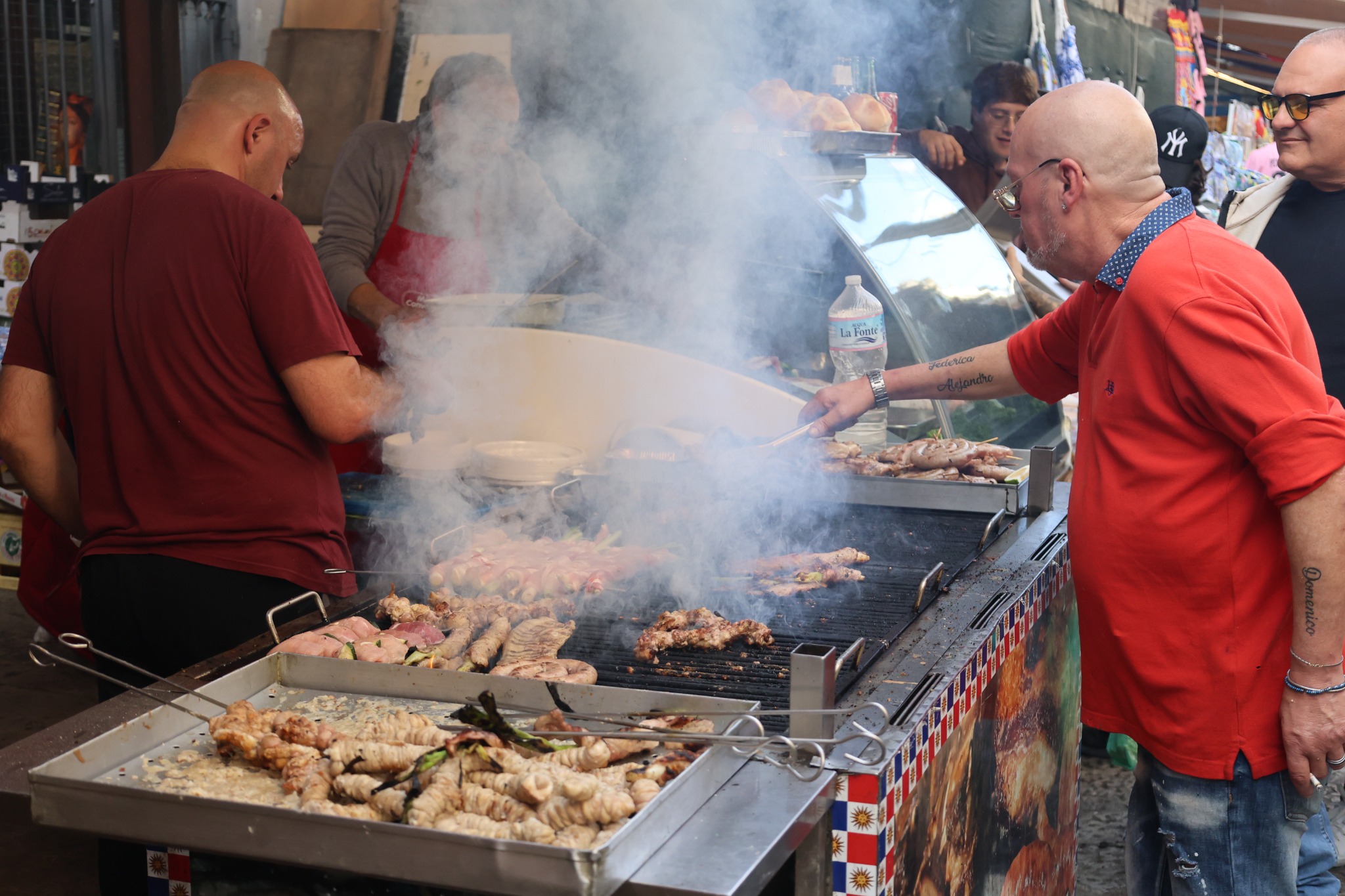
The photographs also catch the social side of eating in Palermo. Staff serve from behind the counter, customers gesture and compare plates, and tables spill into pedestrian spaces. The last scene is different in texture and atmosphere: an open grill enveloped in thick smoke, with cooks attending food over the heat. It is a reminder that the city’s food is experienced through sound, smell and movement as much as through taste.
The outdoor tables in these scenes are another part of the story. Tavolata.org explores that custom of gathering around food in What a Tavolata Is: The Shared Table of Southern Italy, a companion piece about the social meaning of a shared meal.
Together, these thirteen scenes make a photographic walk through Palermo’s everyday food culture. The point is not to rank restaurants or pretend that every delicacy can be identified from a photograph. It is to show the abundance, the craft and the wonderfully unruly immediacy of eating in a Sicilian city.