In 1947, a group of photographers founded a cooperative in Paris. Robert Capa, Henri Cartier-Bresson, David Seymour and George Rodger were among them. They called it Magnum Photos.
The idea was simple and a bit radical for the time. The photographers would own their own work. They’d keep their negatives and their copyright, choose their own assignments, and decide how their images got used. Magazines could license the pictures, but they couldn’t own them.
Why that mattered
Before that, a photographer on assignment usually handed everything to the publication. The picture belonged to the magazine, and the photographer moved on to the next job. Under the cooperative model, a photo could earn money for decades and be sold to many buyers.
It also changed the work itself. When you own the archive you can afford to shoot a long personal project that no editor asked for, because you know the pictures will still be yours in ten years.
One courtyard, a lot of content
You can see the question play out at any press event. Picture a sunlit courtyard beside a tall sponsor banner. One man holds a handheld mic with a flag on it. The man across from him wears over-ear headphones and holds a recorder, listening hard, while a crowd of lanyards drifts past behind them.
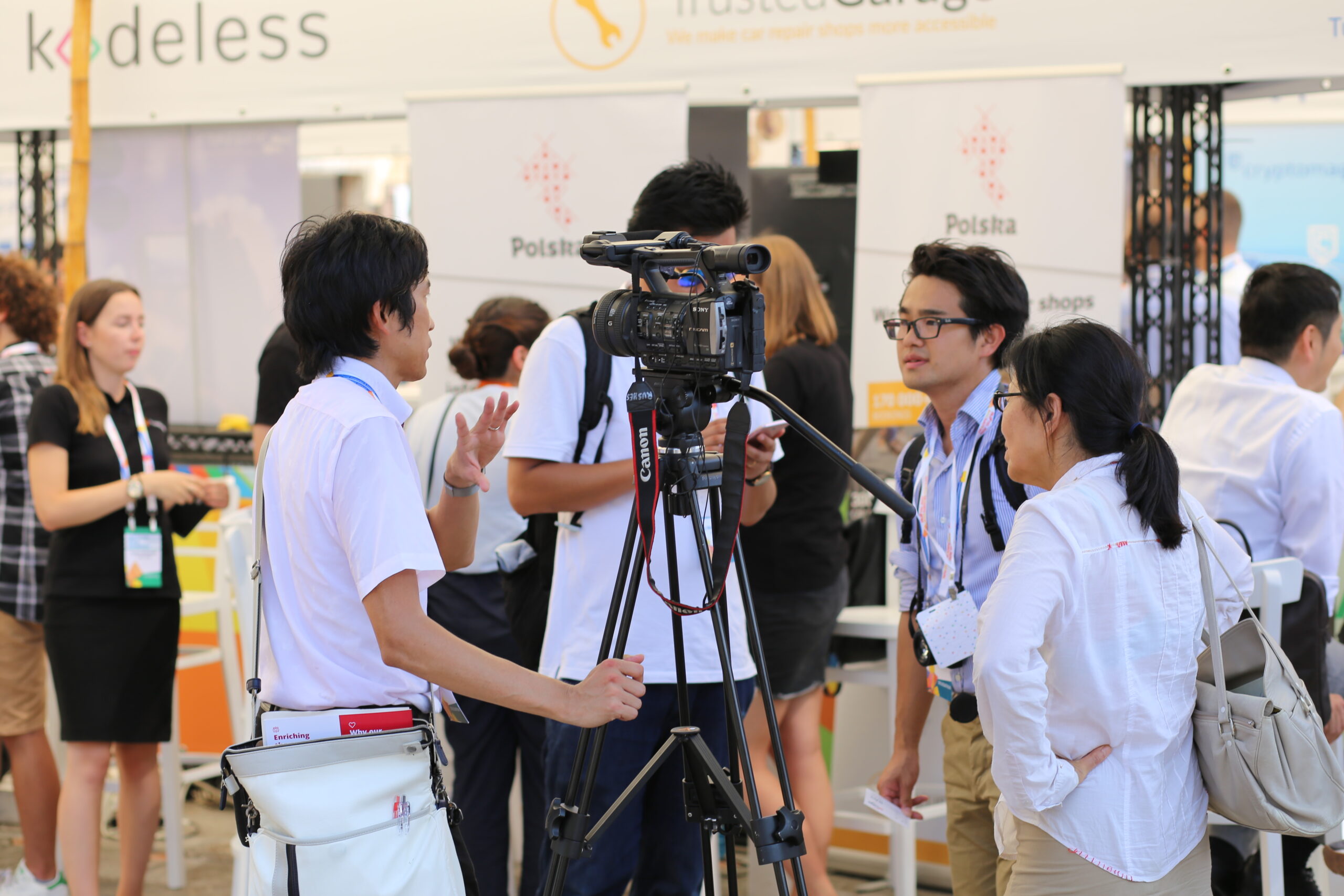
Step closer and there’s another scene. A camera operator crouches behind a broadcast camcorder on a tripod. A man in a white shirt gestures as he explains something, and two others listen. Exhibitor banners fill the background.
Every one of those moments produces something that can be sold or reused. There’s the interview audio, the video, and the still frames of both. Someone owns each one, and it’s often not the person who made it. A staff cameraman’s footage usually belongs to his outlet. A freelancer’s depends on the contract. The photograph of the scene belongs to whoever pressed the shutter, and that person can license it, republish it, or hold it back for a project that only makes sense years later.
Still relevant
Today’s photographers deal with the same questions on new platforms. Who owns the image? Who can license it? Who gets paid when it’s reused a million times?
A conference makes a good test. Dozens of people shoot the same courtyard in the same hour, and afterwards each of them faces the same question about who holds the rights to what they made.
Magnum’s answer was to keep the rights with the person who pressed the shutter. It still sounds sensible.