Six stories worth an extra minute this morning. One of them is a robot market that turns out to be a research market, and one is an accounting structure that lets the biggest buyers of AI hardware keep the bill somewhere other than their own balance sheet.
About 7,000 humanoids sold worldwide last year, and many of them aren’t working
The industry figure for 2025 is roughly 7,000 autonomous humanoid robots sold globally for industrial and professional use. That’s the whole planet, across every vendor, in a year when humanoids were the most photographed machines in technology.
The caveat inside the number matters more than the number. A large share of those units went to research buyers: universities, corporate labs, integrators building demos. They were bought to be studied, not to move a pallet. Strip those out and the population of humanoids doing paid work somewhere is small enough to fit in a couple of large factories.
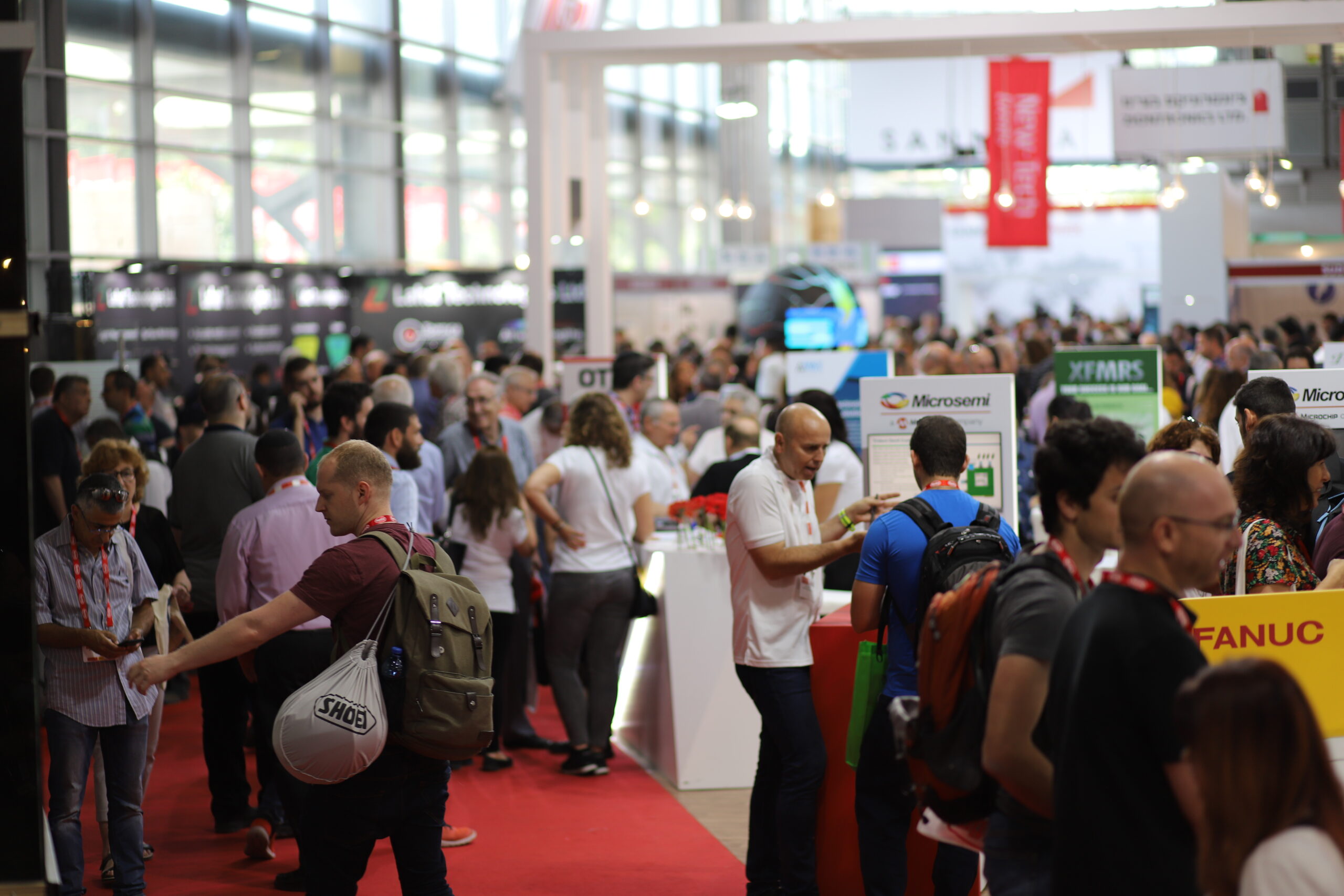
- International Test Conference 2026, October 11–16, Grand Hyatt San Antonio River Walk, San Antonio
- AUSA Annual Meeting & Exposition 2026, October 12–14, Walter E. Washington Convention Center, Washington DC
- SEMICON West 2026, October 13–15, Moscone Center, San Francisco
- Fal.Con Europe 2026, November 2–4, Fira Gran Via, Barcelona
- A3 International Robot Safety Conference 2026, November 3–5, Huntington Place, Detroit
- Humanoids Summit Silicon Valley 2026, December 1–2, San Mateo County Event Center, San Mateo
- Sohn London Investment Conference 2026, November 18, London Marriott Grosvenor Square, London
- SuperReturn Secondaries North America 2026, November 17–18, Convene 360 Madison, New York
- Singapore FinTech Festival 2026, November 17–20, Singapore Expo, Singapore
- SuperReturn Europe 2026, November 3–6, Hotel Okura, Amsterdam
That isn’t an argument the category fails. Early industrial robots sold in similar volumes before the automotive lines standardised on them. It’s an argument about timing. When you see a chart of humanoid unit growth, ask how many of those units are research platforms, because a research platform doesn’t re-order at scale and doesn’t prove an ROI case to the next buyer.
The iPhone 18 Pro moved its brain off the logic board
The teardown finding that stands out: the SoC no longer sits on the logic board. It’s been relocated to manage heat, which is the clearest signal yet that thermals, not transistor count, are the binding constraint on what a phone can run locally.
- Texas Instruments Targets the Tiny Power Faults That Can Disrupt AI Data Centers
- d-Matrix Begins Shipping Large AI Inference Clusters as Specialized Compute Gains Ground
- Cisco and NVIDIA Target the Optical Bottleneck in Growing AI Networks
- AI’s Next Infrastructure Challenge Runs From Power Conversion to Liquid Cooling
- Microsoft’s New AI Chip Arrives as Financial Anxiety Clouds the AI Infrastructure Boom
- Penguin Solutions (PENG) Posts Record FY26 on Memory, Bets FY27 on AI Infrastructure
- Boost Run (BRUN) Signs $525.6M GPU Deal as Liquid Compute Opens $250M Facility to Finance Compute Before Delivery
- Vinci Hits $1.5B Valuation Ten Months Out of Stealth With $250M Round for Chip Physics Simulation
- Matic Becomes First Home Robot Cleared From the FCC Covered List as Security Rules Reshape Robot Vacuums
- Precomputing: Materializes Dashboard Answers With SQLite Triggers as Data Arrives
On-device models are the reason. Sustained inference produces a very different heat profile from the burst loads phones were designed around, and you can’t solve it with software scheduling forever. Physically separating the hot component from the dense board is a structural answer to a structural problem, and it’s the kind of change that tends to stick for several generations.
The variable aperture gets credit for design and a penalty for repair. It’s described as thoughtfully engineered and difficult to service, which is the recurring trade in modern phone hardware. Every moving part added to a camera stack is another module that fails as an assembly rather than a component.
Residual value guarantees are quietly reshaping how AI capex gets reported
Large technology buyers are making more use of residual value guarantees to keep AI infrastructure spending off the balance sheet, with chip suppliers in a position to support their customers’ purchases through the same mechanism.
Here’s what a residual value guarantee does. Someone promises that the equipment will be worth a stated amount at the end of the term. That promise is what lets the arrangement be treated as a lease rather than an outright purchase, and it’s what moves the asset and the debt out of the headline numbers.
Two things follow. First, reported capex understates real compute commitments, so the gap between what these companies say they’re spending and what they’ve actually contracted for widens. Second, the guarantee has to be made by somebody, and when the supplier is standing behind the residual value of its own hardware, the vendor is carrying customer risk. That’s a familiar structure. It worked for years in telecom equipment until the residuals didn’t hold.
The question to keep asking is what a two-year-old accelerator is assumed to be worth in these agreements, and who eats the difference if the assumption is generous.
Amazon blocked Meta’s shopping agent, and the reasons are the interesting part
Amazon says it has blocked Meta’s Muse assistant from accessing Amazon.com to shop on users’ behalf. The stated grounds are terms of service violations, security risk, and merchant consent.
Merchant consent is the argument with legs. Amazon’s position is that a third-party agent buying on a customer’s behalf inserts itself between the seller and the buyer without the seller agreeing to it. Whether that holds up is a genuinely open question, and it’s going to get asked repeatedly over the next two years as every large consumer platform ships an agent that wants to transact somewhere else.
Underneath the legal framing is a commercial one. Retail media is a very large business built on controlling what a shopper sees at the moment of purchase. An agent that goes straight to checkout skips all of it. No platform with an ad business is going to let that traffic through voluntarily, whatever the terms of service say.
South Korea will let AI researchers serve in corporate labs again
Seoul has reopened a programme allowing AI specialists to satisfy their military obligation by doing research in company labs instead of conventional service.
For a country with mandatory conscription and a semiconductor industry competing for the same small pool of people as American labs paying in dollars, this is industrial policy wearing a defence uniform. Military service at the wrong age can remove a researcher from the field during exactly the years that matter most, and for the best candidates it’s a reason to build a career elsewhere.
Watch how narrow the eligibility is. If it’s restricted to a handful of large firms, it becomes another advantage for the incumbents in a market that already concentrates talent heavily.
The Clarity Act died in the Senate over what stablecoins pay
The crypto market structure bill collapsed in the Senate after heavy lobbying on one side and bank opposition on the other, with the fight centred on whether stablecoin issuers can pass yield to holders.
That detail is the whole thing. A dollar sitting in a checking account earns close to nothing for the depositor and a good deal for the bank. A tokenised dollar paying interest competes directly with that, and at scale it pulls cheap deposits out of the banking system, which raises the cost of funding every loan a bank writes.
Banks understood the stakes precisely and lobbied accordingly. Framing it as a crypto regulation fight makes it sound like an argument about digital assets. It’s an argument about deposits, and it will come back in the next session under a different bill number.