Photography is an unusual combination of technology, observation, creativity, and human curiosity. A camera is a machine designed to capture light, yet the photographs it produces can preserve history, reveal character, document scientific discoveries, or transform an ordinary street scene into something memorable. The technology has changed dramatically since the nineteenth century, from cumbersome wooden cameras and glass plates to sophisticated digital systems capable of recording extraordinary detail in near darkness. What has remained remarkably consistent is the photographer’s desire to observe, interpret, and preserve the world. Photography is not simply the act of recording what happens to be in front of a lens. It is a process of selecting what deserves attention, deciding how it should be presented, and recognizing the moment when an image becomes more than a visual record.
The photographs in this collection explore photography from an interesting perspective: rather than concentrating exclusively on the pictures photographers produce, they turn the cameras toward the photographers themselves. We see people working with professional telephoto lenses, compact mirrorless cameras, digital single-lens reflex systems, portable flashes, and elaborate video equipment. Some are photographing public events, others are studying their camera settings, and a few appear absorbed in the simple pleasure of exploring their surroundings through a viewfinder. Together, these images offer a glimpse into the diverse community of people who practice photography and the equipment that accompanies them.
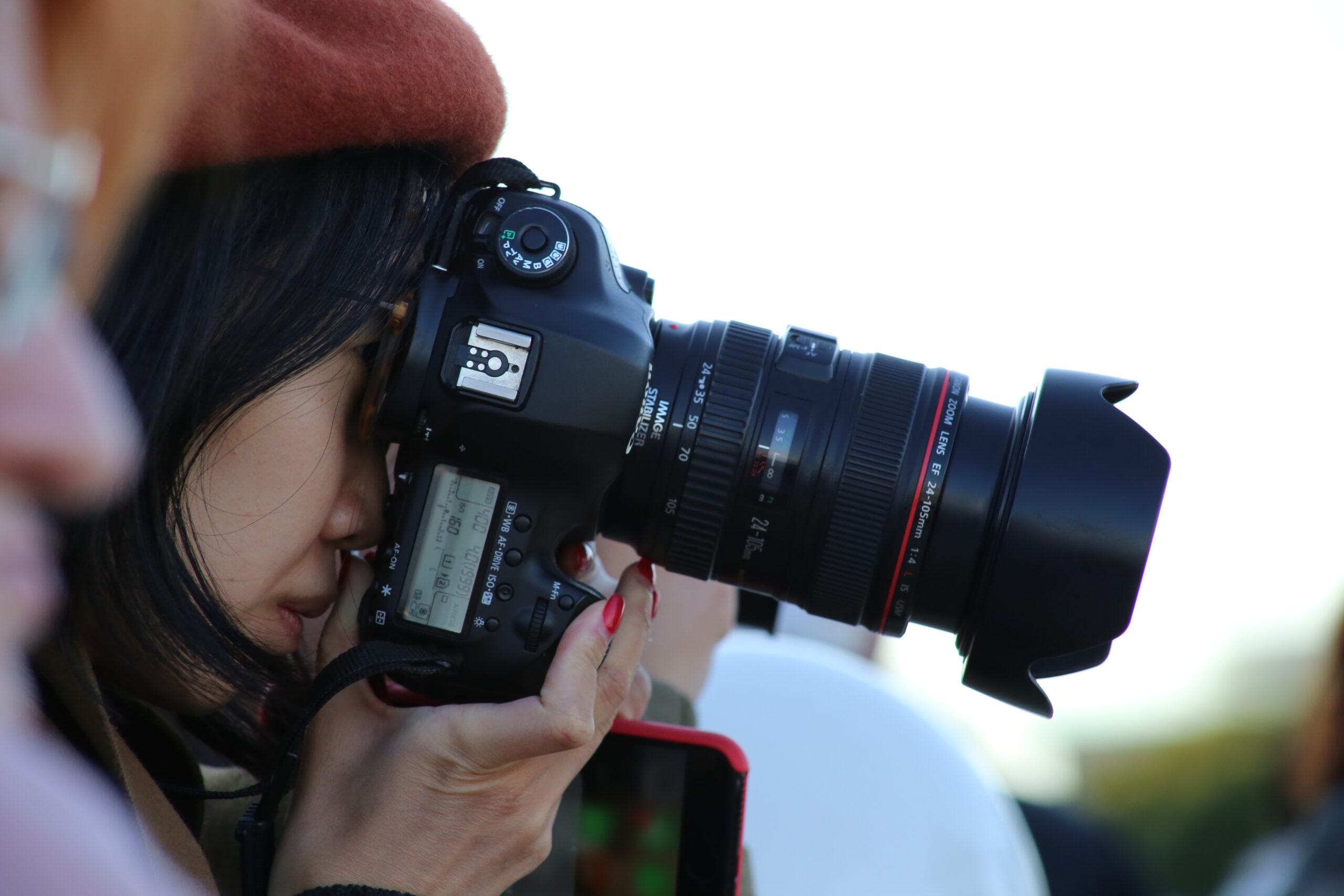
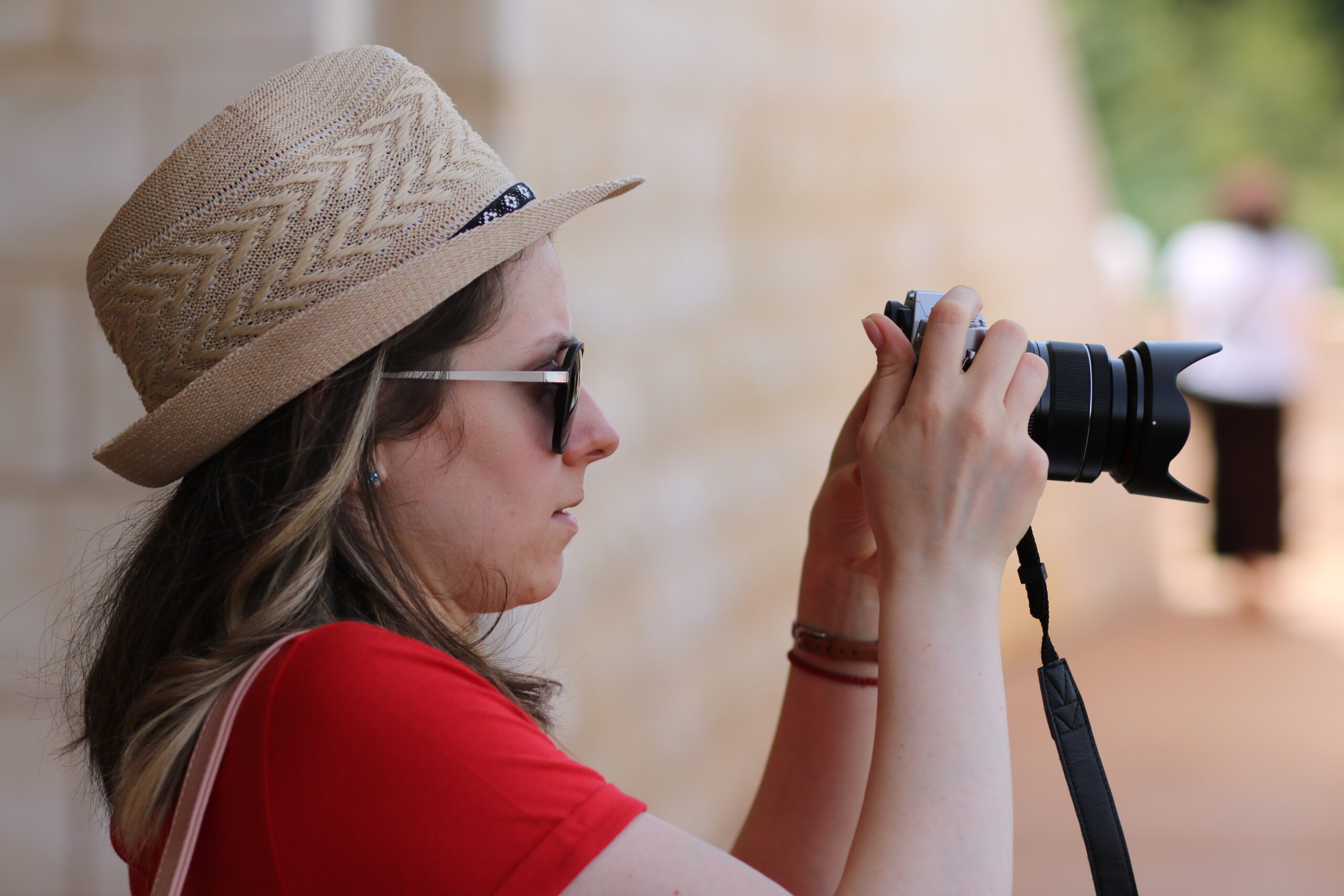
One of the most recognizable characteristics of photography is the intimate physical relationship between the photographer and the camera. A woman wearing a burgundy beret raises a Canon DSLR to her eye, concentrating on a scene beyond the frame. Elsewhere, a photographer in a straw hat and sunglasses holds a smaller camera against the warm light of an outdoor setting. Their equipment differs, as do their surroundings, but the gestures are almost identical. Hands support the camera, fingers find the controls, and attention narrows toward the subject. The camera becomes a temporary extension of the photographer’s vision. It is a familiar posture, repeated millions of times each day around the world, yet each instance represents an individual decision about what is worth photographing.
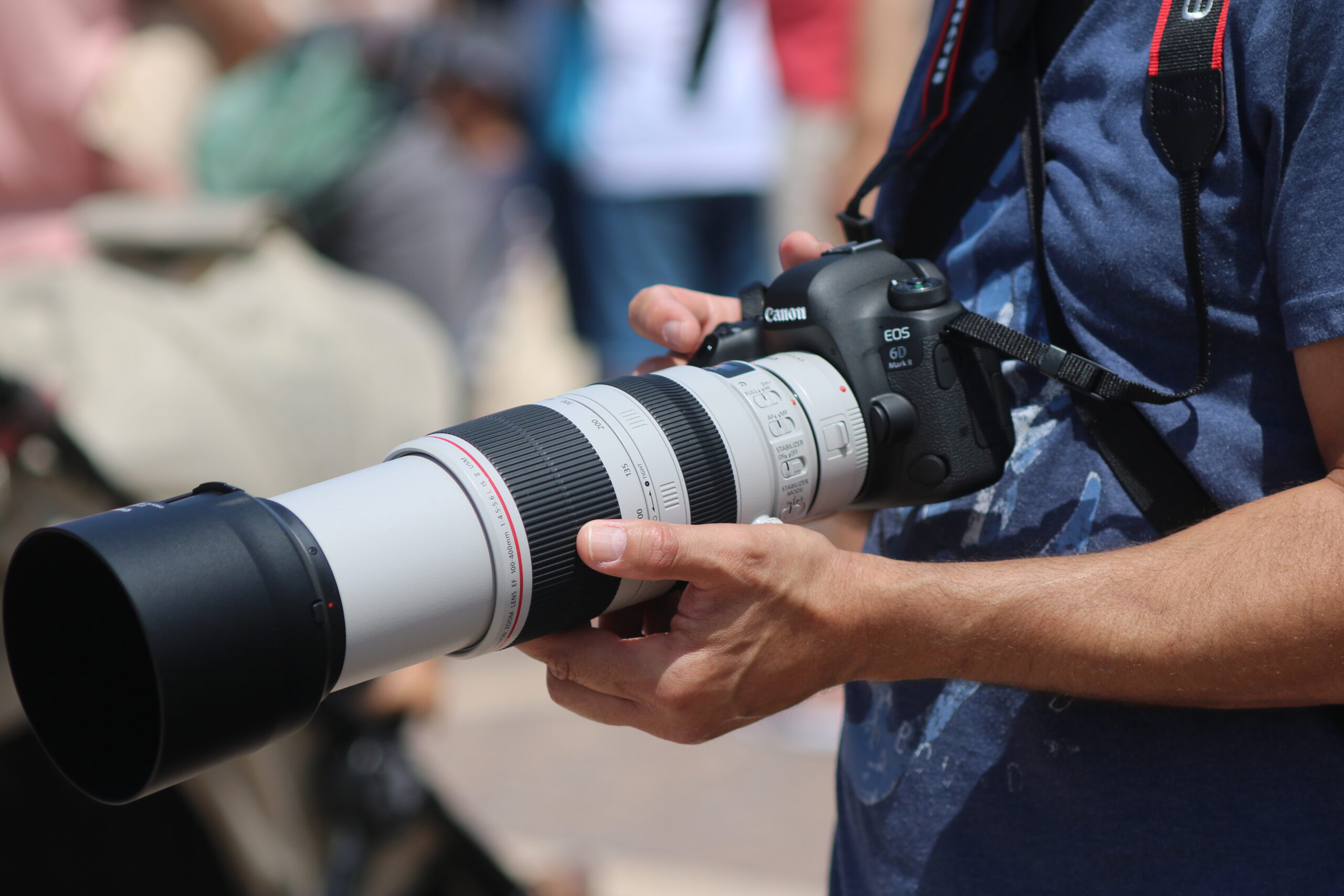
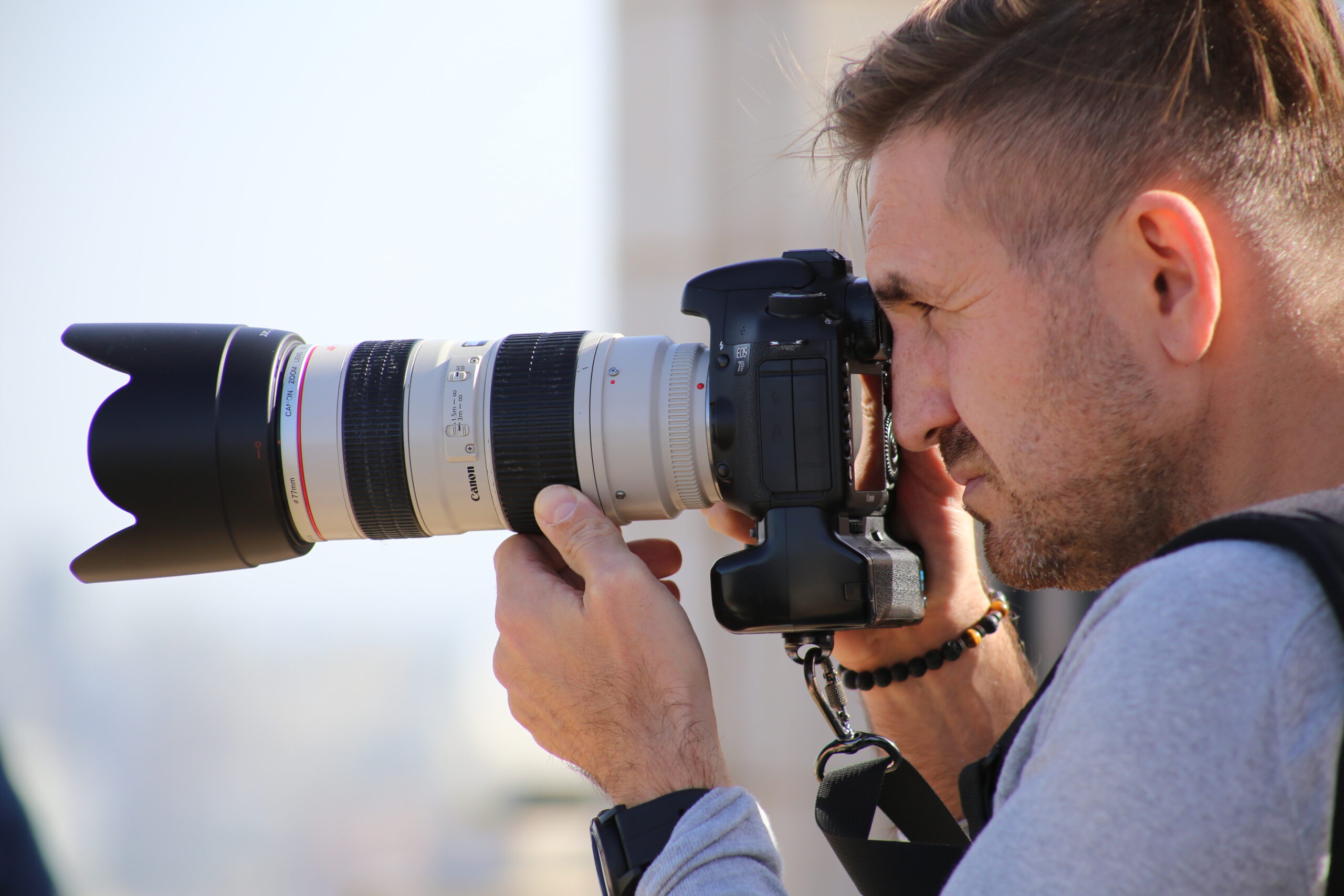
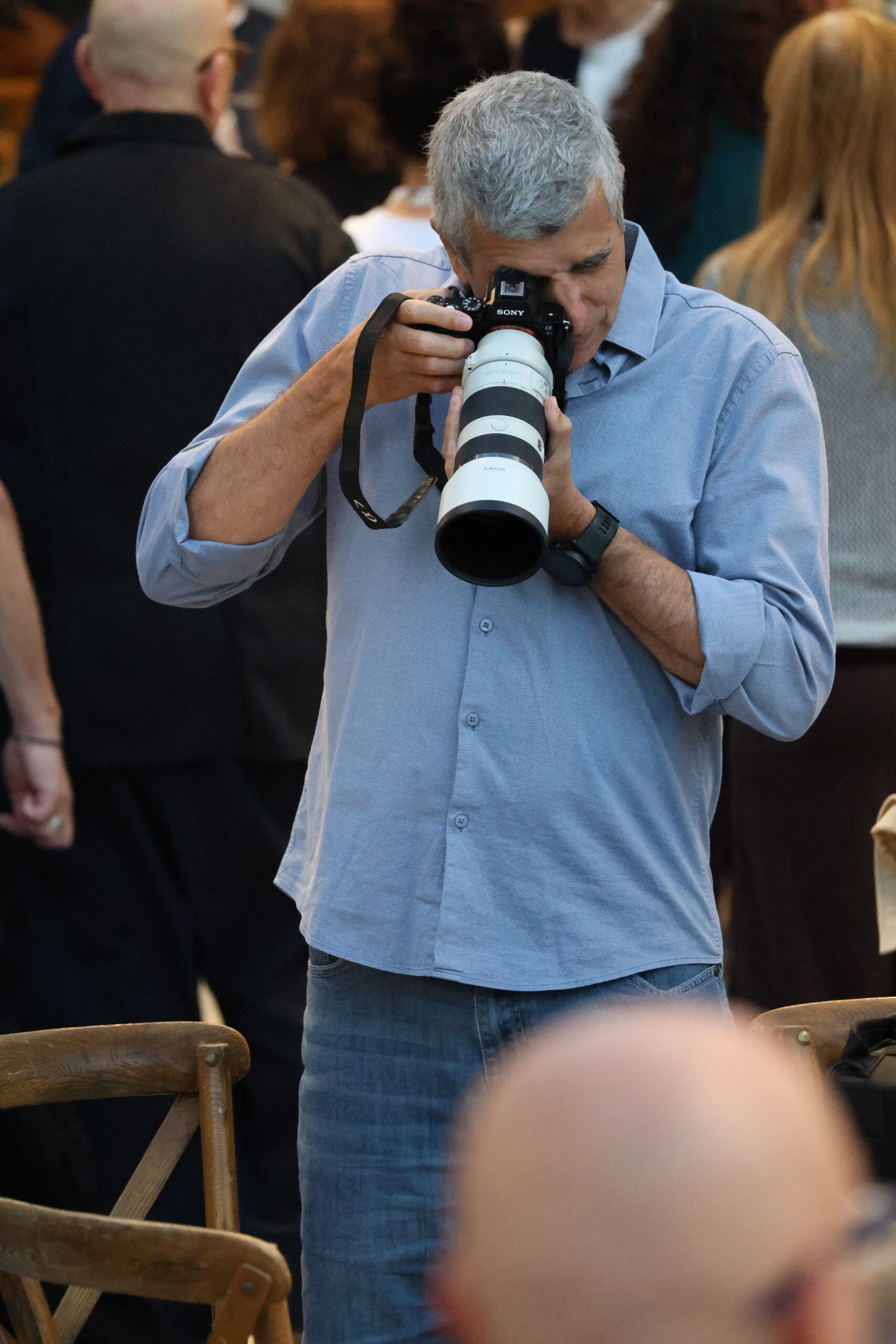
Professional photography introduces another dimension, one in which technical preparation and the demands of an assignment influence nearly every choice. Several images show photographers carrying substantial Canon and Sony telephoto lenses, sometimes paired with professional DSLR bodies, battery grips, and specialized accessories. These large lenses are particularly useful when subjects cannot be approached closely, as in sports, wildlife, public ceremonies, or crowded events. Their optical designs allow distant details to fill the frame, while longer focal lengths can isolate a subject against a compressed, softly rendered background. The trade-offs are equally apparent. Heavy equipment requires physical effort, careful handling, and considerable experience. A photographer working with a long telephoto lens must anticipate movement, maintain stability, and react quickly to changing circumstances.
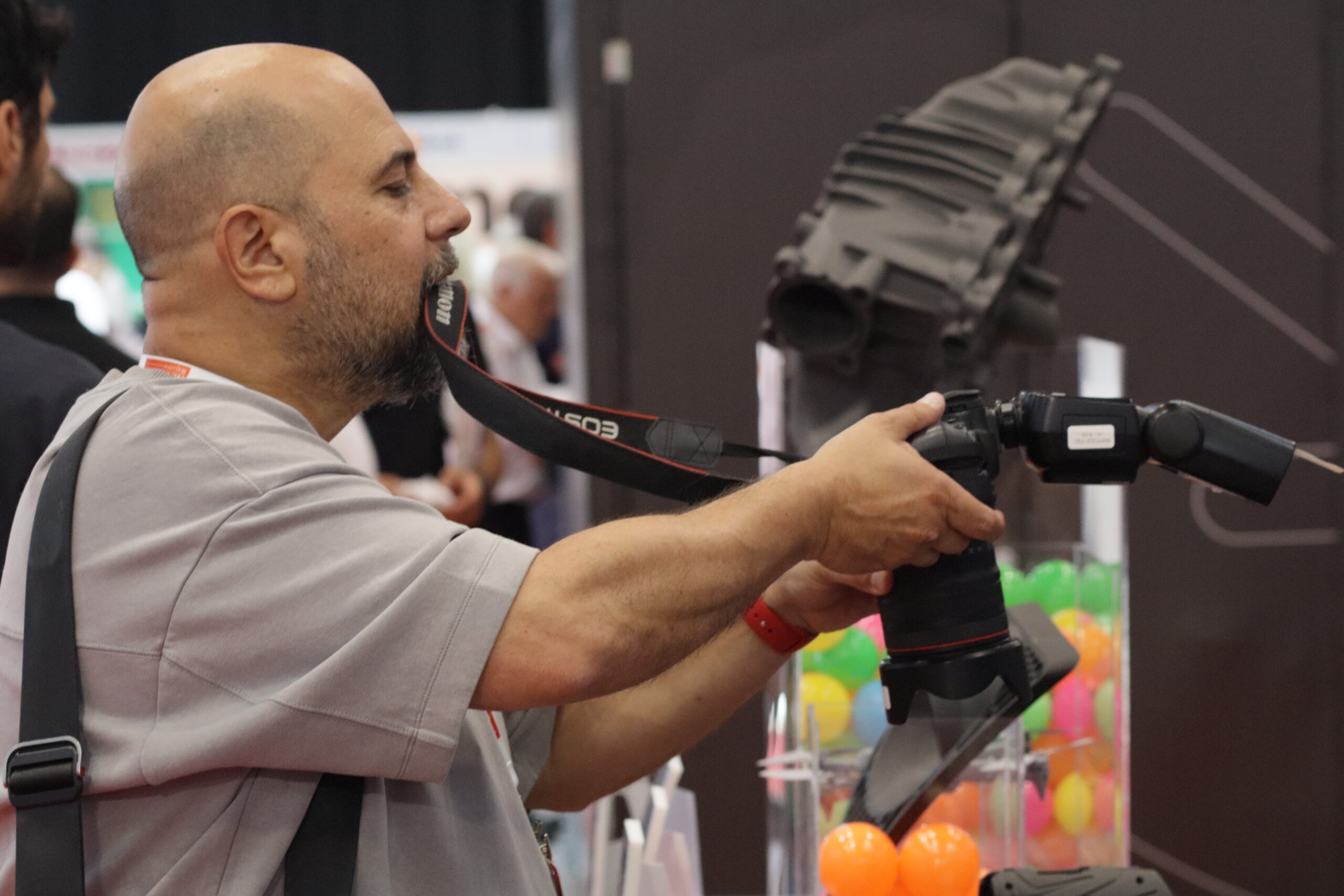
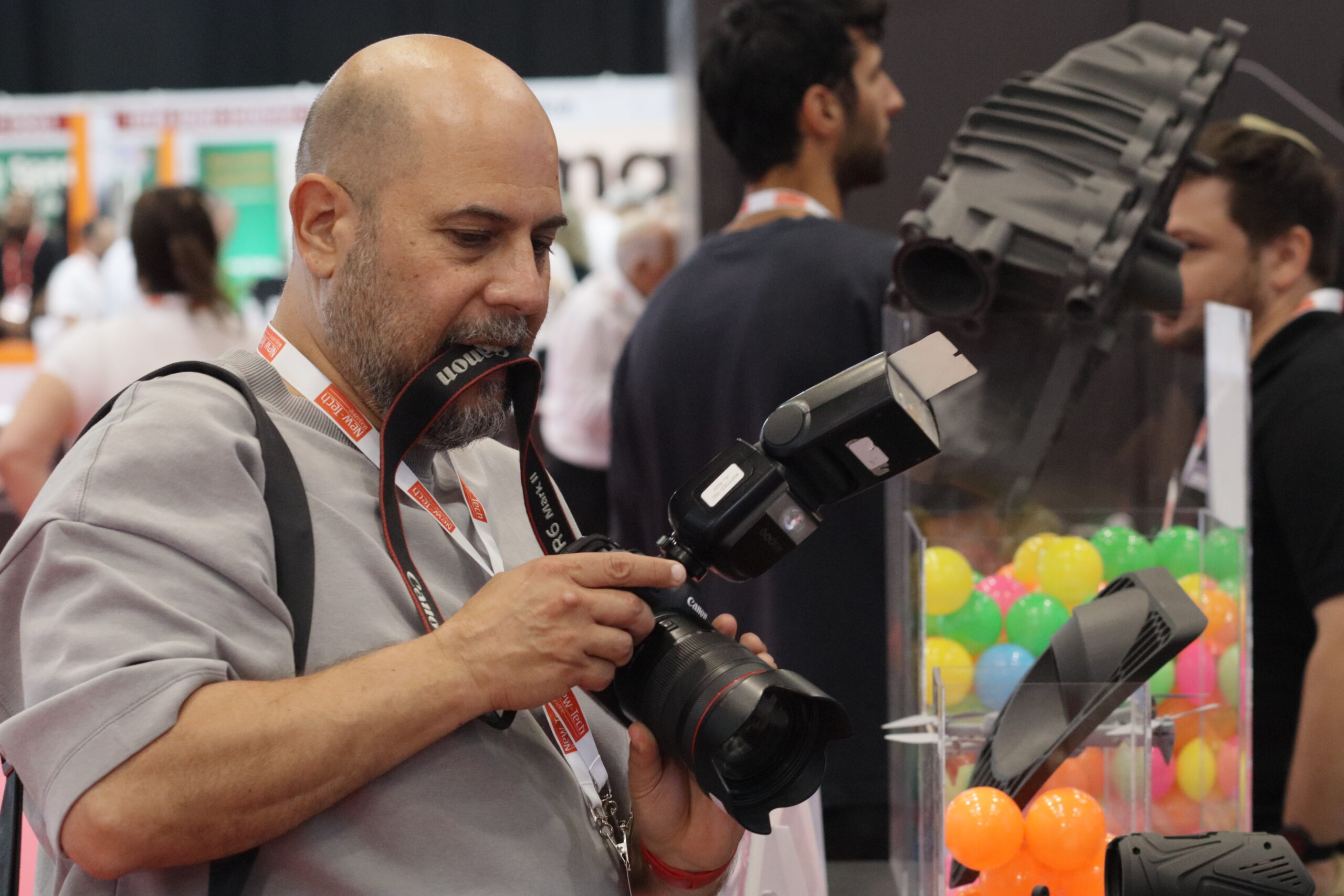
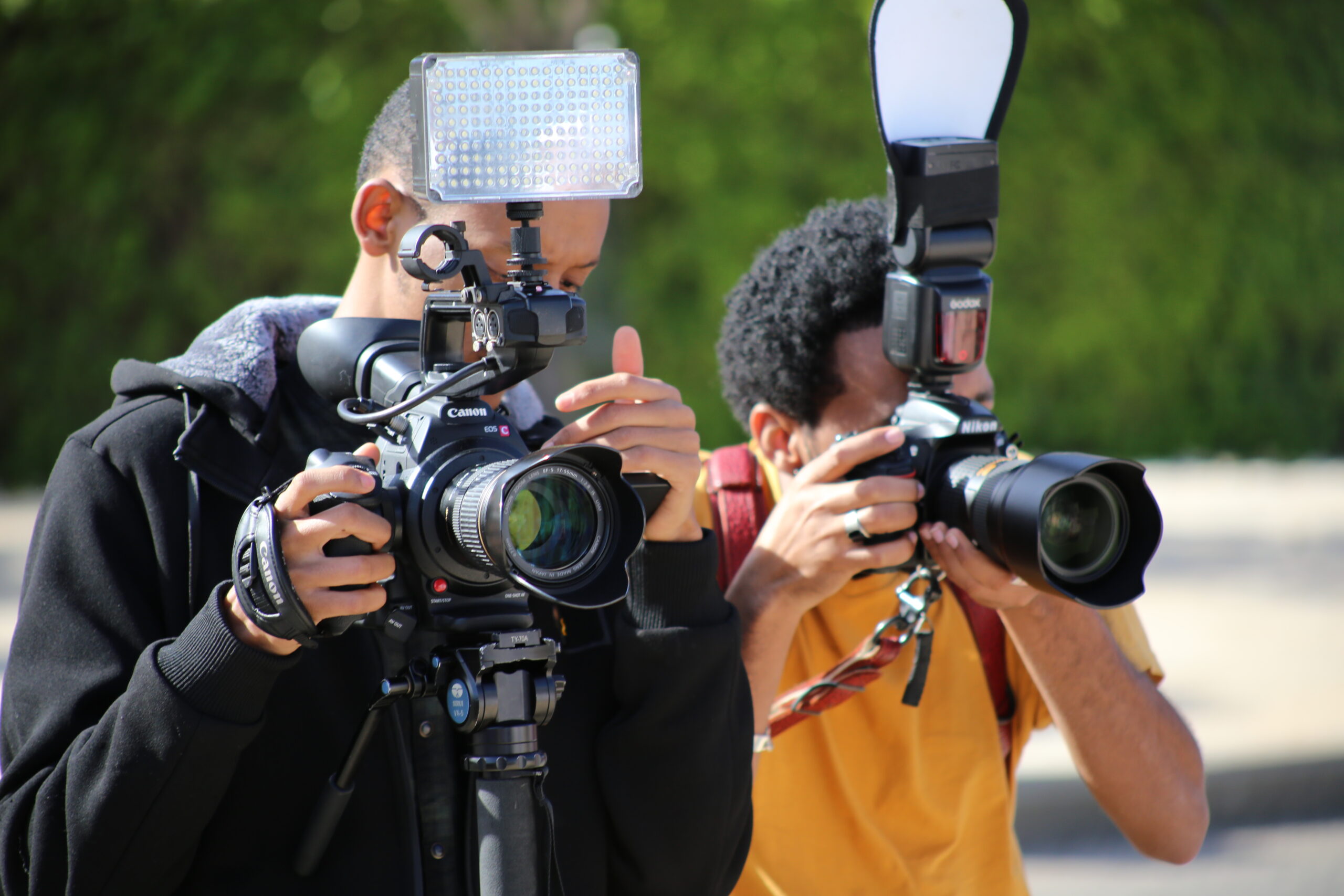
The collection also captures the energetic atmosphere of event photography. At exhibitions and public gatherings, photographers work among crowds, artificial lighting, colorful displays, and constantly changing subjects. A bearded photographer examines his Canon equipment beneath the illumination of an indoor exhibition, while another photographer operates a Nikon camera equipped with an external flash. In a particularly lively scene, two media professionals aim their cameras toward the viewer, one using Canon video equipment and the other a Nikon DSLR with a Godox flash. These photographs reveal a practical side of the profession that finished images rarely communicate. Event photographers must negotiate limited space, unpredictable lighting, moving subjects, and the expectation that important moments will be captured correctly the first time. There is often no opportunity to repeat a handshake, a spontaneous expression, or an unexpected interaction.
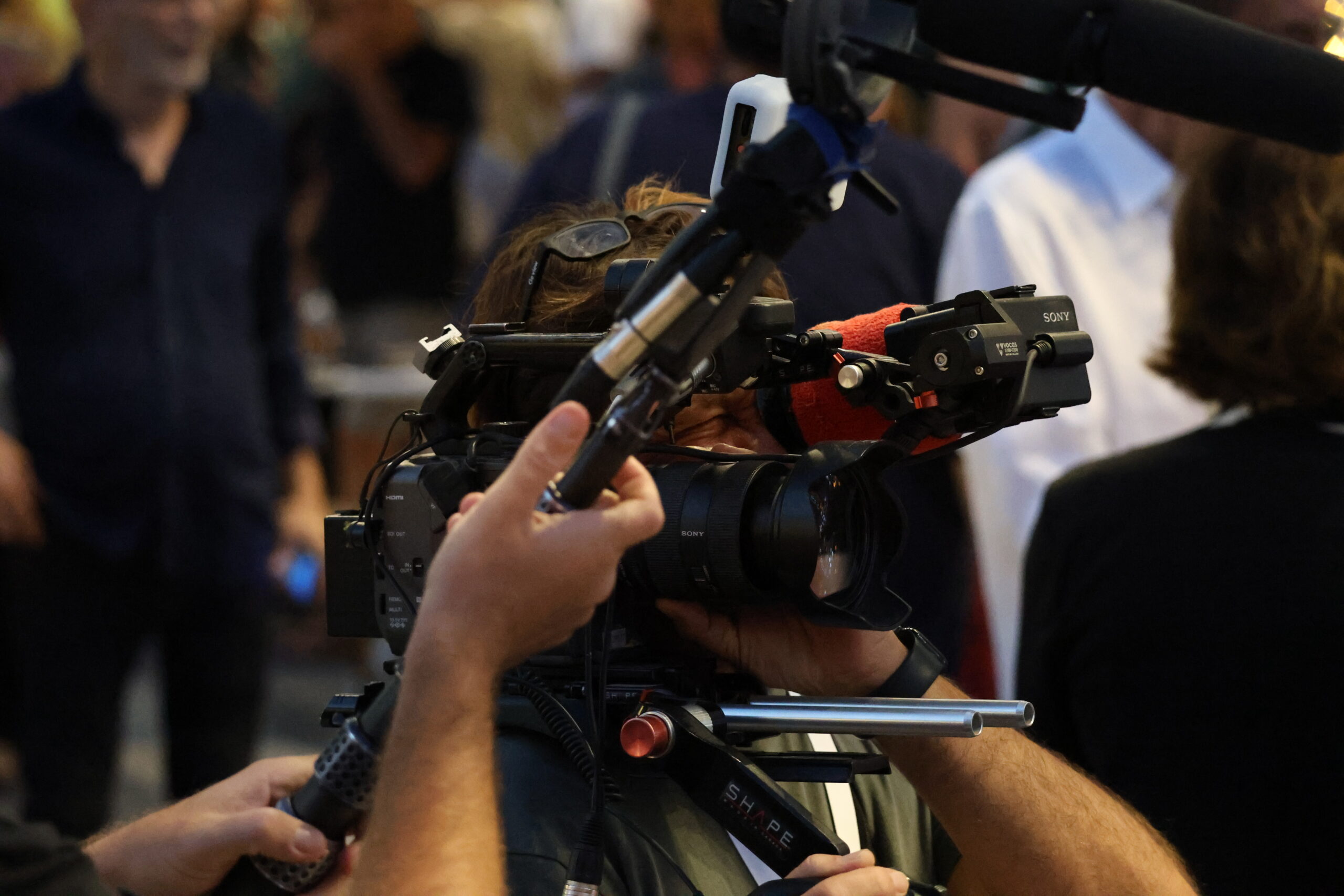
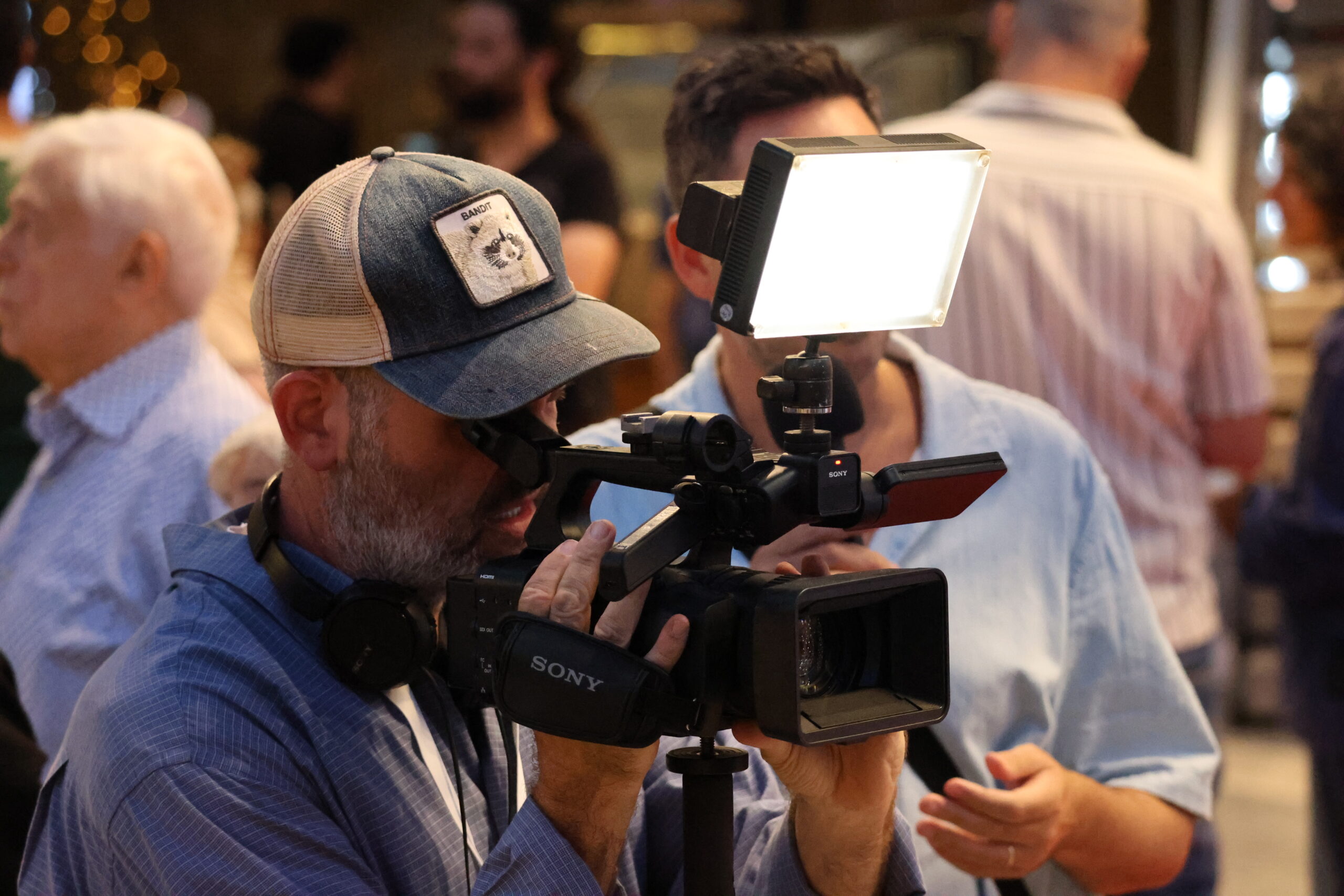
Videography shares much of photography’s visual language but introduces additional technical and creative demands. Sony professional camcorders appear in several photographs, equipped with mounted lights, microphones, and supporting hardware. Their operators work in crowded indoor environments, where the camera must record not only the visual composition but also movement, sound, and continuity. A still photographer can wait for a fraction of a second in which all the elements align. A videographer must think about what happens before and after that instant. Camera movement, focus transitions, audio quality, and the duration of a shot become part of the visual narrative. The presence of these sophisticated video systems illustrates how the boundaries between photography and filmmaking have become increasingly fluid, particularly as modern digital cameras acquire advanced capabilities in both disciplines.
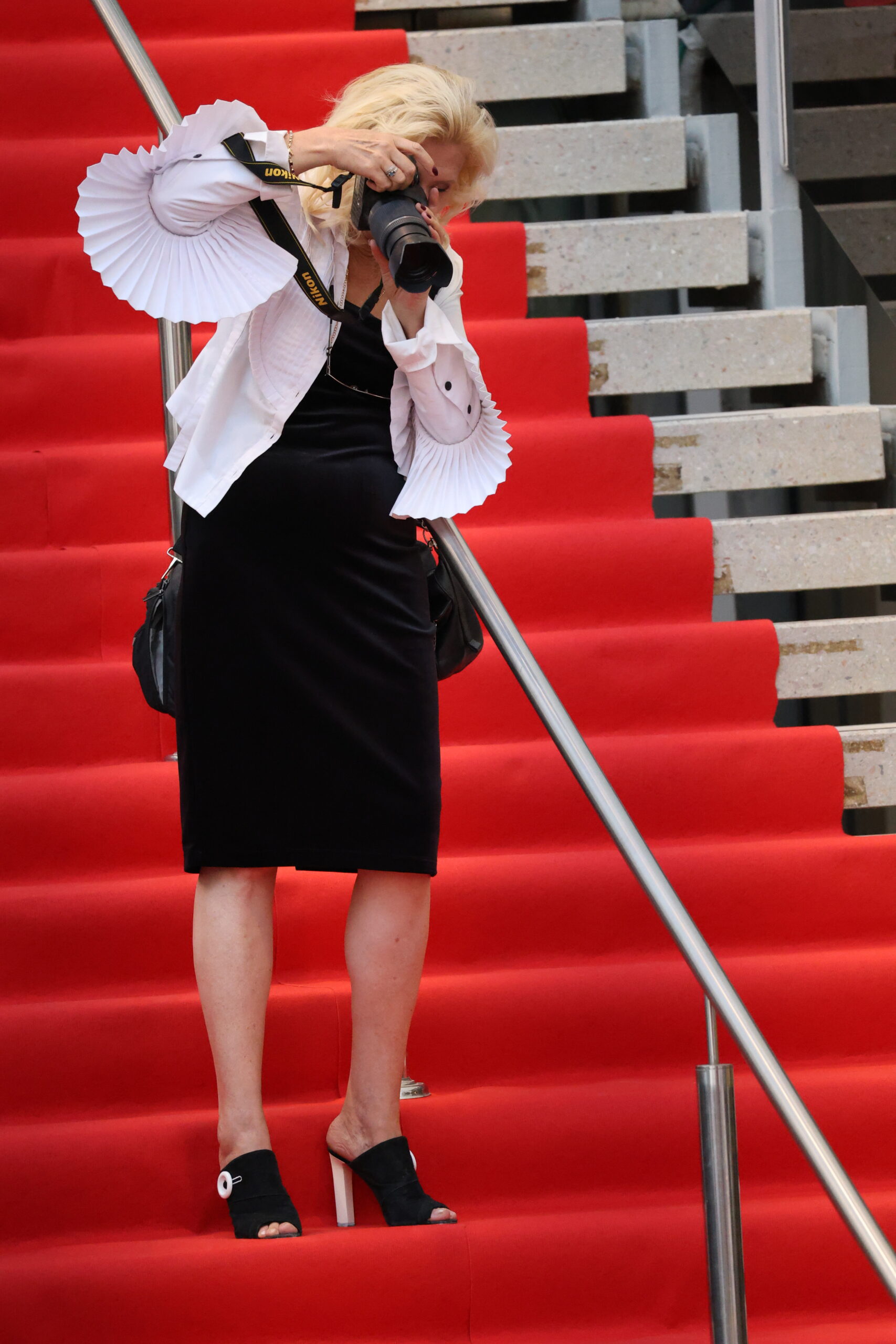
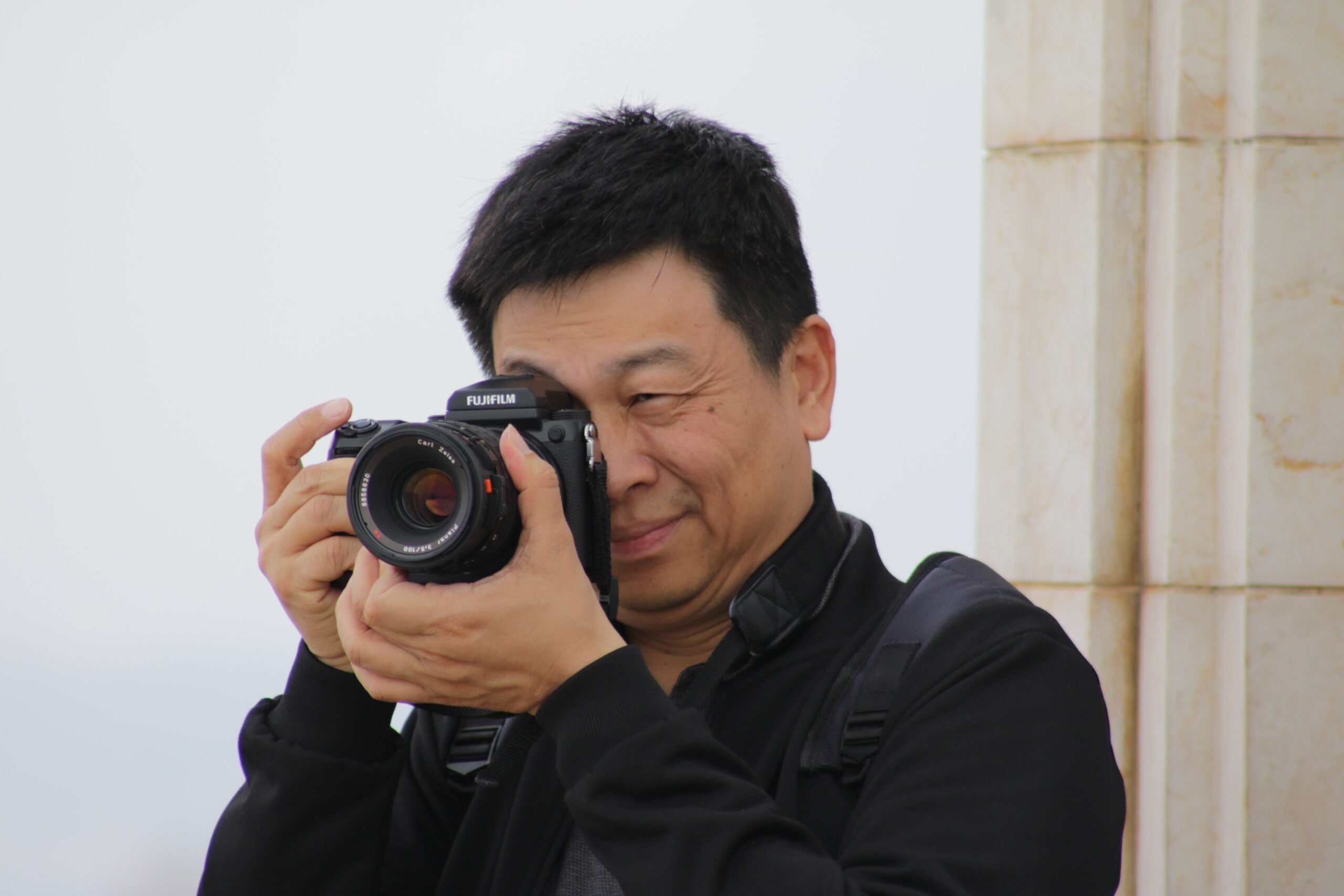
Camera manufacturers have played a significant role in shaping photographic practice. Canon, Nikon, Sony, and Fujifilm are all represented in this collection, each associated with different equipment traditions and design philosophies. Canon and Nikon built much of their professional reputations around extensive DSLR systems, optical engineering, and interchangeable lenses. Sony helped accelerate the adoption of high-performance mirrorless cameras, while Fujifilm developed a distinctive approach combining modern digital technology with controls and styling inspired by traditional film cameras. The photographs show these brands in actual use rather than as showroom products. A Nikon camera appears on a red-carpeted staircase, a Fujifilm camera is held by a smiling photographer near a pale stone wall, and Sony Alpha cameras accompany photographers working outdoors. The variety is a reminder that no single camera system defines photography. Equipment matters, certainly, but the photographer’s understanding of light, timing, composition, and subject remains decisive.
The evolution from DSLR to mirrorless technology is particularly visible in the contrast between the larger professional cameras and the compact Canon EOS R100 and Sony Alpha bodies featured in the collection. Traditional DSLRs use a mirror mechanism and optical viewfinder to allow photographers to see through the taking lens. Mirrorless cameras eliminate that mechanism, relying instead on electronic displays and image sensors that continuously capture the scene. The change has enabled smaller camera bodies, sophisticated autofocus systems, electronic exposure previews, and increasingly capable video functions. Yet the transition has not made photographic knowledge obsolete. Aperture, shutter speed, focal length, sensor performance, and the direction of light remain fundamental, regardless of whether the camera uses a mechanical mirror or an electronic viewfinder.
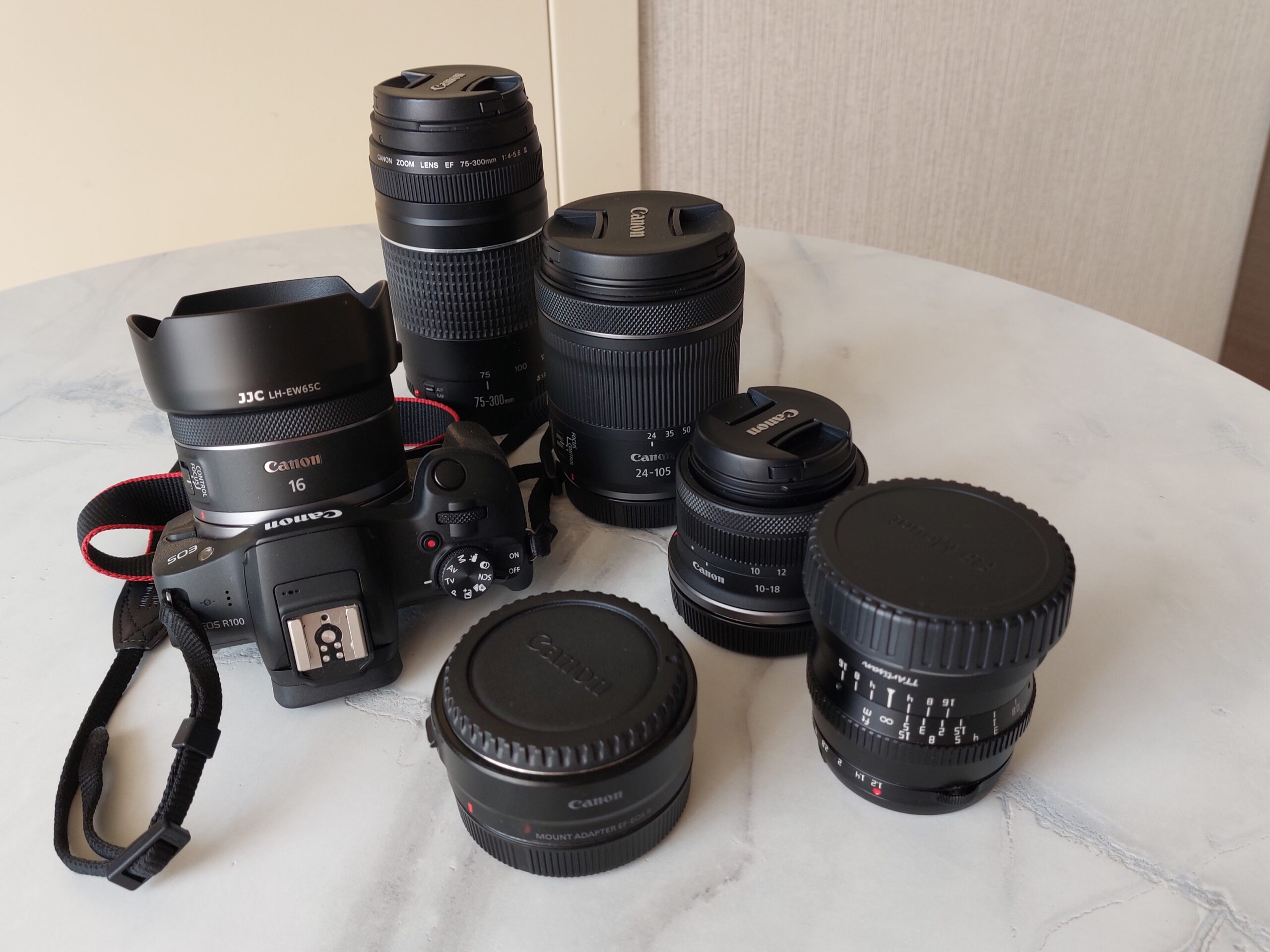
A particularly engaging part of the collection focuses on photographic equipment arranged as still-life subjects. Canon cameras, interchangeable lenses, lens caps, adapters, and photography books are spread across tabletops, inviting the viewer to examine the components of a photographic system. One arrangement includes a Canon EOS R100 alongside wide-angle, standard zoom, and telephoto lenses. The equipment illustrates how a relatively small camera body can support very different kinds of photography simply by changing the lens. A wide-angle lens can accommodate architecture, landscapes, or confined interiors. A standard zoom offers flexibility for travel and everyday photography. A telephoto lens brings distant subjects closer and changes the visual relationship between foreground and background. These are not merely accessories; they are tools that influence the photographer’s interpretation of a scene.
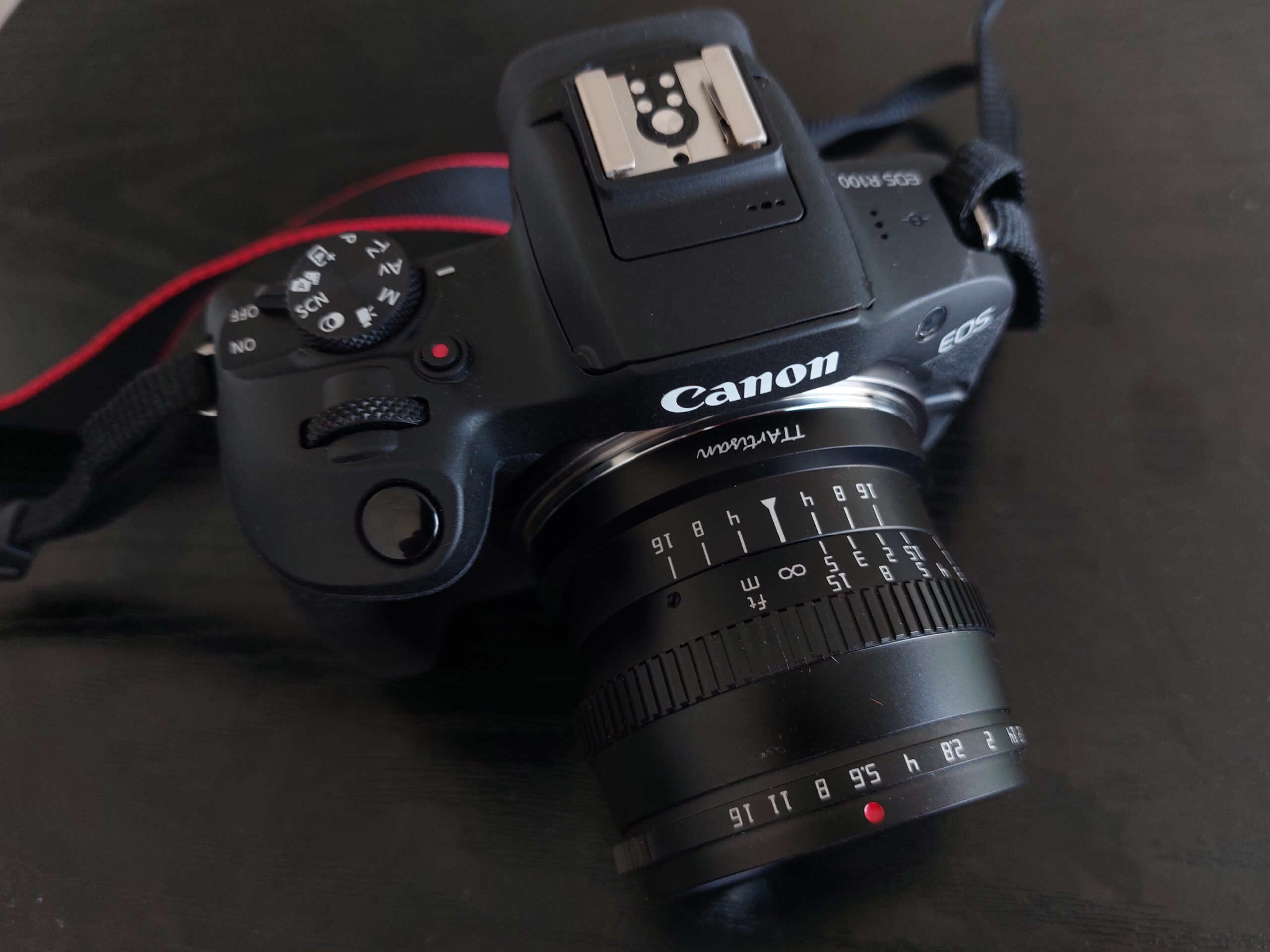
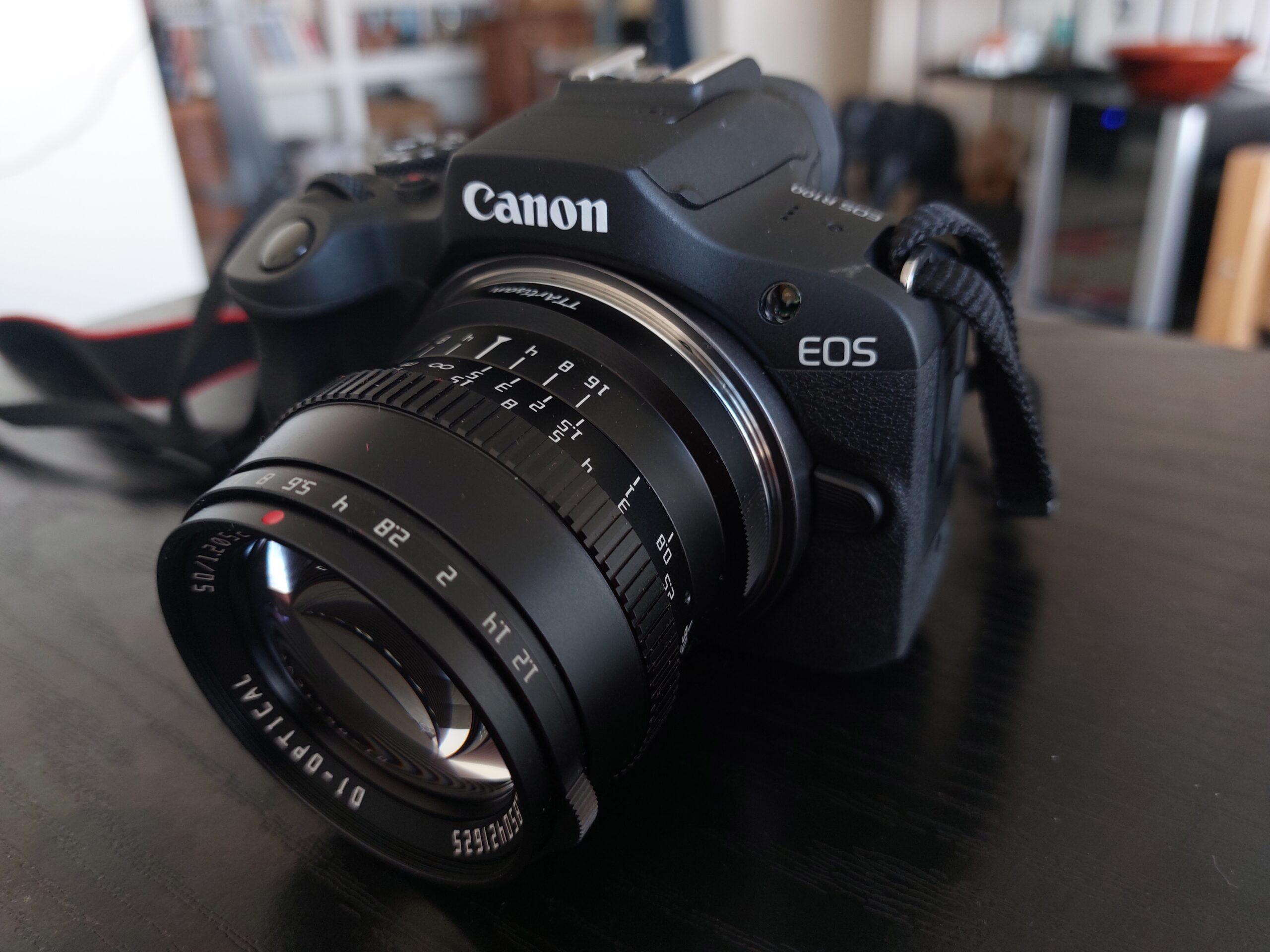
The close-up photographs of a Canon EOS R100 fitted with a TTArtisan manual-focus lens introduce another interesting contrast between modern technology and traditional photographic technique. Contemporary autofocus systems can recognize faces, track eyes, and follow moving subjects with remarkable precision. Manual-focus lenses require the photographer to control the focusing process directly, often using engraved distance scales and a mechanical focusing ring. This slower approach can encourage deliberate composition and closer attention to depth of field. It also recalls an earlier era when photographers routinely calculated exposure, estimated distance, and adjusted focus without electronic assistance. For some photographers, these manual controls remain an important part of the creative experience, even when more automated alternatives are readily available.
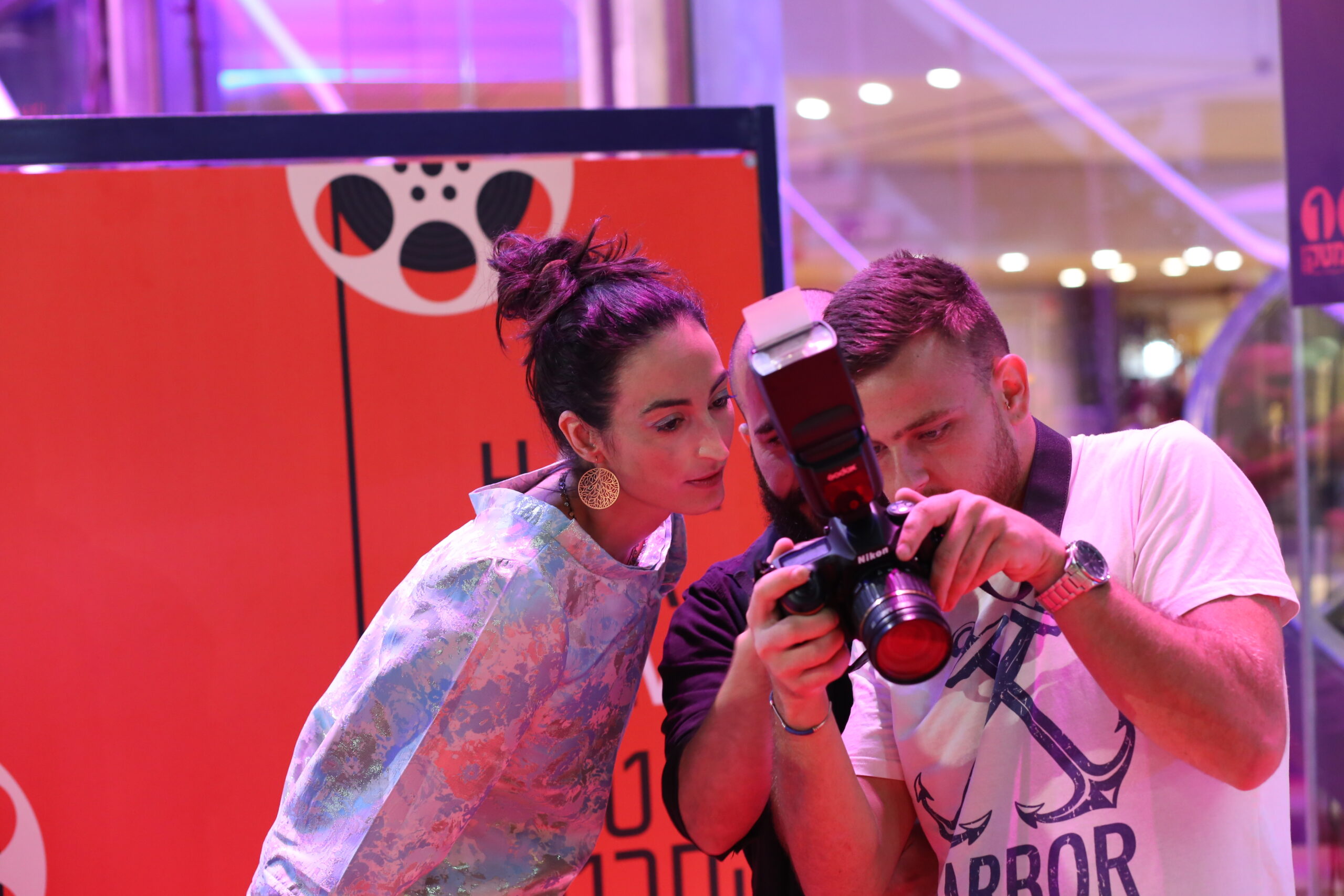
Photography is also a social activity, something that becomes apparent in the images of people examining cameras together. A young woman holding a Canon EOS 6D studies photographic equipment alongside a companion with a smartphone. In another scene, two people examine the rear display of a Nikon DSLR at an indoor event. These interactions reflect a familiar aspect of digital photography: the photograph can be reviewed almost immediately after exposure. The ability to inspect an image, discuss its composition, and make adjustments has transformed how photographers learn. In the film era, feedback might require hours or days of processing. Digital cameras provide an almost continuous cycle of experimentation, evaluation, and improvement. Photography has become more accessible not only because cameras are easier to operate, but because the learning process itself has accelerated.

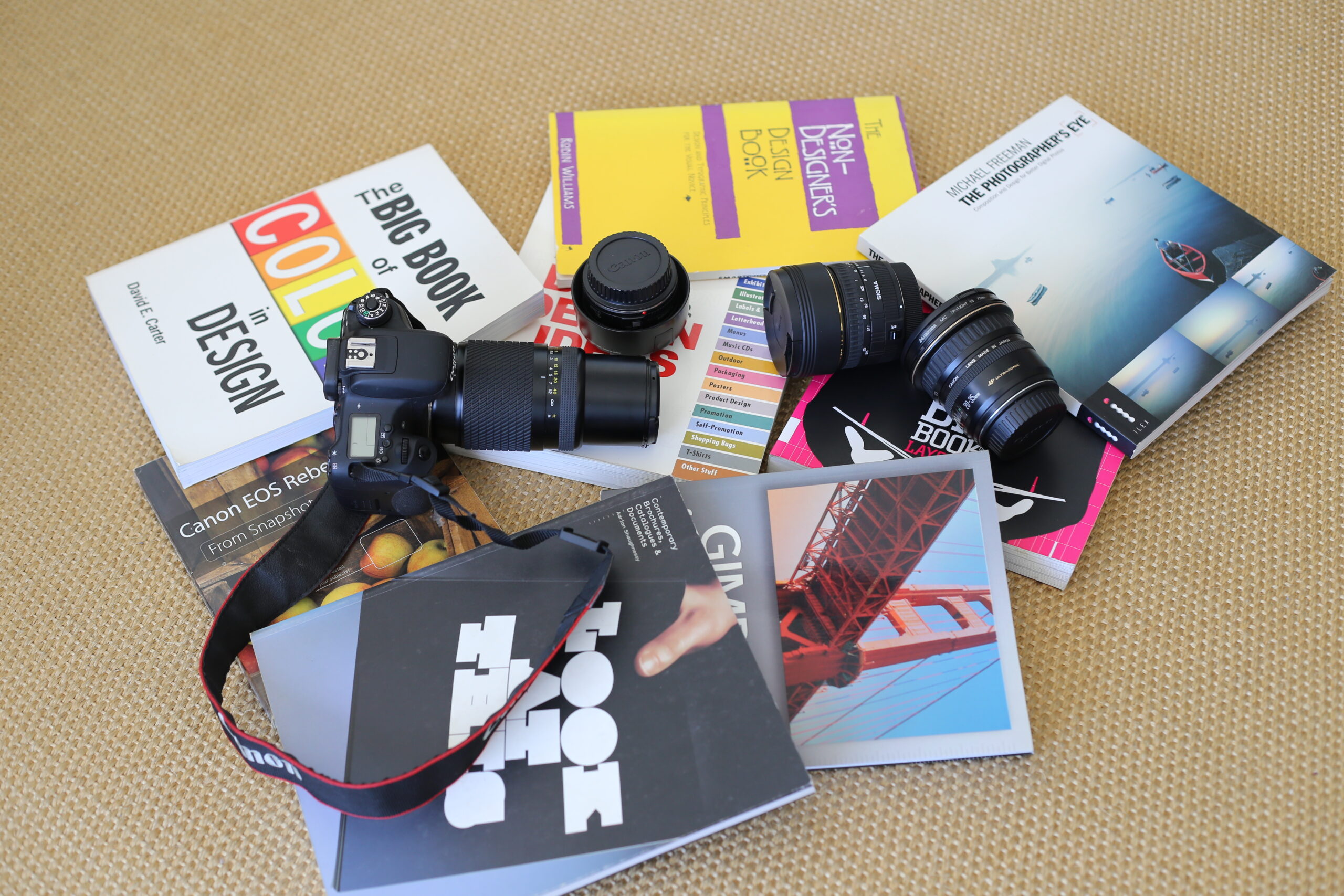
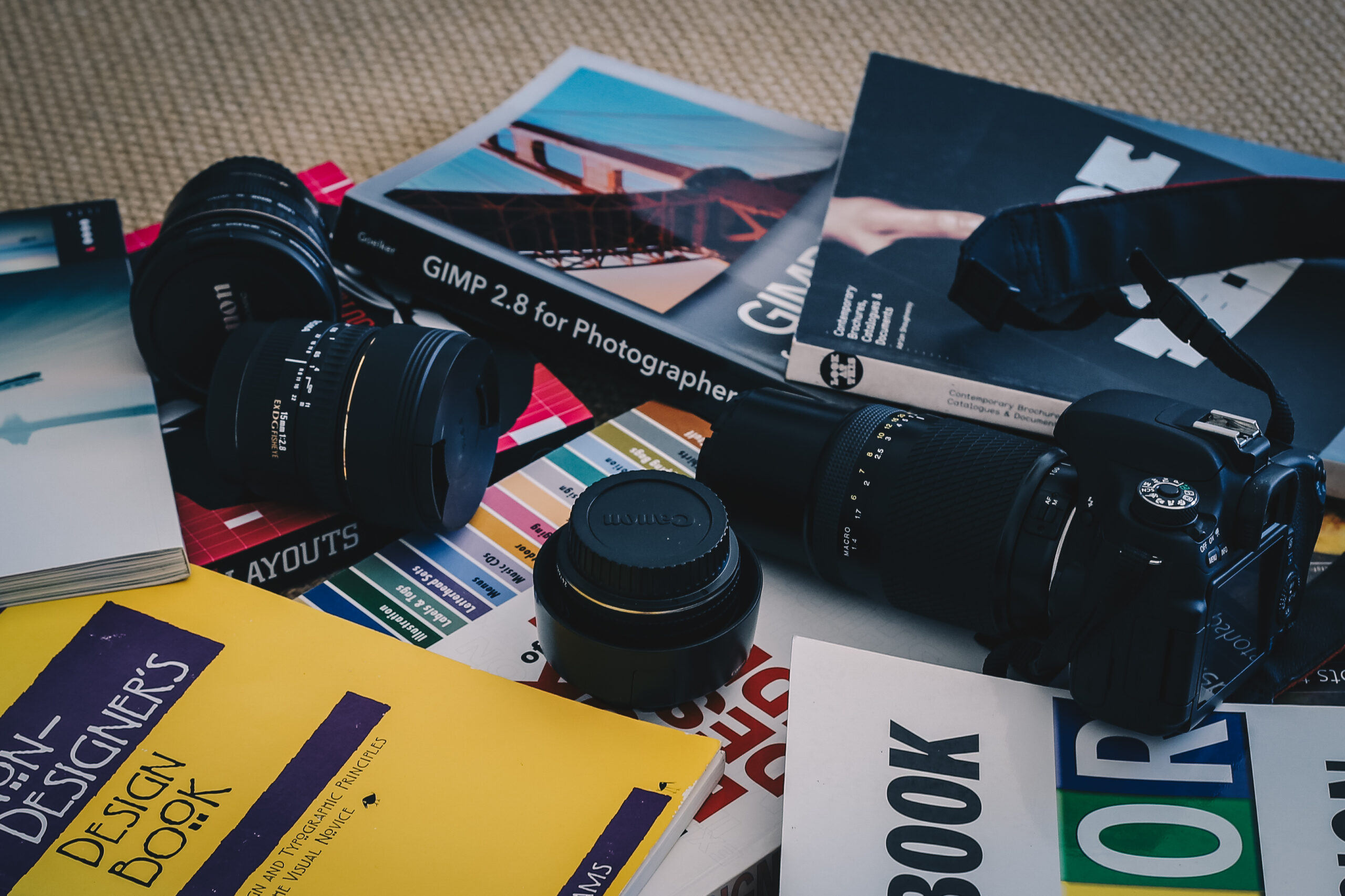
The presence of books on photography, image editing, and design provides a useful counterpoint to the emphasis on hardware. A camera records information, but photographic composition depends on visual judgment. Understanding color relationships, perspective, contrast, geometry, and the organization of objects within a frame can make an enormous difference to the final image. The placement of a person against an architectural background, the use of a blurred foreground to create depth, or the decision to isolate a face against a crowded scene are all compositional choices. Such decisions are rarely dictated by the camera. They emerge from experience, observation, and an understanding of how viewers interpret visual information.
There is also an element of personal identity in photographic equipment. Some photographers prefer the substantial feel of a professional DSLR and a long telephoto lens, while others favor the discretion and portability of a compact mirrorless camera. A camera carried through city streets serves a different purpose from one mounted beside a sports field or operated at a crowded press event. Even accessories can reveal something about a photographer’s working habits: an external flash suggests a need to control illumination, a lens hood helps manage stray light, and a second camera body may indicate the importance of switching focal lengths without interrupting an assignment. The collection captures these differences without presenting one approach as inherently superior.
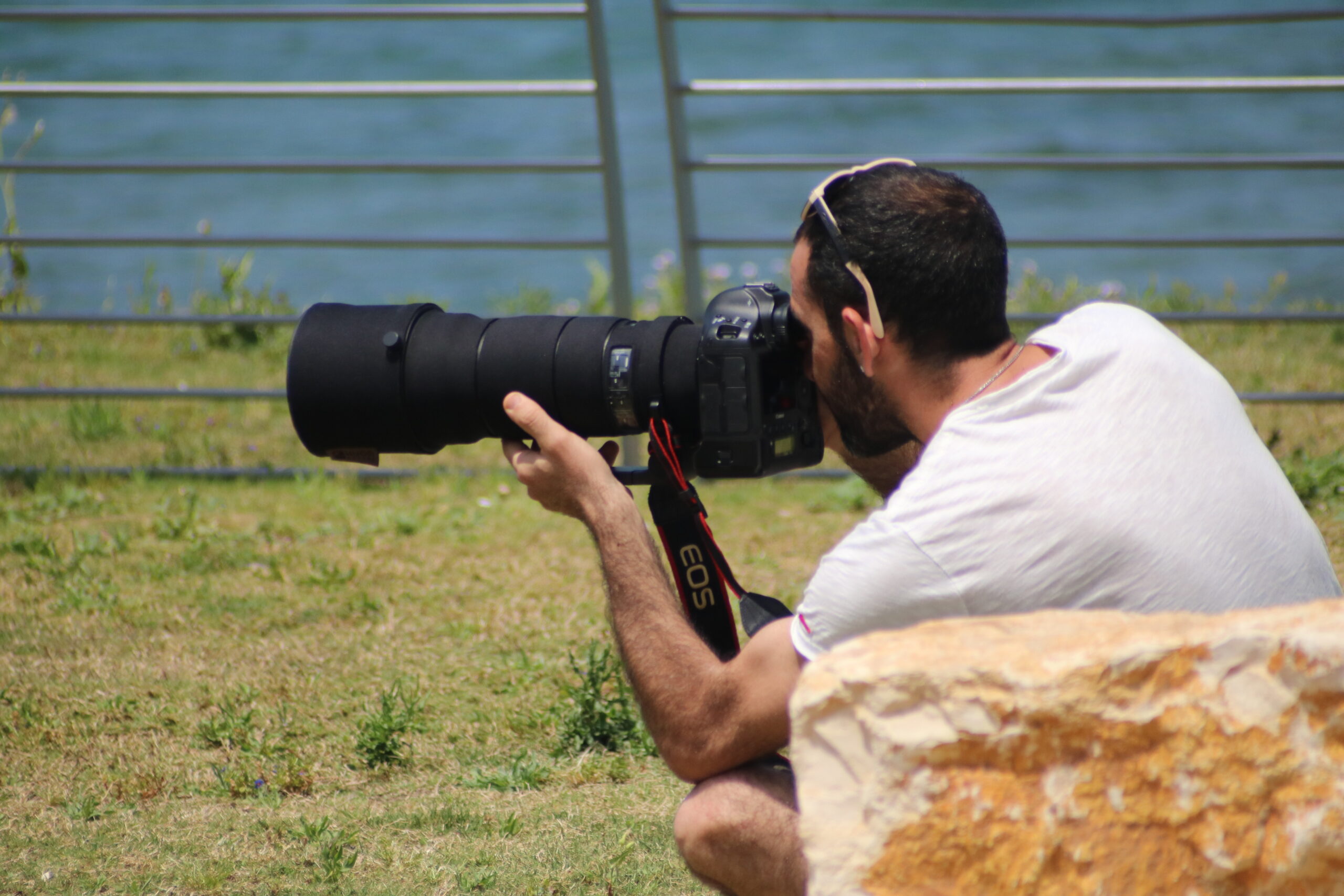
Perhaps the most appealing quality of these photographs is their unplanned humanity. A photographer smiles while aiming a Fujifilm camera, another crouches beside a waterfront railing to find a lower perspective, and a woman on a staircase raises her Nikon camera toward a subject outside the frame. These are small moments, easily overlooked, but they reveal the concentration, improvisation, and occasional awkwardness involved in making photographs. The photographer is usually invisible in the finished image. Here, that relationship is reversed. We see the people behind the cameras, their expressions, their working environments, and the physical gestures that precede the click of the shutter.
The continuing fascination with photography cannot be explained by technological progress alone. Smartphones have made image capture almost universal, while advanced digital cameras offer capabilities that would have seemed extraordinary only a generation ago. Artificial intelligence now assists with focusing, exposure, noise reduction, editing, and image organization. Yet greater automation has not eliminated the need for photographers to decide where to stand, when to press the shutter, what to include, and what to leave outside the frame. The abundance of images may even increase the importance of those decisions. When almost everything can be photographed, the ability to recognize something meaningful becomes more valuable.
Ultimately, the fascinating world of photography is a world of people as much as cameras. The equipment will continue to evolve, lenses will become more sophisticated, sensors will improve, and new methods of capturing and processing images will emerge. But the underlying impulse is unlikely to disappear. People photograph because they want to remember, investigate, communicate, document, and sometimes simply admire what they see. This collection, with its mixture of professional equipment, everyday encounters, carefully arranged cameras, and photographers absorbed in their work, illustrates that enduring relationship between human curiosity and visual technology. Photography begins with light entering a lens, but its real significance lies in the person who decides what that light should reveal.
Detailed descriptions of 24 photographs, including image filenames, subjects, photographic equipment, and visible camera brands.
| Image File | Detailed Photograph Description and Visible Equipment |
|---|---|
| IMG_4836-scaled.jpg | Close-up of a woman with dark hair wearing a burgundy beret, photographing through a black Canon EOS DSLR fitted with a Canon EF 24–105mm f/4 L-series zoom lens and petal-shaped hood. The camera is held horizontally, her red-painted fingernails supporting the body. A blurred face occupies the extreme foreground. Canon branding and lens markings are visible. |
| IMG_6638-scaled.jpg | Bald, bearded male photographer in a grey shirt handling a Canon EOS DSLR with a large red-ringed zoom lens and external flash equipment at an indoor exhibition. A substantial industrial lighting fixture and colorful balls appear behind him. The Canon EOS strap is identifiable; the camera model is not readable. |
| IMG_6639-1-scaled.jpg | The same photographer examines the controls of his Canon camera, holding it near chest height. A black Canon L-series lens with red ring and hood points downward, while an articulated external flash extends above the camera. Trade-show visitors and a display filled with brightly colored balls create a softly blurred background. |
| IMG_6663-scaled.jpg | Side-profile portrait of a woman wearing a woven straw hat, dark sunglasses and a red shirt, holding a compact interchangeable-lens camera with a black zoom lens and petal hood. Warm daylight illuminates her face and hands, while a distant pedestrian is blurred in the background. Camera brand cannot be confirmed. |
| IMG_6836-scaled.jpg | Detailed equipment photograph of a Canon EOS 6D Mark II DSLR held by a photographer wearing a dark blue shirt. Attached is a large white Canon L-series telephoto zoom lens with a red ring, tripod collar, and deep black hood. The composition emphasizes the size of the lens and the photographer’s hands, against a defocused outdoor crowd. |
| IMG_3509-scaled.jpg | Close side view of a male photographer pressing his eye to a Canon professional DSLR with a vertical battery grip. The camera carries a white Canon L-series telephoto zoom with red identification ring and black petal hood. The man wears a grey top and dark wristband. Bright sky provides a clean, uncluttered background. |
| IMG_3175-1-scaled.jpg | Professional video camera operator filming amid an indoor crowd with a large Sony broadcast-style video camera. The rig has a substantial lens, shoulder-support components, rods, mounted accessories and an overhead boom microphone crossing the frame. Sony branding is visible on the equipment. |
| IMG_3174-scaled.jpg | Bearded videographer in a blue shirt and baseball cap looking through the viewfinder of a Sony professional camcorder. A bright rectangular LED panel is mounted above the camera, and a second man stands close behind. The background shows a crowded indoor event under warm lighting. Sony branding is clearly visible. |
| IMG_3157-1-scaled.jpg | Grey-haired man wearing a pale blue shirt and jeans photographing an indoor gathering with a Sony interchangeable-lens camera and large white Sony telephoto zoom lens. He bends slightly forward, concentrating through the viewfinder. Wooden chairs and other attendees surround him. The long white lens dominates the center of the composition. |
| IMG_3132-scaled.jpg | Blonde female photographer standing on a vivid red-carpeted staircase, wearing a black dress, white jacket with pleated sleeves and black heeled shoes. She raises a Nikon DSLR to her eye, using a black zoom lens and hood. The yellow Nikon lettering on the camera strap is clearly visible. The red steps provide a striking graphic background. |
| IMG_2711-scaled.jpg | Two media professionals photographing or filming outdoors. The man on the left operates a Canon EOS professional video camera mounted on a support with a rectangular LED light. The man on the right uses a Nikon DSLR with a Godox external flash and bounce reflector. Both point their cameras toward the viewer, with dark green foliage behind. |
| IMG_2335-scaled.jpg | Two young people examining photographic equipment and a smartphone outdoors. A woman in a blue striped shirt holds a Canon EOS 6D DSLR fitted with a black zoom lens and hood, while a companion in a black athletic jacket holds a pale-colored smartphone beneath it. Both concentrate on the devices. Canon and EOS 6D markings are visible. |
| IMG_2265-scaled.jpg | Male photographer crouching beside a pale stone block near a metal waterfront railing, using a Canon EOS DSLR with an exceptionally long black telephoto lens and cylindrical hood. He wears a white T-shirt with sunglasses resting on his head. The Canon EOS strap hangs beneath the camera. The low shooting position suggests photographing a distant subject. |
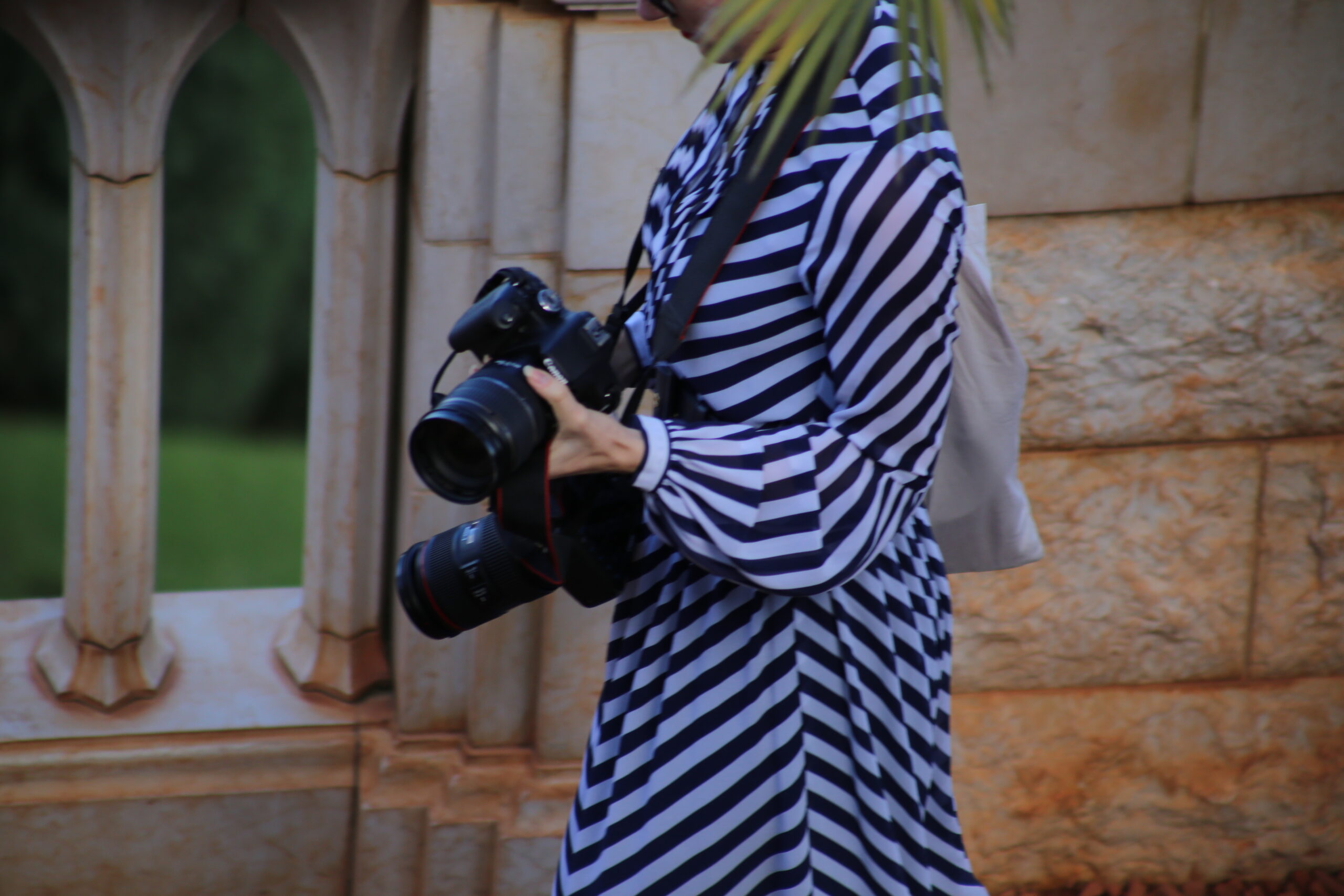
| IMG_2226-scaled.jpg | Partially framed woman in a flowing black-and-white striped dress carrying two black DSLR cameras with zoom lenses. One camera is held in her hand and another hangs against her body. She walks beside an ornate pale stone building with pointed arch openings. Camera brands are not sufficiently visible for reliable identification. |
| IMG_1777-scaled.jpg | Smiling man in a black jacket photographing with a Fujifilm mirrorless camera fitted with a relatively compact lens. The Fujifilm name is visible on the viewfinder housing. He holds the camera at eye level with both hands, against a pale architectural wall and bright open background. |
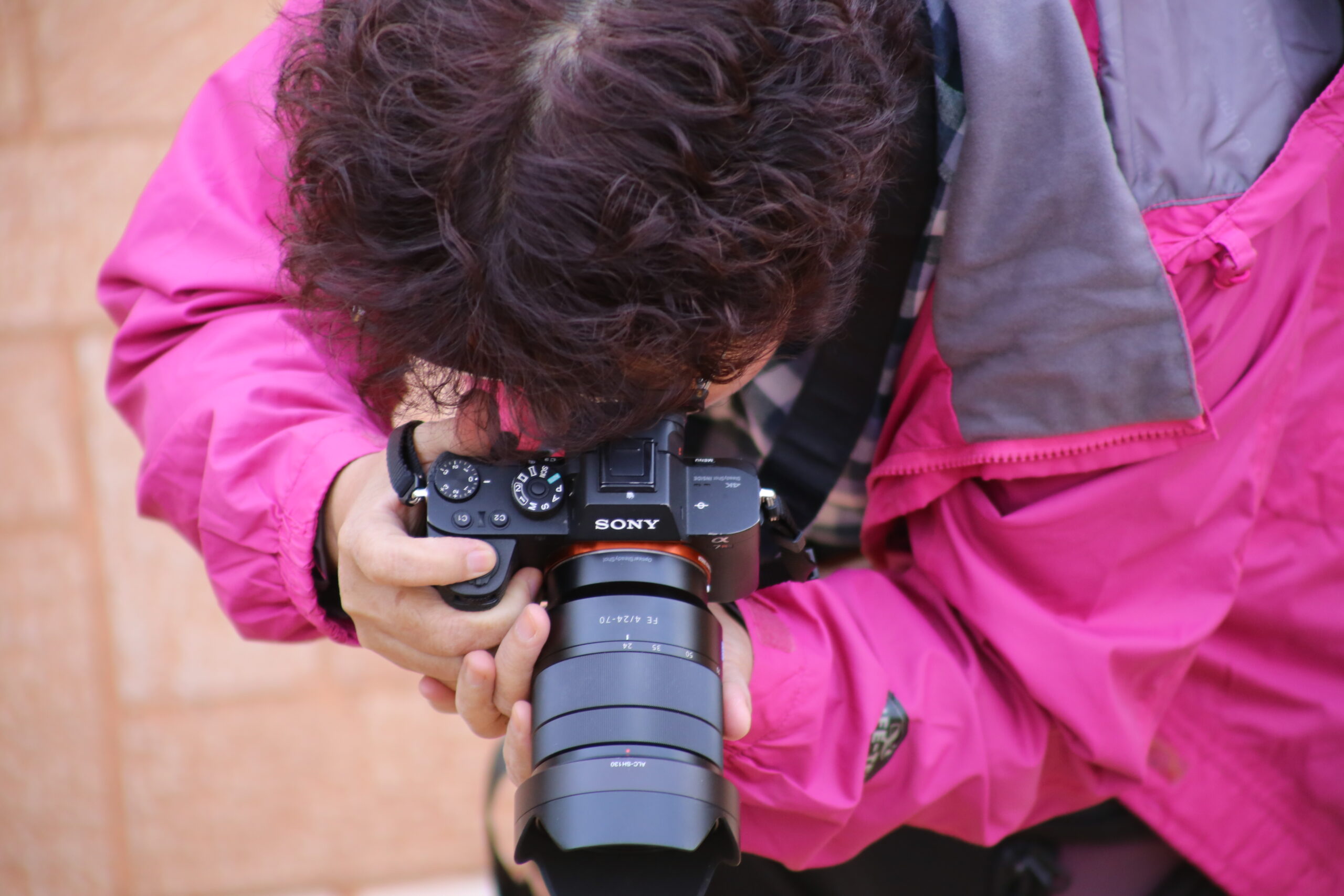
| IMG_1606-scaled.jpg | Overhead close-up of a photographer wearing a vivid pink jacket, looking down through a Sony Alpha mirrorless camera fitted with a long black zoom lens and petal hood. The Sony logo and Alpha symbol are visible on the camera body. The tight framing emphasizes the photographer’s hands, camera controls and lens barrel. |
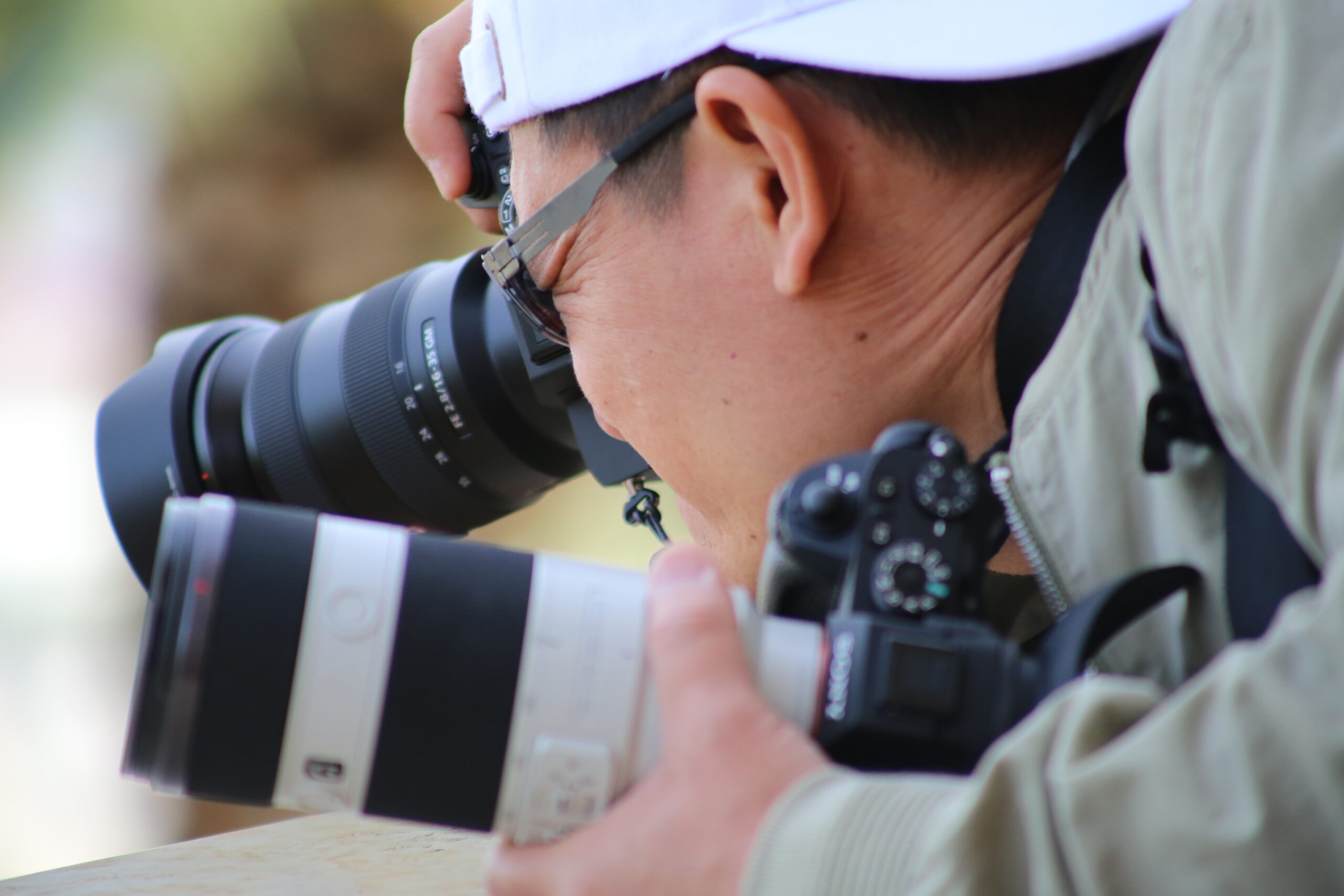
| IMG_1490-scaled.jpg | Tightly cropped profile of a photographer in a white baseball cap and glasses, operating a camera with a large black Tamron zoom lens while holding another Sony camera fitted with a white telephoto zoom in the foreground. The equipment overlaps within the frame, emphasizing the size and variety of the lenses. Sony and Tamron markings are visible. |
| IMG_0461-scaled.jpg | Overhead still life of photography and design equipment arranged on a beige textured surface. A Canon DSLR with attached zoom lens lies among additional Canon-compatible lenses, lens caps, photography manuals and design books. Visible publications include The Big Book of Color in Design, The Photographer’s Eye and a Canon EOS Rebel guide. The arrangement connects photography hardware with visual-design education. |
| IMG_0451-scaled.jpg | Another equipment still life photographed from above, this time with darker processing and stronger shadows. A Canon DSLR, several black interchangeable lenses, lens caps and a camera strap are scattered among books and design publications. The GIMP 2.8 for Photographers title is clearly readable, alongside a yellow design book. Canon branding is visible. |
| IMG_0419-scaled.jpg | Two people examining the rear screen of a Nikon DSLR with a large external flash at an indoor event illuminated by pink and purple lights. The man in a white T-shirt operates the camera while a woman with dark hair in a bun and large round earrings leans toward him. An orange-red display panel with a film-reel symbol forms the background. |
| 20251113_112848-scaled.jpg | Carefully arranged Canon EOS R100 mirrorless camera and collection of lenses on a light marble-patterned table. The camera is fitted with a Canon RF 16mm lens and JJC hood. Other visible equipment includes a Canon RF 75–300mm telephoto zoom, RF 24–105mm zoom, RF-S 10–18mm wide-angle zoom, a TTArtisan manual-focus lens and a Canon mount adapter. The photograph functions as an equipment inventory. |
| 20241101_074749-scaled.jpg | Close overhead three-quarter view of a Canon EOS R100 mirrorless camera on a dark tabletop, fitted with a TTArtisan manual-focus lens. The lens has engraved aperture and distance scales, and the camera’s top mode dial and hot shoe are prominently visible. Soft light emphasizes the contrasting black surfaces and silver lens-mount ring. |
| 20241101_074649-scaled.jpg | Low-angle front three-quarter product photograph of a Canon EOS R100 with TTArtisan manual-focus lens on a dark surface. The Canon logo, EOS marking and TTArtisan lens engravings are clearly visible. The lens’s large front element and engraved focusing and aperture scales are prominent, with softly blurred furniture in the background. |
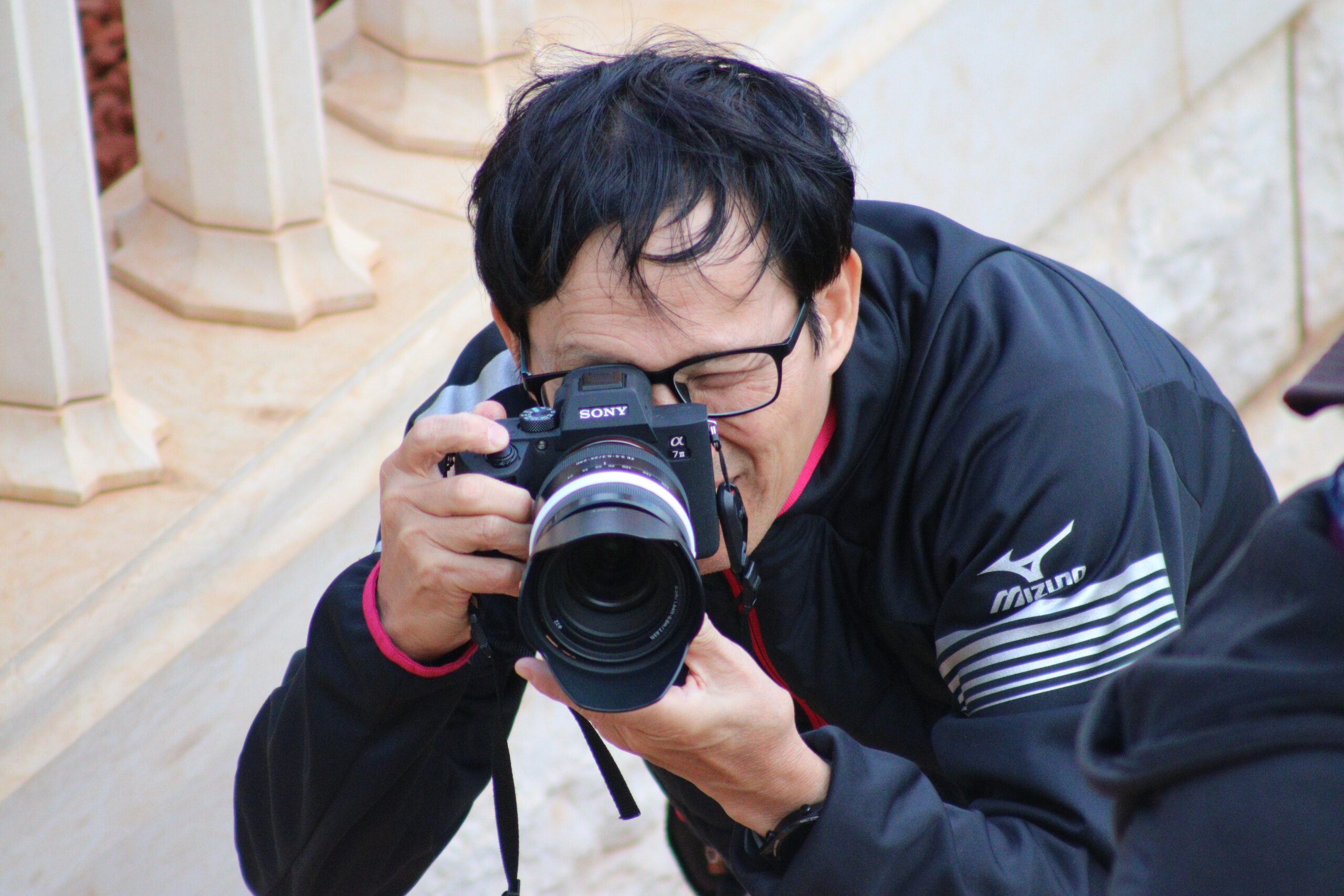
| 20191214_103114440_iOS-1-scaled.jpg | Male photographer wearing glasses and a black Mizuno sports jacket, crouching slightly while aiming a Sony Alpha 7-series mirrorless camera toward the viewer. The camera has a black zoom lens and petal hood, and the Sony logo and Alpha 7-series markings are visible. Pale stone steps and balustrades create a softly lit architectural setting. |