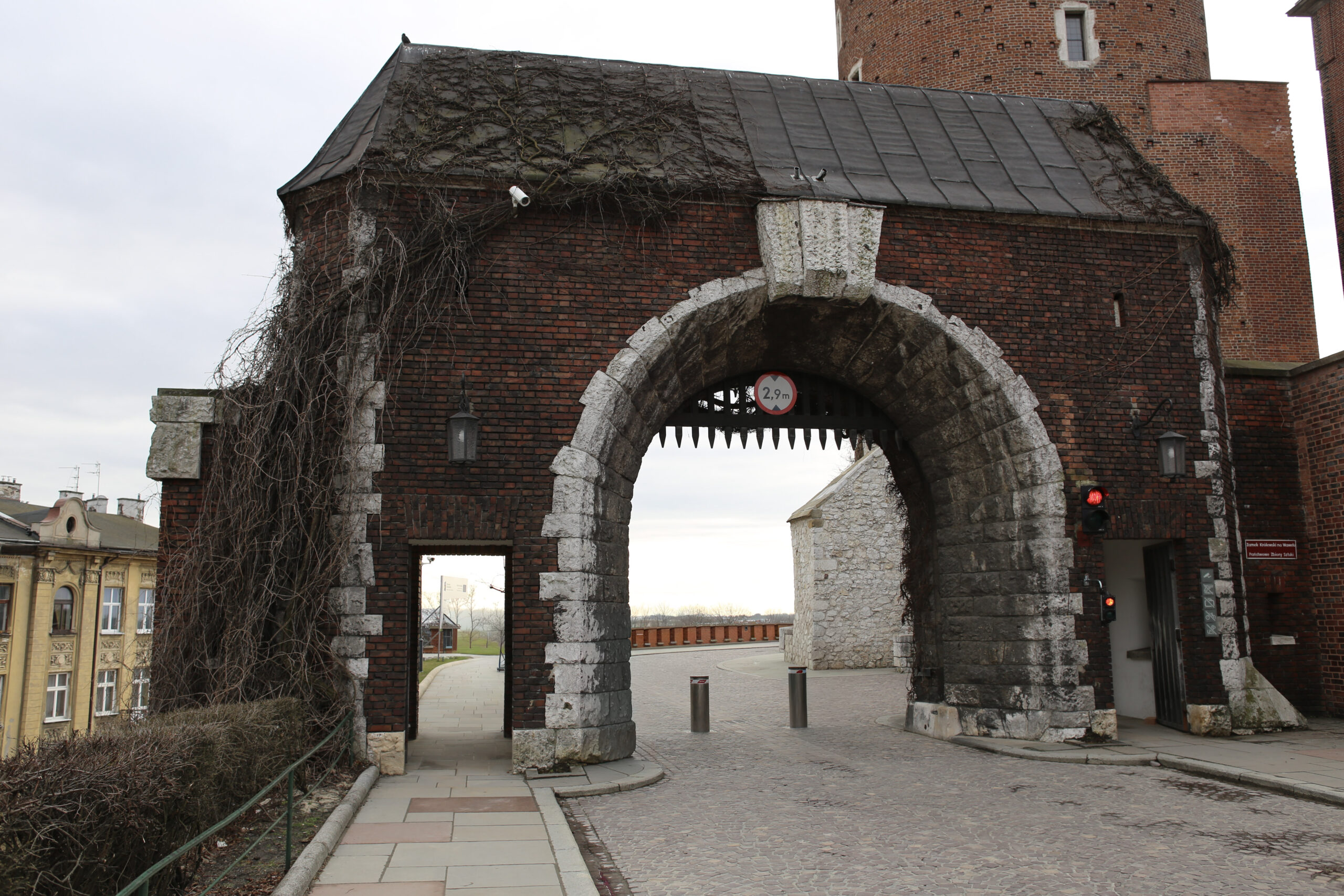
A brick gatehouse at Wawel Royal Castle in Kraków, with a rough stone arch cut through the middle and an iron portcullis raised just above head height. Under the arch there’s a round sign that reads 2.9 m. To the right a traffic light is on red, two steel bollards stand in the road, and a security camera is bolted to the corner of the roof. The ivy is bare because it’s winter, and the sky is the colour of wet slate.
The Shot That Gets Posted
You know the version of this picture that travels. Someone in a long coat walks under the arch, shot from low down so the stone looks huge, and the caption says something about a hidden corner of Kraków. The sign, the light, the bollards and the camera aren’t in it. They’ve been cropped, cloned out, or the photographer simply stood where they weren’t.
Hidden is doing a lot of work in that caption. This is the entrance to the most visited site in the city. It’s a working gate, with cars and deliveries and guards, and a red light because vehicles have to take turns. Take all that out and you’ve got a fairy-tale archway. Leave it in and you’ve got a place that runs on a schedule.
Same Trick, Different Century
The second frame is inside the Doge’s Palace in Venice. Two marble figures stand with their backs to us, looking down into the courtyard. They’re Sansovino’s Mars and Neptune, from 1567, the pair that gave the Giants’ Staircase its name. Arches frame them on both sides, and the striped brick and white stone of the courtyard fills the space between.
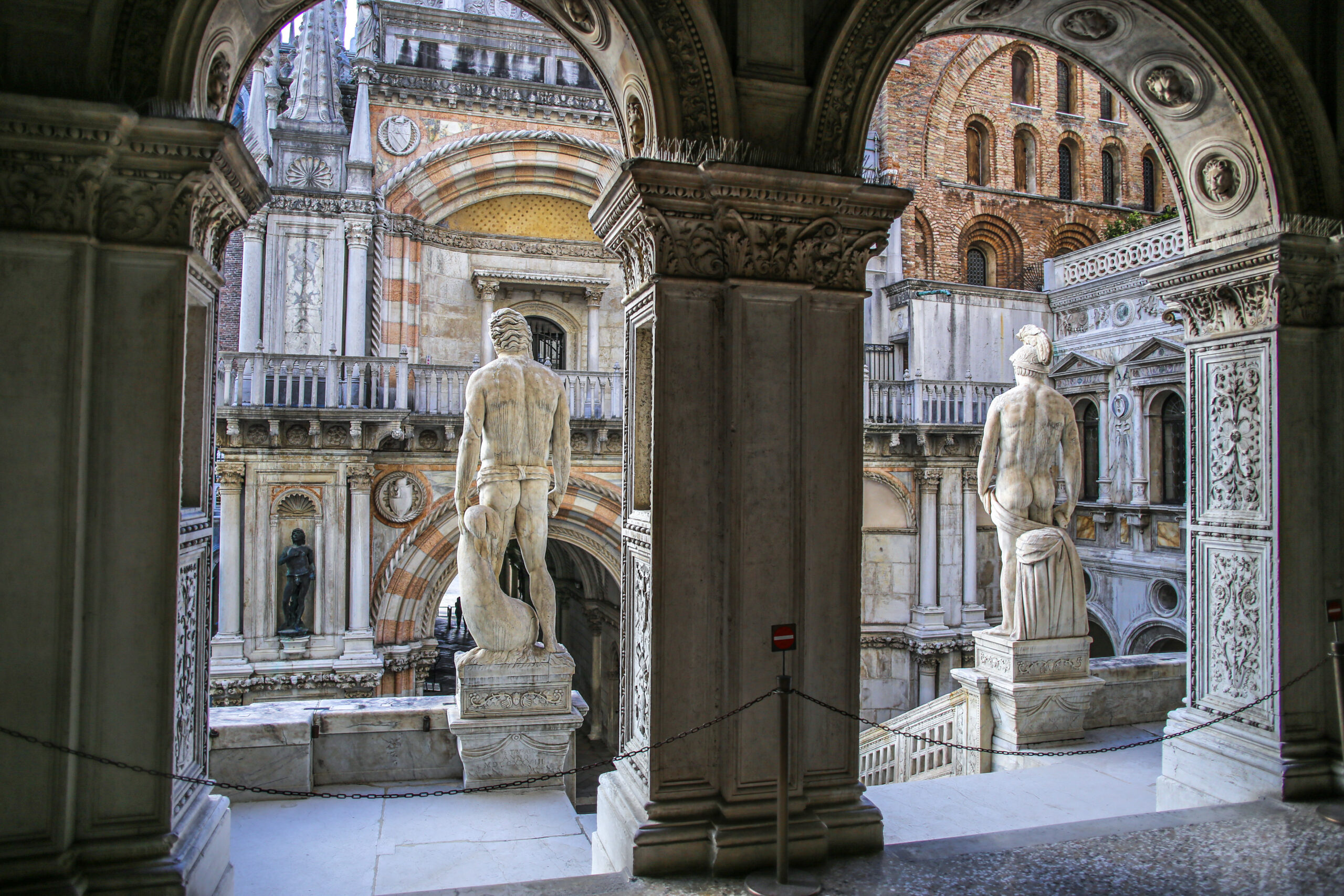
Now look at the bottom of the picture. A chain runs between posts across the whole width, and a small red no-entry sign sits on a stand in the middle. Look up at the arches and you’ll see rows of thin metal spikes along the cornice, there to keep pigeons off the marble. It’s a lovely view that’s full of crowd control.
The influencer version keeps the arches and the gods and loses the chain. What’s left looks like a private view, as if you’d been let through a door the others weren’t. But the calm in that picture exists because of the chain. Remove it and everyone walks up to the statues, and the shot is gone.
- Royal Caribbean Buys 50% of Sandals Resorts for About $3 Billion, Bringing Cruises and All-Inclusives Together
- TOURISE Summit 2027: March 23-25, Riyadh, Saudi Arabia
- Wrocław’s Market Square in Fisheye: Why I Kept the Distortion
- Salamanca’s Stone Faces: A Photo Essay in Five Frames
- Europe’s Tourist Crime Belt: Pickpockets, Bracelet Scams, and Why the Same Offenders Keep Working
- The Beach Racket in Italy, Greece and Spain: Turnstiles, Cheap Concessions, and a Shoreline You Can’t Reach
- Why Lisbon Cafés Are Putting Up No Laptops Signs: Coffee, Instagram, and the Remote Work Terrace
- Four in Ten Travelers Visit Landmarks Mainly for the Photo: How Instagram and Reels Reshaped Tourism
- Why Comporta Still Feels Empty: The Rice Estate Behind Portugal’s Most Coveted Beaches
- Travel in 2026: Five Photos That Explain the Year’s Real Trends
- Largo do Chiado at Night: A Brasileira, the Bronze Poet and a Floor Made of Waves
- Sintra at Noon, Venice at Midnight: Six European Cities and the Hour That Suits Them
- Porto’s Chestnut Season Is the Shoulder Season Worth Booking
- Venice at Night Is the Version No Access Fee Covers
- The 18th-Century Fountain Hidden Inside Bordeaux’s Customs Museum Courtyard
- The Bilbao Effect, 500 Years Early: Jerónimos Monastery And The Guggenheim
- Bilbao’s Quiet Renaissance: From Industrial Port to Design Destination
- Lisbon’s Seven Hills: A Walking Guide That Tells You the Truth
- New Orleans: An American City That Plays by Different Rules
- Ha Long Bay Without the Cruise Brochure
What the Crop Costs
A cropped frame sells access. It tells the follower they can walk up to the thing, alone, on their own schedule. Then they arrive and find the queue, the rope, the red light, and the person in front of them doing the same pose. Some cities have started pushing back on that gap. Venice has tried charging day-trippers, and other places cap group sizes or ration timed tickets.
The wide frame is more honest about the place. It tells you a site like this has to be managed to survive, and that management shows up in the picture. Nobody wants a holiday photo with a security camera in it, but it’s the reason the arch is still standing.
What They Still Get Right
The low angle at the Wawel gate takes real skill. So does finding the one spot in that loggia where two arches line up around two statues. Good travel photographers see things the rest of us walk past, and there’s nothing wrong with a crop. The problem is the caption that comes with it, the word secret on a place with its own traffic light.
The light at the gate is red. Everyone waits, including the person with the phone.