Somewhere in almost every growing picture collection there is a photograph you can remember perfectly and cannot find. You know the colour of the wall. You remember looking up. You can nearly feel the camera in your hand. Unfortunately, the computer knows it as IMG_something, and the collection offers a choice between “Travel,” “Travel New” and “Various.” I have a soft spot for human untidiness, but this particular kind loses its charm quickly. To organize a media gallery well, give it a clear subject, divide it into useful collections, describe the individual items consistently and make the route through them understandable to someone who was not standing beside you when the pictures were taken.
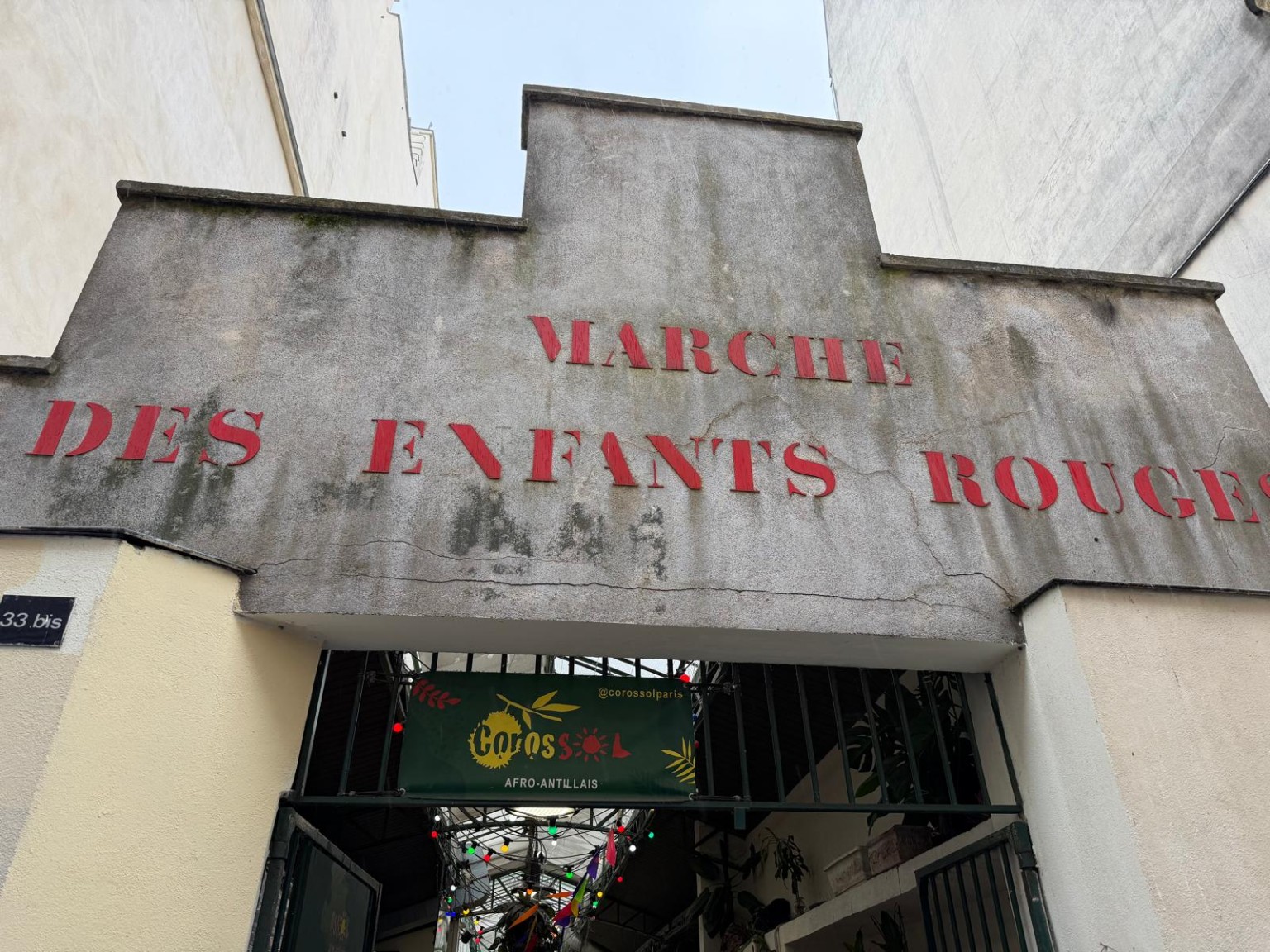
The entrance to the Marché des Enfants Rouges in Paris makes a useful test case. In this photograph, a broad grey facade rises in shallow steps between pale neighbouring walls, with a narrow patch of blue sky above. Large red letters spread across its weathered surface. Fine cracks run through the plaster, darker stains mark the wall beneath the lettering, and a small dark address plate sits at the left edge. Below, green metal gates frame a shadowed passage under a glazed roof. A green Corossol sign, with yellow and red lettering and the words “AFRO-ANTILLAIS,” hangs over the entrance. Small coloured bulbs lead the eye farther inside. It is a picture of a threshold: enough information to identify a place, enough darkness beyond it to make you curious.
Now imagine trying to retrieve it six months later. One person remembers the market’s name. Another searches for Paris. A third is putting together a collection of shopfront lettering. Someone else wants covered-market entrances. All four requests are reasonable, but a folder labelled “Holiday Final” serves none of them particularly well. This is the central difficulty of organizing photographs: a file sits in one storage location, while its subject can belong to several lines of enquiry. A good gallery lets those lines meet without making visitors understand your filing habits.
I would begin with the collection’s main promise. For a travel archive, place may be the most useful first division: France, then Paris, then a focused collection such as markets or neighbourhood walks. For an event archive, the event and its date may matter more than geography. A photographer’s portfolio might work better through subjects or projects. There is no universal hierarchy, and trying to make every possible distinction visible at the top usually produces a navigation menu that reads like a tax return. Choose the route your audience is most likely to need, then offer a few supporting ways to explore.
For this image, “Marché des Enfants Rouges entrance, Paris” would be a useful public title. It names the subject and location without trying to describe every visible object. A caption could add the neighbourhood, capture date or circumstances if those details have been verified. The important word there is verified. An upload date tells you when a file entered a website; it does not establish when the photograph was taken. If the capture date is unknown, leave it unknown. A gallery becomes much less trustworthy when tidy-looking records conceal guesses.
File names have their own practical role. A name such as “paris-marche-des-enfants-rouges-entrance.jpg” is easier to recognise during an upload or export than an unexplained camera number. In a working archive, I would also preserve a stable identifier so that two photographs with similar descriptions remain distinguishable. The original camera filename can be kept in the record. What I would avoid is renaming files already published on a live website merely to make them prettier. Existing image addresses may be used in posts or elsewhere. Improve titles, captions and descriptions first; changing an established address needs a separate decision and a way to preserve access.
Categories and tags work best when they have different responsibilities. Categories can provide the broad shelves: Travel, Events, Portraits, or whatever suits the publication. Tags can connect more specific subjects across those shelves, such as Paris, markets and signage. For our market photograph, those three tags might be enough. Add a tag only if you can imagine someone using it to reach other relevant material. “Beautiful,” “interesting” and “great photo” are opinions rather than useful finding aids. I am also firmly against keeping “Paris,” “Paris photos” and “Photos of Paris” as three supposedly distinct destinations. Pick a consistent term and use it.
It helps to maintain a small vocabulary you can actually remember. Decide how you will handle place names, singular and plural forms, and alternative spellings. Use the correctly accented name in the visible title; where the gallery’s search system supports it, an unaccented variant can help people who type without accents. Test that behaviour rather than assuming it works. Search tools differ in whether they examine captions, descriptions, tags or only titles. A detailed description hidden in a field the search never reads will not help the person looking for it, however diligent you felt while writing it.
Behind the public page, keep a clear relationship between the original and its derivatives. A full-resolution original, a smaller web version and a square preview may all show the same photograph, but they serve different purposes. Visitors rarely need three separate entries for them. A single gallery item can offer appropriate viewing or download sizes while the archive preserves the original. A substantially different edit may deserve its own entry, particularly if comparing the versions is the point. The distinction is editorial: does the second item add something for the viewer, or is it simply another export?
That question matters when selecting near-duplicates too. A burst of eight frames may contain a worthwhile change in gesture or expression. Eight almost identical views of this entrance are more likely to make the viewer wonder whether the page has loaded twice. I would choose one strong establishing view, then add a closer frame only if it reveals something new, perhaps the lettering, the gate or the activity beyond it. Keep the other files if they are useful to your archive. The public gallery can be selective without forcing you to delete material you may need later.
Once the individual records make sense, look at the collection as a visitor would. A market gallery could open with the entrance, move into the covered passage and continue towards stalls and smaller details, provided those photographs are available. The entrance gives the sequence a natural starting point. A broad Paris collection might instead use this image among several neighbourhood scenes, with a caption giving it a precise identity. The same file can appear in more than one curated collection without being uploaded again, where the publishing system supports that arrangement. This is one reason to distinguish a reusable media record from the pages that display it.
For video or audio, extend the same habits rather than inventing a parallel filing universe. Give each recording a clear subject, a verified date where available and an understandable relationship to the collection. Show its duration and identify the format before someone opens it. Credits, permissions and restrictions belong in the record too, with relevant information visible wherever people can download the material. Our comparison of media galleries and photo galleries explores when those additional formats earn their place. Organization should help a mixed collection feel coherent, even though the items ask to be viewed or heard in different ways.
Before calling the job finished, try a small retrieval exercise. Find the market photograph by its name, then by Paris, then through the collection where you expect it to belong. Open it on a phone and check that the title and caption remain readable. Ask someone unfamiliar with the archive where they would look for it. If they choose a different route, that is useful evidence about the labels. It does not automatically mean they need instructions. The gallery should carry more of the burden than the visitor.
For an existing collection, I would work in manageable batches: choose a coherent group, improve its records, remove confusing duplicate entries and check the public result. Keep the originals backed up independently; an attractive gallery is a presentation, not a backup strategy. Our guide to what a media gallery is covers the larger relationship between the stored library and the selection people see. The goal here is pleasantly ordinary. Someone remembers a grey wall and red letters, types a few sensible words, and finds the picture. No archaeological expedition through “Various” required.